




Walk into any poultry house, and you’ll see birds eating. They peck at the feed, consume some, and waste some. The efficiency of that feeding process—how much of what goes into the feeder actually becomes meat or eggs—depends on many factors. Genetics, environment, and health all play a role. But the physical form of the feed itself has a direct impact on how much the birds eat, how well they digest it, and how efficiently they convert it into product.
The form of the feed affects feed intake, growth rate, and feed conversion. It affects the uniformity of the flock and the incidence of digestive issues. It even affects the dust levels in the house and the air quality for both birds and workers. Choosing the right feed form and having the equipment to produce it consistently is an essential part of poultry production.
The Different Forms of Poultry Feed
Poultry feed comes in several physical forms, each with its own characteristics. The choice of form depends on the age and type of birds, the feeding system, and the production goals.
Mash is the simplest form. It’s the ground mixture of ingredients with no further processing. Mash is inexpensive to produce because it requires less processing than other forms. But it has significant drawbacks. Dust levels are high. The birds can sort through the feed, consuming the parts they prefer and leaving the less palatable ingredients behind. This sorting leads to nutritional imbalances and wasted feed.
Pellets are the most common form for many poultry operations. The ground ingredients are conditioned with steam and compressed through a die. The resulting pellets are dense, uniform, and easy for birds to consume. Pellets reduce sorting because the ingredients are bound together. They also reduce dust. The heat of the pelleting process improves digestibility and reduces pathogen load.
Crumble is a form that falls between mash and pellets. It’s made by crushing pellets into smaller pieces. Crumbles are often used for starter diets, as the smaller particles are easier for young birds to consume. They provide the advantages of pellets—uniform nutrition, reduced sorting, and improved digestibility—in a size suitable for small birds.
The Science of Feed Form and Bird Performance
The physical form of the feed affects how birds eat and digest it. Pellets and crumbles are consumed more rapidly than mash. The birds spend less time eating and more time resting. The reduced feeding time can lead to better feed efficiency.
The improved digestibility of pelleted feed comes from the heat and pressure of the pelleting process. The starches are gelatinized, making them more available to the bird’s digestive enzymes. The protein structure is modified, improving the availability of amino acids. The result is a feed that’s more efficiently converted into meat or eggs.
Research has consistently shown that pelleted feed improves feed conversion in broilers. The improvement is typically 5% to 10% compared to mash. For a large operation, that improvement translates to substantial savings in feed costs.
The uniformity of pellets and crumbles is another advantage. Each pellet or crumble contains the same nutritional composition as every other one. This ensures that each bird receives a balanced diet, regardless of where it eats. The uniformity contributes to flock uniformity, which is important for processing and marketing.
Producing Crumble for Starter Diets
Starter diets require a different feed form than grower or finisher diets. Young birds have small beaks and digestive systems, and they need feed that’s easy to consume. Crumble is the preferred form for many operations.
Producing crumble starts with pelleted feed. The pellets are formed in the pellet mill and then passed through a crumbler—a roller system that breaks the pellets into smaller pieces. The size of the crumble is controlled by the gap between the rollers. The crumbled material is then screened to separate the fines, which are returned to the process.
The production of crumble requires careful control of the pellet quality. Pellets that are too soft will not crumble properly. Pellets that are too hard will require excessive force to break, reducing the efficiency of the crumbling process. The conditioning and pelleting parameters must be set to produce pellets with the right density and durability.
A crumble poultry feed production line integrates the equipment needed for each step: grinding, mixing, pelleting, crumbling, and screening. The line must be designed for consistent production, with each stage balanced to prevent bottlenecks. The control system must maintain the parameters that affect pellet quality and crumbling efficiency.
The Pellet Mill in the Production Line
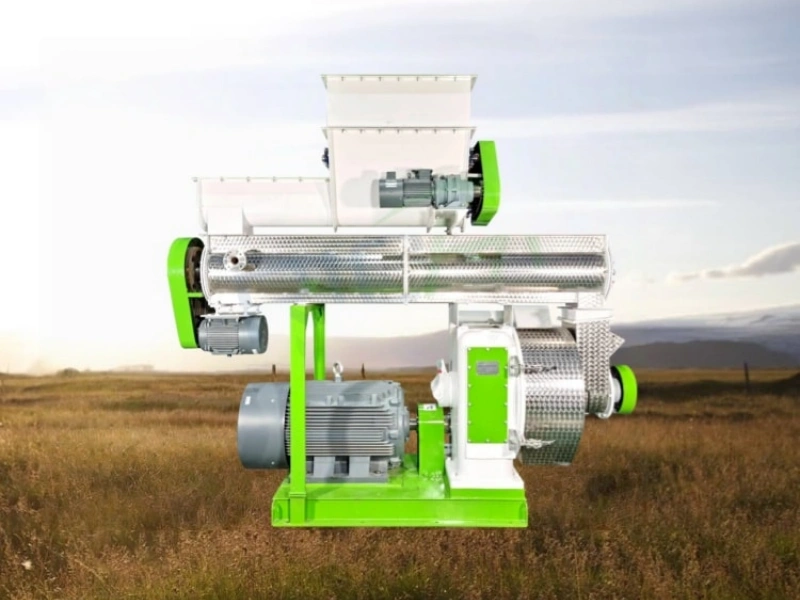
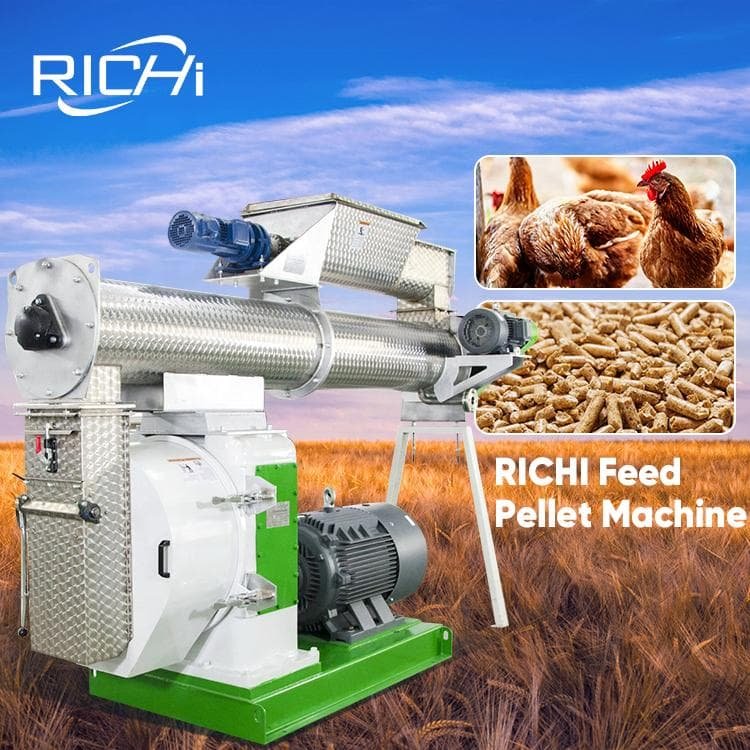
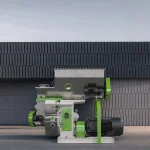
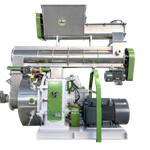
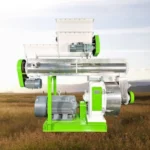
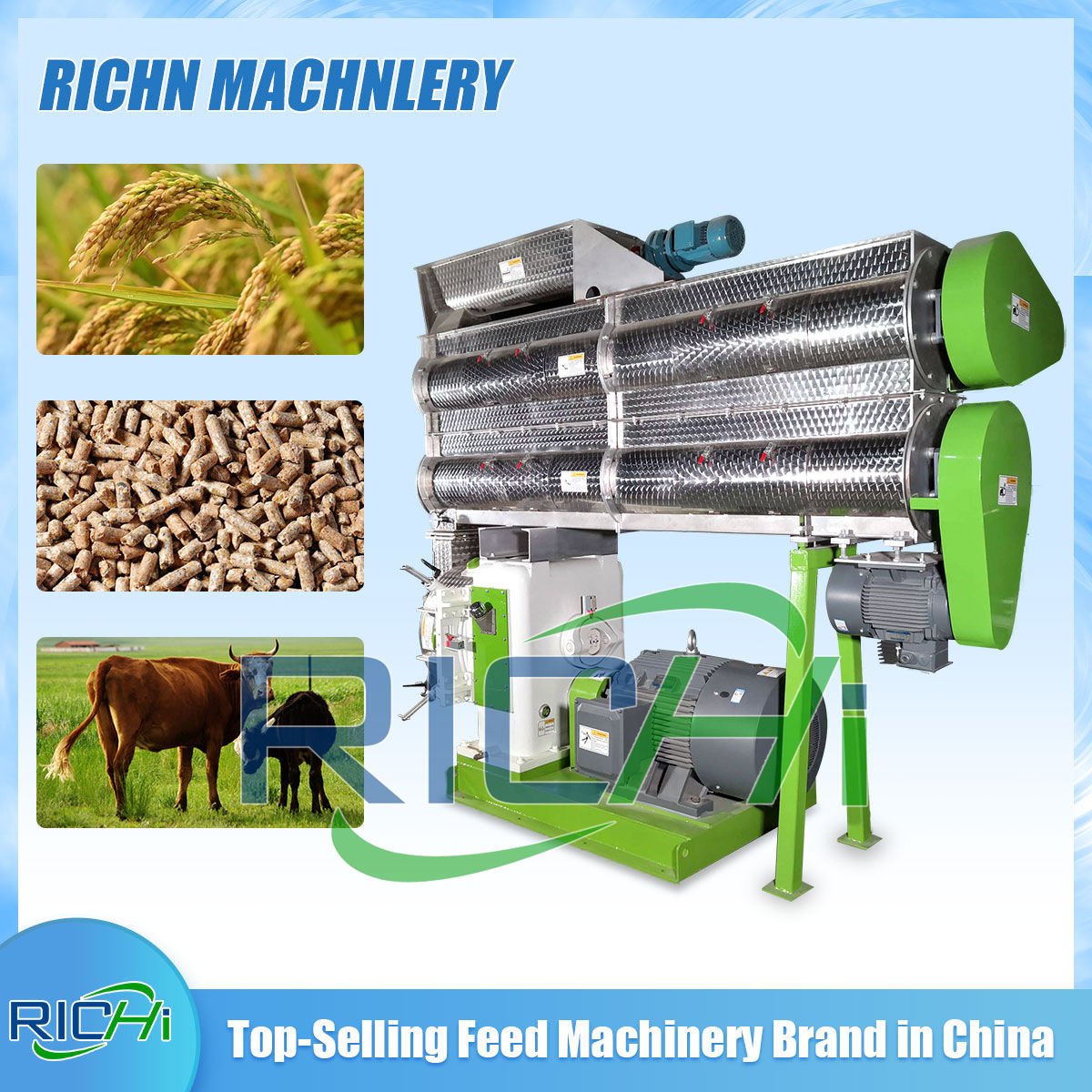
The pellet mill is the central component of the chicken feed pellet machine configuration. This equipment performs the compression step that transforms the conditioned mash into pellets. The pellet mill must be matched to the production requirements and the material characteristics.
The pellet mill operates by forcing the conditioned material through a die. The die is a metal ring with precision-drilled holes. The material is pressed through the holes by rollers that rotate inside the die ring. The friction generates heat, which melts the natural binders and forms the pellets.
The die selection is critical for poultry feed. The hole diameter determines the pellet size. For broiler feed, pellets of 3 to 5 millimeters are typical. For layer feed, the size may vary depending on the feeding system. The die must be made from a wear-resistant alloy, as the abrasive nature of the ingredients can cause wear over time.
The rollers press the material against the die surface. The gap between the rollers and the die affects the compression and the pellet quality. The roller bearings must be sealed to prevent contamination from the fine particles.
The motor provides the power for the compression process. The motor must be sized for the load and the production capacity. A motor that’s too small will struggle to maintain production; a motor that’s too large will waste energy.
The Complete Production Line
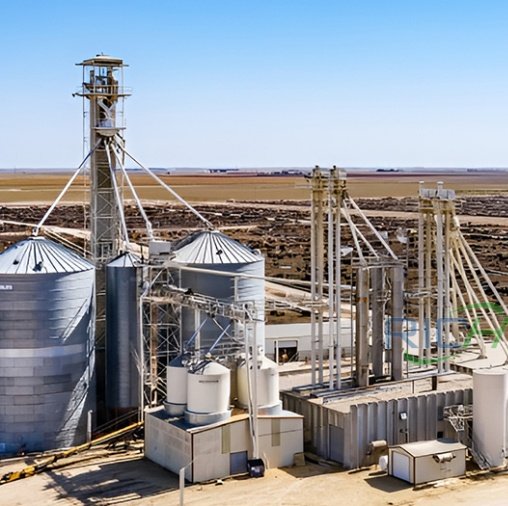
A pellet plant for poultry feed includes the equipment for grinding, mixing, conditioning, pelleting, and cooling. For crumble production, the line also includes the crumbler and screening equipment. Each component must be integrated for efficient operation.
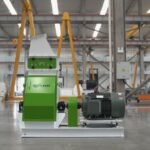
The grinding equipment reduces the grains to the correct particle size. A hammer mill is commonly used for this purpose. The screen size determines the particle size. The grinding must be consistent to ensure that the material feeds smoothly through the pellet mill.
The mixing equipment blends the ground ingredients with the protein meal and other additives. The mixer must be capable of thorough blending to ensure uniform nutrition. The mixing time and speed must be appropriate for the ingredients.
The conditioning equipment adds steam to the mixed material. The conditioning prepares the material for pelleting by softening the particles and activating the binders. The conditioning temperature and moisture must be controlled precisely.
The cooling equipment reduces the temperature and moisture content of the pellets after pelleting. The cooler must be sized for the production capacity. The airflow and residence time must be sufficient to achieve the target moisture content.
The screening equipment removes fines from the finished pellets. The fines are returned to the process. The screening ensures that the finished product meets the quality specifications.
Quality Control in Poultry Feed Production
Quality control in poultry feed production involves several checkpoints. The incoming ingredients should be tested for moisture content and quality. The grinding process should be monitored for particle size. The mixing process should be checked for uniformity.
During pelleting, the conditioning temperature and moisture should be monitored. The pellet durability should be tested regularly. The pellet size should be checked for consistency.
For crumble production, the crumble particle size should be monitored. The fines content should be checked. The moisture content of the finished crumble should be measured to ensure it’s within the target range.
The quality control program should be documented. Records of the test results help identify trends and prevent problems. The documentation provides evidence of quality for customers and regulatory authorities.
The Role of the Equipment Supplier
The choice of equipment supplier affects the performance of the production line. A supplier with experience in poultry feed production can provide guidance on equipment selection and configuration. They can help design a line that meets the production requirements.
The supplier’s technical support is important. The operation of a pellet plant requires some expertise. The supplier should provide training and ongoing assistance. The availability of spare parts is another factor to consider.
click this site to explore equipment options and configurations for poultry feed production. The right equipment, properly operated, can improve feed efficiency and reduce production costs.
The Economic Impact
The economic impact of feed form on poultry production is significant. The improved feed conversion from pelleted or crumbled feed reduces the feed required per bird. The reduced waste from pellets and crumbles contributes to savings.
The investment in a production line must be justified by the savings in feed costs. The payback period depends on the volume of feed produced and the savings per ton. For many operations, the equipment pays for itself within a reasonable period.
Beyond the direct savings, there are other benefits. The control over ingredient quality and feed form improves flock performance. The reduced dust improves worker conditions. The consistent feed quality reduces variation in bird performance.
The Path Forward
The physical form of poultry feed matters. Mash, pellets, and crumbles each have characteristics that affect bird performance. The right form, properly produced, improves feed efficiency and reduces costs.
The equipment for producing pellets and crumbles is available at different scales. The production line includes grinding, mixing, conditioning, pelleting, cooling, and screening equipment. For crumble production, the line includes a crumbler and fines removal equipment.
The investment in a production line must be based on a clear economic analysis. The savings from improved feed efficiency must be weighed against the capital cost. For many operations, the return on investment is favorable.
The poultry industry continues to evolve, and the role of feed processing in production efficiency is increasingly recognized. The investment in a production line is one step toward improved performance and profitability.