




A forage pellet may look simple.
It is a small cylindrical piece of compressed plant material, usually produced in a uniform size.
But behind that simple appearance is a surprisingly complex production process.
The quality of the final pellet can be influenced by the crop itself, harvesting conditions, moisture, grinding, pelletizing pressure, cooling, screening, storage, and transportation.
For livestock producers, these details matter because a pellet is ultimately a feed product.
For manufacturers, they matter because consistent quality is essential for building a reliable market.
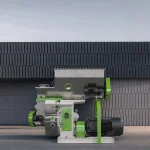
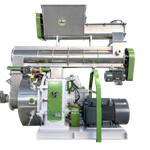
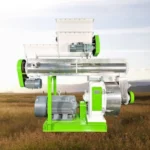
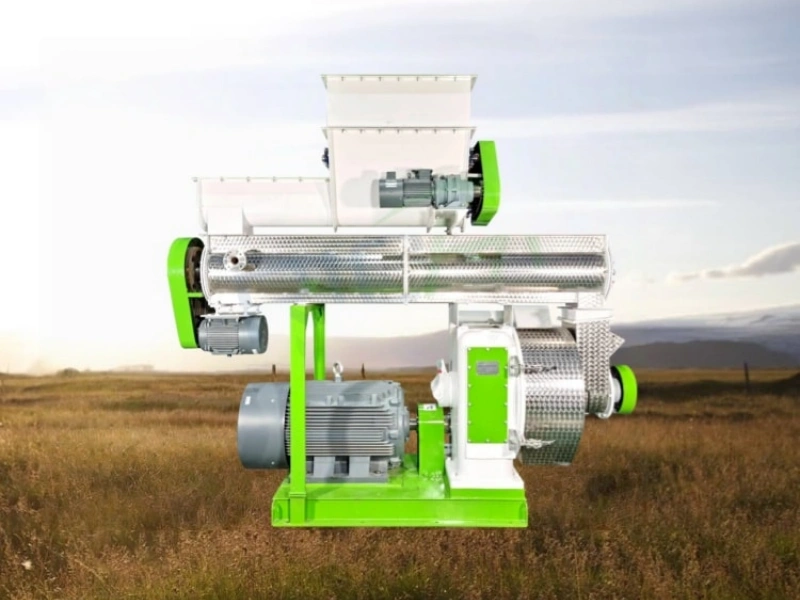
This makes an alfalfa pellet mill for sale more than a machine purchase. It becomes part of a production system where every stage affects the final result.
What Does “Good Quality” Mean?
There is no single characteristic that defines a good forage pellet.
Instead, several properties should be considered together.
These can include:
- Consistent pellet size
- Suitable moisture
- Adequate durability
- Low excessive fines
- Clean appearance
- Stable storage quality
- Appropriate physical density
Nutritional quality is equally important, but it begins with the original forage.
A pellet mill cannot compensate for poor-quality or contaminated raw material.
Therefore, quality control should start before the material enters the production line.
Raw Material Is the Starting Point
The first quality decision occurs in the field.
Harvest timing influences forage composition.
Drying conditions affect moisture and potential nutrient preservation.
Storage conditions influence contamination and deterioration.
Once the material arrives at the factory, operators should inspect it.
Questions include:
- Is the material sufficiently dry?
- Does it contain soil or stones?
- Are there excessive stems?
- Has it developed mold?
- Is the material too coarse?
- Has it absorbed moisture during storage?
Only suitable raw material should enter the production process.
Grinding for Better Pellet Formation
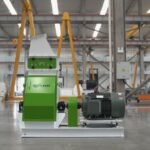
Grinding is often necessary for hay and alfalfa.
Long fibers can create feeding and compression challenges.
The grinding process reduces the material to a more manageable particle size.
However, smaller is not always better.
Extremely fine grinding requires additional energy and may not provide proportional improvements.
The target should be a particle size that supports stable feeding and pellet formation.
This is a technical balance.
Moisture: The Invisible Quality Factor
Moisture may not be obvious from the finished pellet’s appearance.
Two pellets can look similar but behave differently during storage because of different moisture levels.
Excess moisture can increase the risk of deterioration.
Insufficient moisture can affect pellet formation.
The correct operating range depends on the feedstock and machinery.
Operators should therefore use moisture meters and establish production procedures around measured data.
Why Pellet Durability Matters
Pellets need to survive handling.
They may travel through conveyors, pass through packaging equipment, be loaded onto trucks, and eventually be poured into feed bins.
If pellets break excessively during these stages, the percentage of fines increases.
This creates several problems.
The product may become less attractive visually.
Handling may become dustier.
The buyer may receive a product that is less uniform than expected.
Pellet durability is therefore an important commercial characteristic.
The Role of Pellet Mill Settings
A pellet mill cannot simply be switched on and expected to produce identical results under every condition.
Operators may need to adjust:
- Feeding rate
- Moisture
- Die configuration
- Roller pressure
- Material preparation
- Operating speed
The correct settings depend on the feedstock.
This is one reason experienced operators can make a significant difference.
Equipment technology matters, but process management matters too.
Choosing the Correct Capacity
Production capacity influences quality indirectly.
If a machine is consistently overloaded, production may become unstable.
If it is significantly oversized for the available material, operating efficiency may suffer.
A 2-3 T/H hay pellet mill for sale may be suitable for a medium-scale project, but only if the upstream preparation system and downstream cooling and packaging equipment can support that capacity.
The complete line should be balanced.
Cooling Is Part of Quality Control
Fresh pellets leave the pellet mill under conditions that are not ideal for immediate long-term storage.
Cooling reduces temperature and allows the product to stabilize.
The cooling process should be designed around pellet output and product characteristics.
Insufficient cooling can create storage problems.
Excessive airflow, on the other hand, may unnecessarily increase energy consumption.
Proper equipment sizing is therefore important.
Screening Improves the Finished Product
Screening removes fines and broken pellets.
The result is a more uniform product.
For packaged feed, this can improve appearance.
For automated feeding systems, consistent particle size can also make handling easier.
The fines may sometimes be recycled into production, depending on the process.
This reduces product losses.
Packaging Choices
A high-quality pellet still needs suitable packaging.
Packaging protects the product from moisture and contamination.
Different markets may require different formats.
Small Bags
Suitable for retail and smaller livestock operations.
Large Bags
Useful for commercial farms with higher consumption.
Bulk Delivery
Suitable for large customers with appropriate storage facilities.
The packaging strategy should be based on customer purchasing behavior.
Storage Conditions
Storage is often overlooked during factory planning.
Feed pellets should be protected from:
- Rain
- Condensation
- High humidity
- Contamination
- Excessive heat
- Pest exposure
The warehouse should be designed around expected inventory volume.
For seasonal forage businesses, storage capacity may need to accommodate several months of production.
How Quality Affects Customer Loyalty
A livestock producer may forgive a minor delay once.
Repeatedly inconsistent feed quality is a different matter.
Customers expect products to remain consistent from one shipment to another.
If pellet diameter changes significantly, moisture fluctuates, or excessive fines appear, the customer may begin looking for alternatives.
Consistency can therefore become a stronger competitive advantage than simply offering the lowest price.
Why Complete Feed Equipment Matters
A business producing only alfalfa pellets has a relatively simple process.
But a manufacturer producing complete livestock feed needs more equipment.
The factory may require:
- Ingredient storage
- Batching
- Grinding
- Mixing
- Conditioning
- Pelletizing
- Cooling
- Screening
- Packing
This is where a broader 0.3-20 T/H animal feed manufacturing plant solution can become relevant.
(Related Post:https://www.richipelletmill.com/animal-feed-mill-equipment-for-sale/)
Different capacities require different levels of automation and equipment configuration.
Alfalfa Pellets Versus Complete Feed Pellets
These products should not be confused.
Alfalfa pellets are primarily a processed forage product.
Complete feed pellets may contain multiple ingredients formulated for a specific animal species.
The equipment may overlap, but the production objective is different.
This distinction should be made clear when developing product pages, marketing materials, and commercial specifications.
Can Quality Be Measured?
Yes, although the exact tests depend on the intended application.
Manufacturers may evaluate:
- Moisture
- Pellet dimensions
- Bulk density
- Durability
- Fines
- Nutritional composition
- Contamination
- Storage stability
Routine testing helps identify production changes.
For commercial manufacturers, keeping records can also make it easier to trace quality issues back to specific batches.
The Role of a Professional Equipment Manufacturer
Equipment selection has a direct influence on process stability.
A manufacturer such as Richi Pellet Mill can provide pelletizing equipment and supporting machinery for different production requirements.
However, buyers should not evaluate a supplier only by machine appearance or advertised capacity.
Important considerations include:
- Technical support
- Spare parts
- Equipment compatibility
- Installation
- Operator training
- Maintenance requirements
- Customization options
Long-term support can be particularly important for commercial factories.
Quality Starts with the Entire Process
One of the biggest misconceptions about pellets is that quality is created inside the pellet mill.
In reality, quality is cumulative.
Poor harvesting can reduce raw material quality.
Poor drying can create moisture problems.
Poor grinding can affect pellet formation.
Poor cooling can affect storage.
Poor screening can increase fines.
Poor packaging can expose the final product to moisture.
The pellet mill is important, but it is only one link in the chain.
What Should a New Producer Prioritize?
A new producer does not necessarily need the most advanced factory.
Instead, the priorities should be:
Reliable raw materials
Stable moisture control
Appropriate particle size
Correct pelletizing conditions
Effective cooling
Good storage
Consistent quality control
These fundamentals often matter more than unnecessary complexity.
Building a Product Customers Can Trust
The ultimate objective is not simply producing pellets.
It is producing a product that customers can trust.
That means customers know what they are receiving every time they place an order.
The pellet looks consistent.
The packaging is reliable.
The moisture remains within the expected range.
The supply is dependable.
The product performs predictably in the feeding system.
This level of consistency can turn first-time buyers into repeat customers.
Those researching forage-processing technology can helpful resources as part of their background research, but the most reliable decisions come from combining technical information with raw material testing and real customer requirements.
Final Perspective
High-quality forage pellets are the result of many small decisions made correctly.
The process begins with suitable alfalfa.
It continues through drying, grinding, pelletizing, cooling, screening, packaging, and storage.
Each stage has a role.
For businesses entering the forage pellet market, this is good news.
It means quality can be improved systematically.
Rather than relying on one machine or one production setting, manufacturers can analyze the complete process and identify where improvements are needed.
In the end, the most valuable pellet is not necessarily the hardest or densest one.
It is the product that combines suitable physical quality, stable storage characteristics, appropriate feed specifications, and reliable production consistency.
That is what turns processed forage into a commercially useful feed product.