







Buying pellet equipment is only one part of launching a commercial wood pellet project. A machine can be correctly selected and still underperform if the site is not ready, utilities are incomplete, installation sequencing is wrong, or operators are asked to learn the process after production has already started. For project owners, the practical question is therefore not simply “Which pellet mill should we buy?” but “What must be ready before the equipment arrives, and how do we move from installation to stable output with controlled risk?”
This implementation view is especially important for new factories, plant expansions, and projects using variable wood residues such as sawdust, shavings, chips, or mixed biomass streams. The pelletizing section depends on what happens before and after it: raw-material preparation, drying when required, screening, conveying, dust control, cooling, and storage all influence whether the line can operate continuously. A disciplined project plan connects these systems to the building, utilities, people, and commissioning schedule before shipment.
Start With a Site Readiness Gate Before Equipment Shipment
The safest time to discover a missing foundation, undersized power supply, inaccessible maintenance area, or unsuitable dryer location is before the machinery reaches the site. The buyer and equipment supplier should therefore close a site-readiness checklist as part of the project schedule. This should cover building dimensions, floor elevations, loading access, equipment foundations, structural openings, crane or lifting access, fire-control provisions, dust-management zones, cable routes, and space for operators to work around the equipment.
Site readiness is not only a civil-engineering issue. It also determines installation efficiency. A plant may have sufficient total floor area but still create bottlenecks if conveyors cross vehicle routes, pellet cooling equipment has poor airflow, or wear parts cannot be removed without dismantling neighboring machines. Maintenance clearance should be treated as a design requirement rather than unused space that can be eliminated later.
| Readiness item | What should be confirmed | Risk if unresolved |
|---|---|---|
| Civil works | Foundations, elevations, openings, embedded parts | Rework after equipment arrival |
| Logistics access | Truck route, unloading area, lifting plan | Delayed positioning and extra handling |
| Maintenance access | Space around motors, dies, rollers, bearings, screens | Longer shutdowns and unsafe servicing |
| Dust and fire control | Collection points, housekeeping zones, local compliance | Operational and safety problems |
Lock the Utility List to the Final Process Configuration
Utility planning should use the final equipment list, not an early budget layout. The connected electrical load changes when the project adds a dryer, hammer mill, larger conveying system, dust collection, automatic packing, or additional storage. The buyer should receive a motor list and confirm local voltage, frequency, transformer capacity, distribution panels, cable distances, and the responsibilities for field wiring. Where compressed air is used for pneumatic gates, filters, or packing equipment, pressure and air demand should also be checked against the compressor selection.
Drying creates another utility decision. If incoming sawdust or chips arrive above the acceptable pelleting moisture range, the project may require a dryer and a suitable heat source. That choice affects fuel storage, combustion equipment, exhaust routing, emissions control, fire separation, and operating cost. It should be settled before the site layout is frozen. A project that plans to “add the dryer later” often discovers that the future dryer also needs new conveyors, foundations, electrical capacity, ducting, and space that were never reserved.
The correct utility package therefore depends on the real process route and local conditions. Buyers should avoid copying a utility estimate from another factory simply because the nominal capacity appears similar. Raw-material condition, automation level, product specification, storage concept, and building layout can materially change the installed requirement.
Plan Installation as a Sequence, Not a Collection of Machines
Installation should follow the process flow and the physical dependency between machines. Large or elevated equipment normally needs to be positioned before access is restricted by smaller conveyors, platforms, ducts, and electrical trays. The project team should agree on unloading, lifting, positioning, mechanical assembly, platform installation, piping and ducting, electrical work, instrumentation, and final alignment as coordinated work packages.

A useful installation meeting does more than review dates. It assigns responsibility. For example, the supplier may provide equipment drawings and installation guidance while the buyer arranges local cranes, civil work, cable installation, building penetrations, and local permits. These interfaces should be documented before mobilization. When responsibility is vague, the project loses time because each party assumes another team will provide a missing item.
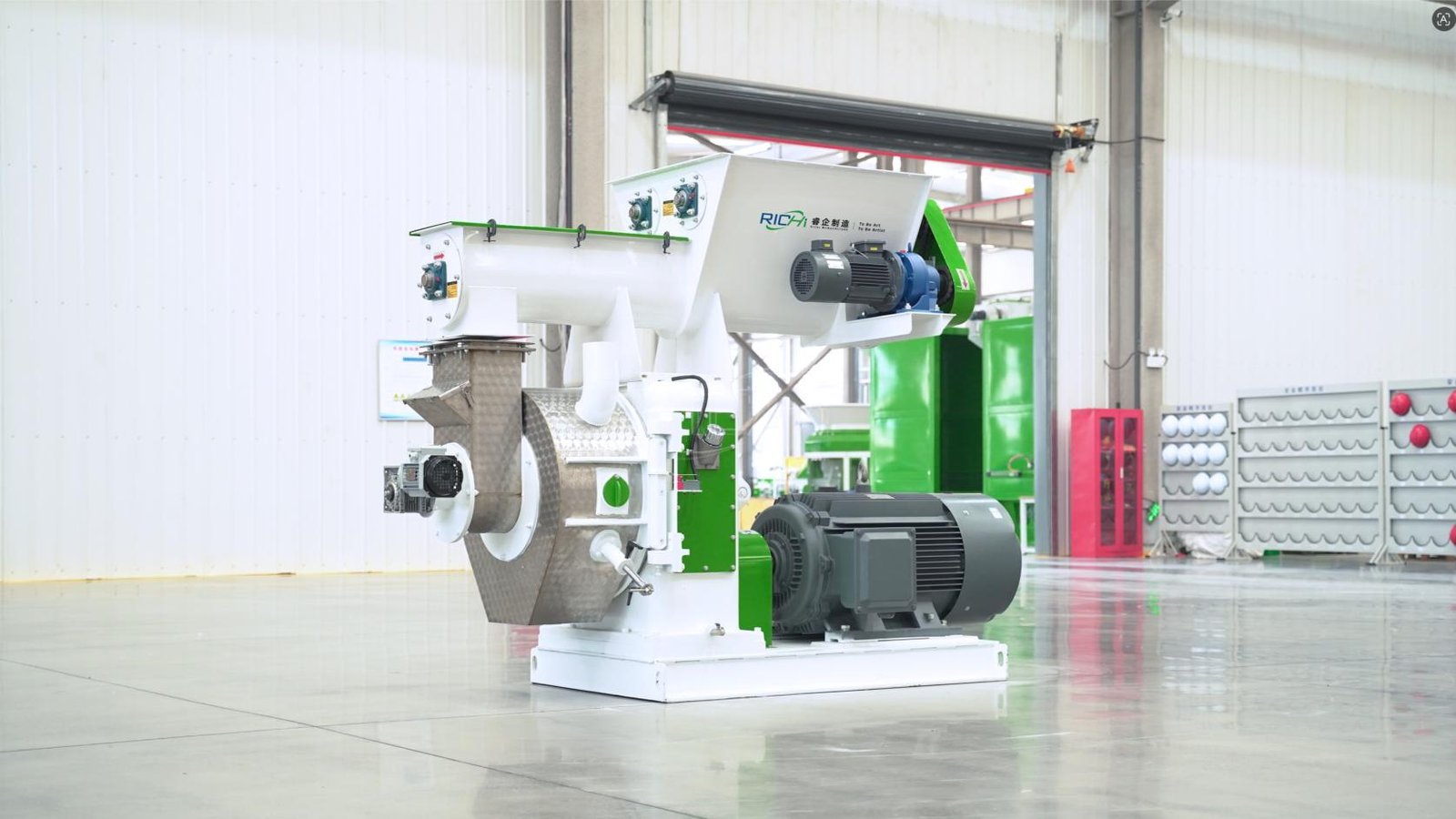
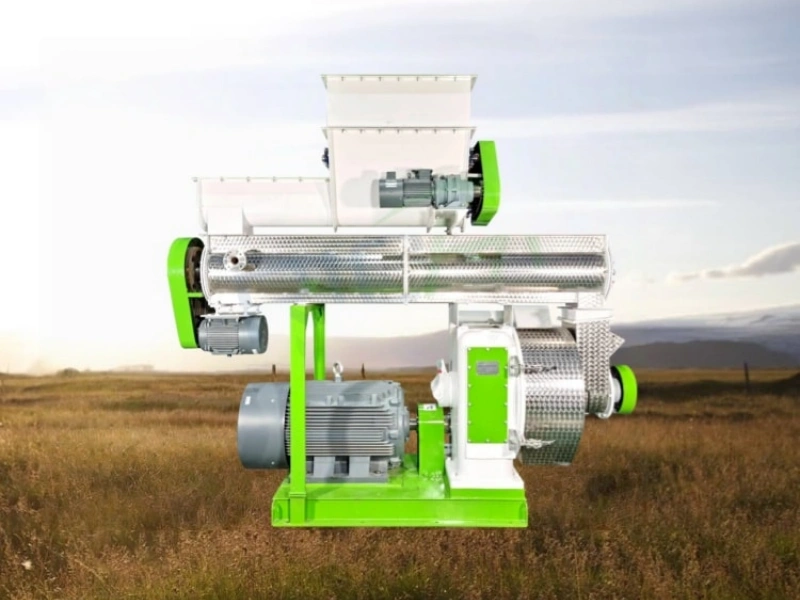
For buyers comparing project solutions, the value of an industrial wood pellet machine should also be judged by how well it integrates into the complete process. Feed consistency, upstream particle preparation, moisture control, discharge conveying, cooling, screening, and dust extraction affect the pellet mill’s real operating stability. Installation drawings should therefore show the machine as part of a production system rather than as an isolated item.
Commission the Line in Controlled Stages
Commissioning should be treated as an engineering test sequence, not the first day of commercial production. The first stage is normally a mechanical and electrical inspection: fasteners, lubrication points, guards, rotation direction, sensors, emergency stops, interlocks, and communication between control devices. Conveyors and auxiliary machines should be tested individually before the complete line is operated as one system.
The next stage is no-load and low-load operation. This allows the team to confirm material direction, gate logic, feeder response, dust collection, vibration, unusual noise, and motor behavior without immediately pushing the plant to maximum throughput. Once these checks are stable, the team can introduce production material and progressively raise the load while monitoring pellet quality, amperage, feeder stability, temperature, moisture, fines return, cooling performance, and downstream flow.
Raw material should be representative of normal factory supply. A commissioning test based only on unusually clean, dry, uniform sawdust can create a false impression if normal production will include mixed particle sizes or seasonal moisture variation. The acceptance plan should identify the intended raw-material envelope and define what conditions require a different screen, dryer setting, feeder adjustment, or other process change.
Use a Ramp-Up Matrix Instead of Chasing Maximum Output on Day One
Stable production is usually achieved by controlling variables in sequence. Increasing throughput too quickly can make it difficult to diagnose whether a problem comes from raw-material moisture, particle size, feeder setting, die condition, cooling, conveying, or operator practice. A staged ramp-up gives the team a baseline and makes changes traceable.
| Ramp-up phase | Primary objective | Typical decision |
|---|---|---|
| Initial loaded run | Confirm continuous material flow | Correct blockages, feeder instability, or control logic |
| Quality stabilization | Achieve repeatable pellet formation and cooling | Adjust preparation, moisture, die-related settings, or cooling |
| Throughput increase | Raise output without losing stability | Identify the true bottleneck before increasing load further |
| Shift handover | Repeat results with normal operators | Finalize operating procedures and inspection routines |
The recommendation should change when the process data changes. If throughput falls whenever incoming moisture rises, the priority may be drying control rather than a larger pellet mill. If pelleting is stable but the cooler or packing section backs up, increasing pelletizer load will only move the bottleneck downstream. If frequent stoppages occur during product changeover, storage and conveying logic may deserve more attention than nominal machine capacity. This is why ramp-up data is more useful than a single peak-output figure.
Train Operators Around Decisions, Not Only Button Functions
Operator training should explain what to watch, what normal operation looks like, and what action to take when conditions move outside the expected range. A control-panel tour is not enough. Operators need practical routines for startup, shutdown, feeder adjustment, lubrication, cleaning, inspection, blockage response, die and roller care, dust housekeeping, and communication between upstream and downstream sections.
Training should also cover cause and effect. For example, an operator who sees rising motor load should know whether to check feeder rate, material condition, die condition, or downstream resistance before simply reducing production. A shift team that understands the process can make small corrections early and avoid turning a minor deviation into a long shutdown.
- Define a standard startup and shutdown sequence.
- Record key operating observations by shift rather than relying on memory.
- Set inspection intervals for wear parts and lubrication points.
- Keep critical spare and consumable parts identified before commercial production.
- Train more than one operator so plant knowledge is not concentrated in a single person.
Define Project Acceptance Around Repeatability
A successful commissioning run is important, but repeatability is more important. Project acceptance should consider whether the line can produce the agreed product under the defined raw-material conditions, whether the systems can operate continuously without abnormal intervention, whether safety and interlock functions work, and whether the buyer’s operators can start, run, stop, inspect, and recover the line correctly.
The acceptance record should also capture unresolved items. Minor adjustments, spare-part recommendations, software settings, labeling, guards, housekeeping improvements, or operator questions should be closed through a punch list with clear responsibility. This prevents the common situation in which production begins while small unfinished items accumulate and later become difficult to trace.
Choose a Supplier That Can Support the Implementation Phase
For an industrial buyer, the supplier’s role should extend beyond delivering a pellet mill. The project needs process coordination, equipment integration, installation information, commissioning support, operator training, spare-parts planning, and a practical path from first startup to stable production. This is particularly important when a factory includes drying, crushing, storage, multiple conveying sections, automatic control, or future expansion provisions.
RICHI Machinery focuses on industrial pellet equipment, complete production lines, and turnkey project solutions. For a wood pellet project, the most useful early discussion is not only machine price but the buyer’s raw-material condition, required finished product, site constraints, utility availability, automation preference, and installation responsibilities. Those inputs allow the process and layout to be developed around the real operating environment instead of forcing the site to adapt to a generic equipment package.
Final Procurement Takeaway
A commercial wood pellet project becomes lower risk when implementation planning starts before shipment. Confirm the site, lock utilities to the final process, sequence installation, commission in stages, train operators around real operating decisions, and use ramp-up data to identify bottlenecks before chasing maximum output. These steps help turn a collection of machines into a production system that the buyer’s team can actually operate, maintain, and improve.