





Bamboo grows fast. Some species add a meter or more in a single season, and a mature clump can be harvested repeatedly for decades without replanting. On paper, that makes it one of the most attractive biomass crops available. It does not compete with food production the way maize or soy does. It grows on marginal land. It regenerates after cutting. And it stores carbon while it grows.
Yet bamboo has not become a mainstream pellet feedstock the way wood and agricultural residues have. The reasons are practical rather than theoretical. Bamboo is hard, fibrous, and abrasive. It resists grinding. It wears dies quickly. It dries unevenly depending on species, age, and harvest timing. And the supply chain, from clump to mill, is still immature in most regions.
That does not mean bamboo pelleting is a dead end. It means the projects that succeed tend to be planned differently from wood or straw projects. They pay more attention to material preparation, die selection, moisture control, and long-term supply. A bamboo pellet machine can process the material, but only if the material arriving at the machine is consistent and prepared correctly.
This article looks at bamboo as a biomass feedstock from a practical standpoint. It covers why bamboo behaves differently from wood, what equipment is needed, how the supply chain works, and what project developers should consider before committing to a bamboo pelleting operation.
Why Bamboo Is Different From Wood
Bamboo looks like wood and is often used like wood, but it is structurally different in ways that matter for pelleting.
The first difference is density. Bamboo is denser than many softwoods and has a higher silica content, especially in the outer layer. That silica is abrasive. It wears dies, rollers, and hammers faster than clean wood. A die that lasts for months on pine may wear out in weeks on bamboo.
The second difference is fiber structure. Bamboo fibers are long and tough. They resist grinding and require more energy to reduce to a consistent particle size. Fine grinding improves pellet quality but increases cost and wear.
The third difference is moisture behavior. Bamboo absorbs and releases moisture differently from wood. Fresh bamboo can be very wet, and it dries unevenly depending on culm age and thickness. Managing moisture during storage and processing is more complicated than with wood chips.
The fourth difference is ash content. Bamboo contains more ash than most wood species. Ash affects combustion and disposal, which matters for some end markets more than others.
The fifth difference is species variation. There are hundreds of bamboo species, and they differ in density, fiber content, and suitability for pelleting. A project that works with one species may not perform the same way with another.
These differences do not make bamboo unsuitable. They make it demanding. Projects that treat bamboo like wood tend to struggle. Projects that treat it as its own material tend to do better.
Where Bamboo Grows and Why That Matters
Bamboo grows widely across Asia, Africa, and Latin America. China, India, Vietnam, and several African countries have significant bamboo resources. Some regions have natural forests. Others have plantations established for timber, crafts, or erosion control.
The location of the resource shapes the economics of pelleting. Bamboo that grows close to a processing site and a market is more valuable than bamboo that has to travel long distances. Bamboo that grows on marginal land with no alternative use is cheaper than bamboo that competes with timber or food production.
Harvesting is the first practical issue. Bamboo is cut by hand in many regions, which is labor-intensive. Mechanized harvesting is possible but requires investment. The cost of harvesting directly affects the cost of feedstock.
Transport is the second issue. Fresh bamboo is bulky and heavy. It has to be chipped or shredded before transport to reduce volume, or processed close to the harvest site. Transport distance is a major cost driver.
Seasonality is the third issue. Bamboo can be harvested year-round in some climates, which is an advantage over seasonal residues. But harvest timing affects moisture content and material quality. Wet-season bamboo is harder to dry than dry-season bamboo.
Preparing Bamboo for Pelleting
Bamboo does not go straight from the field to the pellet mill. It goes through several preparation steps, and each one affects the final product.
Harvesting and chipping come first. Bamboo culms are cut, gathered, and chipped or shredded into smaller pieces. Chipping reduces volume and makes transport more efficient.
Drying follows. Fresh bamboo can contain 40 to 60 percent moisture. Pelleting works best at 12 to 15 percent. That means significant drying is required, especially for fresh material. Rotary dryers are common in larger operations. Solar drying and air drying work in some climates but are slower and less predictable.
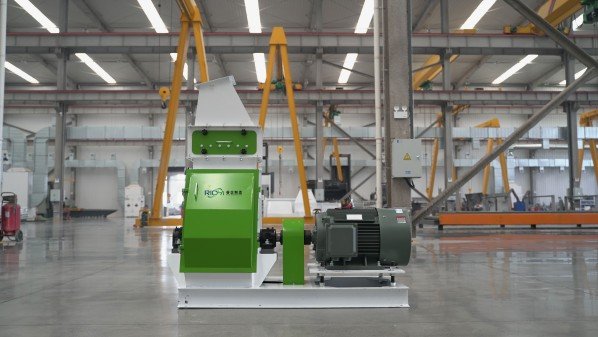
Grinding comes next. Bamboo chips are ground to a consistent particle size using a hammer mill. Because bamboo is tough and abrasive, grinding consumes more energy and wears hammers faster than wood. Screen size and hammer configuration affect the final particle size and the cost of grinding.
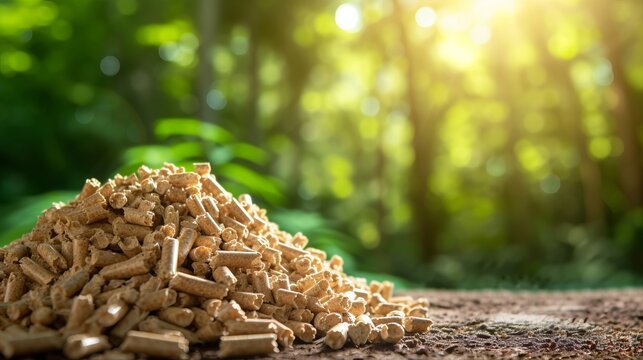
Pelleting is the core step. The material is pressed through a die to form dense pellets. Because bamboo is abrasive, dies must be selected carefully. Compression ratio, die material, and surface treatment all affect performance and die life.
Cooling follows. Fresh pellets are hot and moist. They must be cooled before storage or bagging. A counterflow cooler is standard in commercial lines.
Screening and bagging complete the process. Fines are separated and recycled. Finished pellets are bagged or loaded in bulk.
Each of these steps has to be sized to match the others. A line with a large mill but insufficient drying capacity will run below capacity. A line with excess grinding capacity but a small mill will waste energy.
Equipment Selection for Bamboo
Bamboo places specific demands on equipment, and general-purpose machines may not perform well without adjustment.
The pellet mill itself has to handle abrasive material. Ring die mills are usually preferred for biomass because they handle high volumes and produce more uniform pellets. For bamboo, die material and compression ratio matter more than usual.

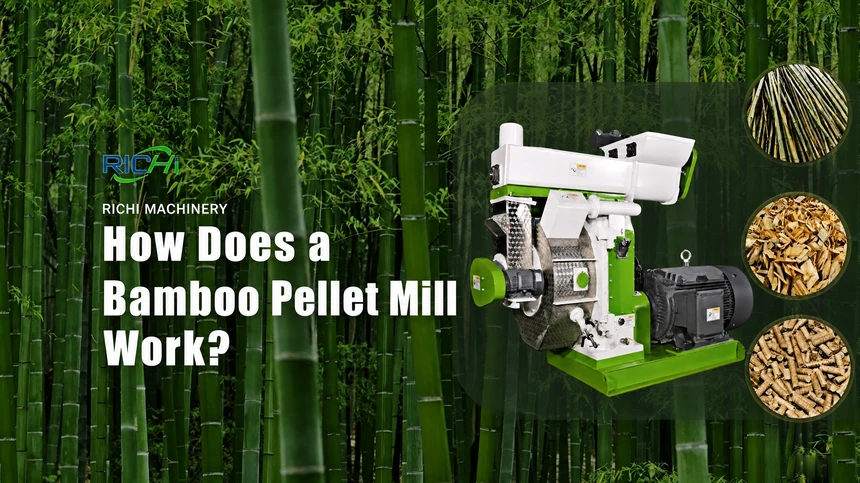
A bamboo pellet machine for making biomass fuel pellets is typically specified with wear-resistant dies, robust drives, and cooling systems capable of handling the heat generated when pressing hard, fibrous material. Buyers should confirm that the machine is rated for bamboo specifically, not just for biomass in general.
Grinding equipment also matters. Hammer mills used for bamboo need wear-resistant hammers and screens. The grinding step is often the bottleneck in bamboo lines, because bamboo resists reduction more than wood or straw.
Drying equipment has to be sized for the actual moisture content of the incoming material. Bamboo moisture varies widely, so drying capacity should be based on the wettest material the line is likely to receive, not the average.
Material handling equipment has to be designed for bamboo chips, which flow differently from wood chips or grain. Bridging, clogging, and wear are common issues.
For projects that need a complete line rather than a single machine, working with a supplier who understands bamboo specifically is important. Richi Pellet Machine is one supplier that produces pellet equipment for biomass applications and works with project developers on equipment selection. Reviewing the supplier’s approach to turnkey projects is a practical step before committing, and more detail is available if you browse around this site to see how these projects are structured.
Moisture: The Make-or-Break Variable
Moisture is the single most important variable in bamboo pelleting. Get it right, and the mill runs smoothly. Get it wrong, and nothing else matters.
Fresh bamboo is wet. Depending on species, age, and season, it can contain 40 to 60 percent moisture. That is far too wet for pelleting. Drying to 12 to 15 percent is necessary, and the energy required to remove that much water is significant.
Drying cost depends on the starting moisture, the target moisture, the dryer efficiency, and the cost of fuel. In regions with cheap biomass fuel, drying is more affordable. In regions with expensive fuel, drying can dominate operating cost.
Storage moisture matters too. Bamboo that is stored wet will mold. Mold reduces fuel value and can create health hazards for workers. Covered storage and proper drainage are essential.
Inconsistent moisture is another problem. Bamboo from different parts of a clump, or harvested at different times, may have different moisture content. Blending material before drying helps, but it requires planning.
The Supply Chain Challenge
Bamboo pelleting projects often fail not because of equipment but because of supply chain problems. Bamboo has to be harvested, chipped, transported, stored, dried, and processed. Each step adds cost and risk.
Harvesting is labor-intensive in most regions. Mechanization is possible but requires capital and suitable terrain. Steep slopes and dense clumps make mechanized harvesting difficult.
Transport is expensive for fresh bamboo because of its bulk and weight. Chipping at the harvest site reduces volume but requires equipment in the field. Processing close to the resource is usually more economical than transporting raw bamboo long distances.
Storage is a challenge because bamboo degrades if stored wet. Covered storage adds capital cost. Open storage risks quality loss.
Supplier reliability is a long-term issue. A pelleting plant needs a consistent supply of bamboo for years. That requires long-term relationships with growers or land managers, not spot purchases.
Markets for Bamboo Pellets
Bamboo pellets can be sold into several markets, each with different requirements.
Industrial boilers are one. Bamboo pellets can be co-fired with coal or used in dedicated biomass boilers. Industrial buyers usually purchase large volumes and pay less per ton than residential buyers.
Residential heating is another. Bamboo pellets can be used in pellet stoves and boilers, but they must meet quality standards for ash, moisture, and durability. Higher ash content compared to wood pellets can be a disadvantage in some stoves.
Export is a third option. Some regions export biomass pellets to Europe or Asia. Export requires meeting quality standards and competing on price with established suppliers.
On-site use is a fourth option. A bamboo processing facility can use its own pellets for heat or power, avoiding transport and market risk.
Environmental Considerations
Bamboo has a strong environmental story, but it is not without complications.
On the positive side, bamboo grows quickly, regenerates after harvest, and can be grown on marginal land. It stores carbon while growing and can reduce pressure on natural forests if managed sustainably.
On the negative side, bamboo monocultures can reduce biodiversity. Removing too much biomass from a site can deplete soil nutrients. And the energy used in drying and pelleting reduces the net carbon benefit if it comes from fossil fuels.
A responsible project accounts for these factors. It manages harvest rates, protects soil, and uses renewable energy where possible.
Common Mistakes in Bamboo Pelleting
Several mistakes appear repeatedly in bamboo projects.
Treating bamboo like wood is the most common. Bamboo is denser, more abrasive, and harder to grind. Equipment and dies designed for wood may not perform well.
Underestimating drying is another. Fresh bamboo contains a lot of water. Drying capacity has to match the actual moisture content, not an optimistic estimate.
Ignoring die wear is a third. Bamboo wears dies quickly. Budgets that assume wood-level die life are unrealistic.
Underestimating supply chain complexity is a fourth. Harvesting, chipping, transport, and storage all add cost and risk. Projects that focus only on the mill often run into supply problems.
Skipping market research is a fifth. Producing pellets is not the same as selling them. Projects that do not understand their market end up with inventory they cannot move.
What a Realistic Project Looks Like
A realistic bamboo pelleting project starts with the resource, not the machine. It confirms that enough bamboo can be harvested sustainably at acceptable cost. It plans storage and drying for real-world moisture conditions. It selects a mill and die matched to bamboo. It budgets for wear parts and maintenance. It identifies a market before production begins.
The equipment is important, but it is not the starting point. The starting point is the material and the system that delivers it to the mill.
Looking Ahead
Interest in bamboo as a biomass feedstock is growing. It offers a renewable, fast-growing, non-food source of energy that can be produced in many regions. Pelleting turns it into a dense, transportable product that fits existing biomass supply chains.
The technology is established. The equipment is available. What separates successful projects from unsuccessful ones is planning. Resource supply, moisture control, die selection, maintenance, and market access all have to be addressed before the first pellet is made.
For project developers willing to do that work, bamboo pelleting can be a practical addition to a biomass portfolio. For those who skip the planning, the machine will sit idle while the bamboo keeps growing.