






For a poultry farm producing its own feed, capacity is one of the most practical questions to answer before purchasing equipment. A system that produces too little feed can create delays, while an oversized plant may increase investment and remain idle for long periods. For many small and medium-sized operations, a production rate of around one ton per hour can provide a practical starting point.
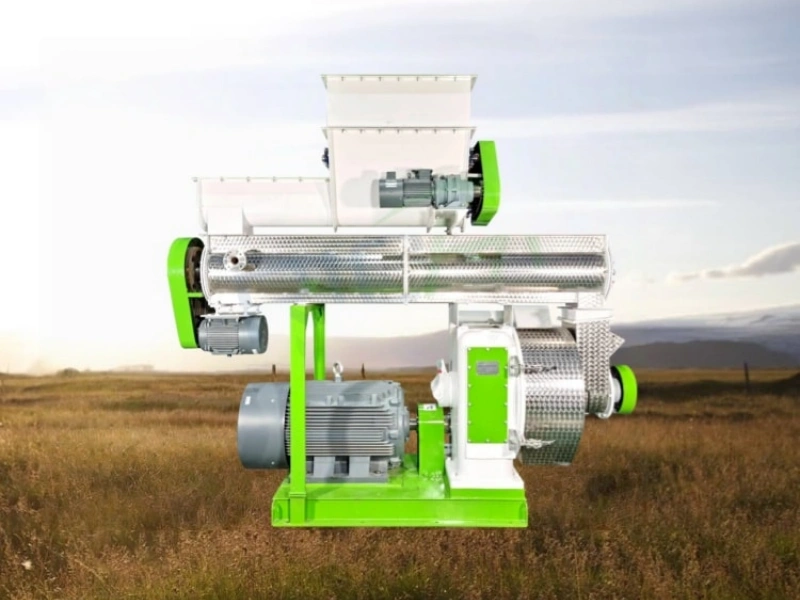
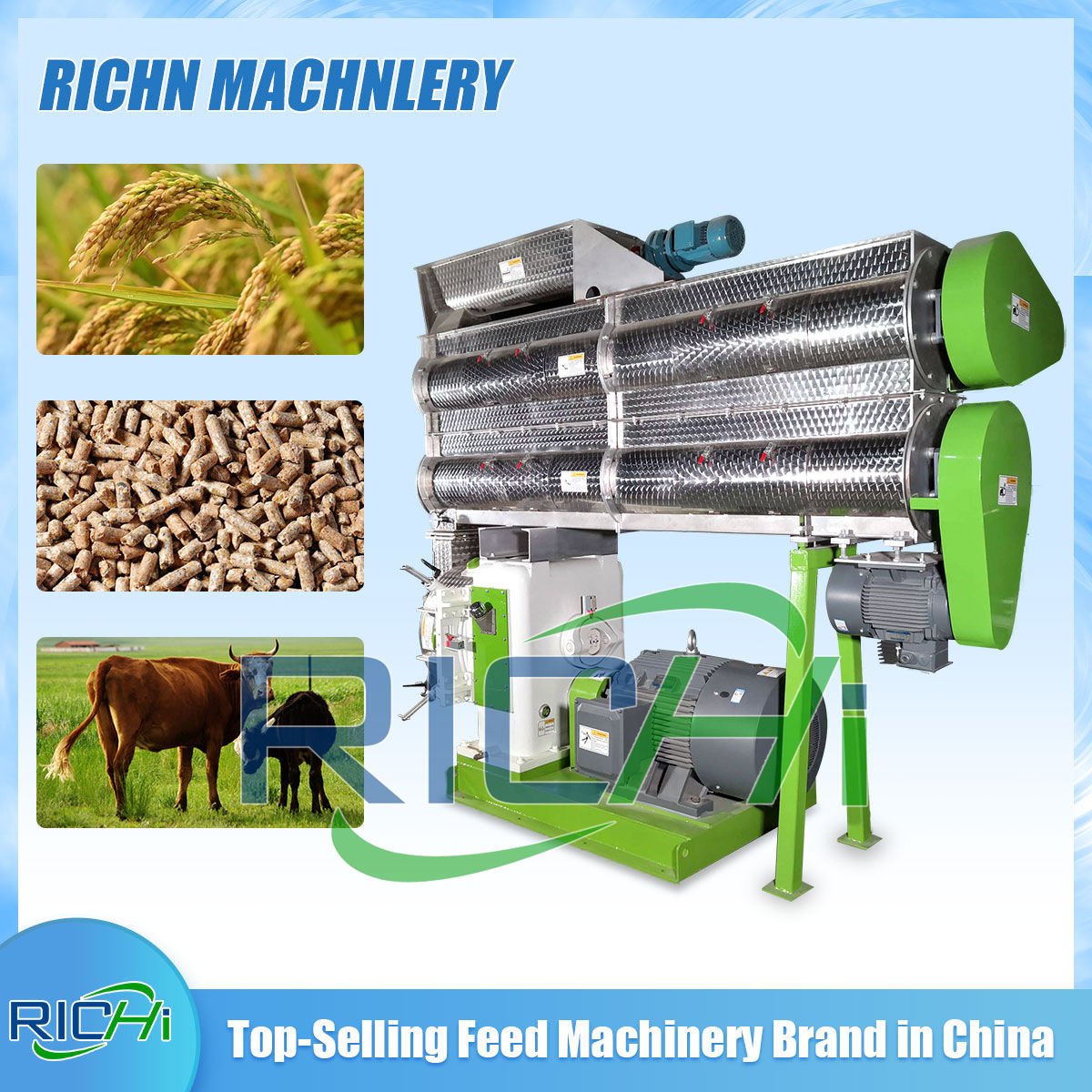
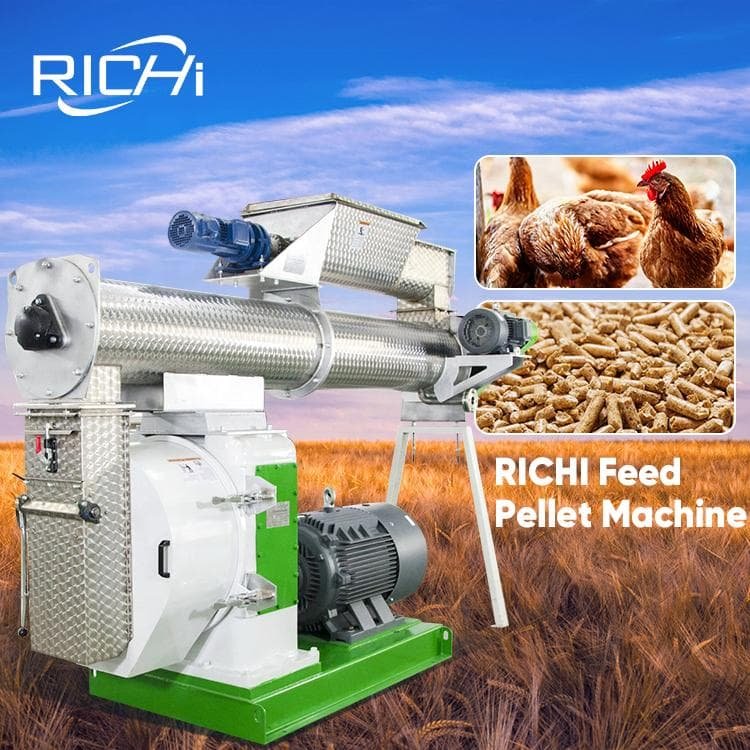
A 1 ton per hour chicken feed pellet machine can be suitable when the farm has a steady but moderate feed requirement and wants to manufacture feed on site rather than depend entirely on commercial suppliers.
How Much Feed Does the Farm Need?
Capacity should begin with daily consumption rather than the machine catalog.
For example, a farm requiring four to six tons of feed per day could potentially complete its daily production within several operating hours. However, production planning should include time for raw material preparation, machine adjustment, cleaning, and maintenance.
The actual working schedule also matters. Some farms prefer to produce feed in one concentrated period each day, while others may operate the equipment according to feeding demand.
A small capacity system can therefore be surprisingly useful when the operating schedule is well organized.
What Goes Into Poultry Feed?
Common poultry feed ingredients include corn, soybean meal, wheat, wheat bran, rice bran, fish meal, vitamins, minerals, and other formulated components.
Before pelletizing, ingredients normally require appropriate preparation. Grain materials may be ground to improve mixing, while other ingredients need to be measured accurately according to the formula.
The moisture condition of the mixture can also influence pellet formation. Proper preparation helps maintain stable material flow and supports more consistent pellet quality.
Why Is Grinding Important?
The grinding section prepares raw materials for mixing and pelletizing. A hammer mill can reduce suitable grains and other materials to a more uniform particle size.
Particle size affects how well ingredients mix together and can also influence the finished pellet structure.
For a one-ton-per-hour system, the grinding capacity should be coordinated with the pelletizing section. If the crusher cannot supply enough prepared material, the pellet machine may not achieve its expected operating rate.
This illustrates why capacity should be evaluated across the complete process.
Can One System Support Other Livestock?
Some farms raise poultry alongside other animals and may want greater flexibility from their feed-processing equipment.
For example, rabbit feed pellet machine capacity may be considered when a producer also needs to process rabbit feed. Although rabbit and poultry formulas are different, both applications involve ingredient preparation, mixing, pelletizing, cooling, and screening.
The final formulation should always be adjusted according to the nutritional requirements of each animal rather than treating different feed products as identical.
The Mixing Stage
Mixing is an important step because poultry feed can contain several ingredients in relatively small proportions.
A suitable mixer distributes grains, protein sources, minerals, and other components throughout the batch. Inconsistent mixing can lead to variations between portions of finished feed.
For farms producing several formulas, an organized batching and mixing process can make changes between recipes easier to manage.
Pelletizing and Size Selection
After mixing, the prepared feed enters the pelletizing section. Mechanical pressure compresses the material through die holes, producing cylindrical pellets.
The required pellet diameter depends on the feeding stage and farm’s feeding method. Different die specifications can be selected according to the desired product.
Pellet length can also be adjusted through the cutting arrangement. These details should be discussed before equipment configuration is finalized.
Cooling and Screening
Fresh pellets normally require cooling before storage. A cooler reduces the temperature of the product and helps prepare it for subsequent handling.
Screening can remove excessive fines and irregular particles. Depending on the production design, fines can be returned to the process.
For a farm producing several tons per day, these steps can make daily handling more convenient and improve the consistency of the finished product.
When Is One Ton per Hour Practical?
A one-ton-per-hour configuration is particularly useful when the farm’s feed requirement is moderate and production does not need to run continuously.
It can also provide a reasonable balance for producers who want to move gradually from purchasing finished feed toward on-site production.
However, the best capacity depends on actual feed demand, raw material supply, operating hours, and future growth.
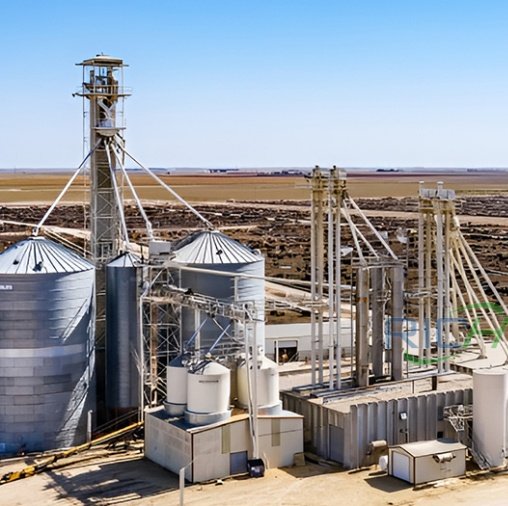
A coordinated pellet maker machine system can integrate grinding, mixing, pelletizing, cooling, screening, and conveying into one workflow.
Before purchasing, farmers should prepare information about daily feed consumption, ingredients, pellet diameter, available space, labor, and future flock expansion.
For additional planning references, producers can click to find out more about feed-processing configurations and equipment selection principles.
The key is to choose a system based on real production requirements rather than a capacity number alone. When the equipment, raw materials, and operating schedule are properly matched, a one-ton-per-hour system can provide a practical foundation for on-farm poultry feed production.
Related post:https://pelletizerequipment.com/pig-feed-pellet-machine/