


For many farms, forage production follows a seasonal cycle. During harvest periods, large quantities of hay may become available within a relatively short time. Once the season ends, however, the same material can become harder to obtain, more expensive to transport, and more difficult to manage.
This creates a practical question for farmers and feed businesses:
How can seasonal forage be converted into a product that is easier to store, transport, and use throughout the year?
Pelletizing is one possible answer.
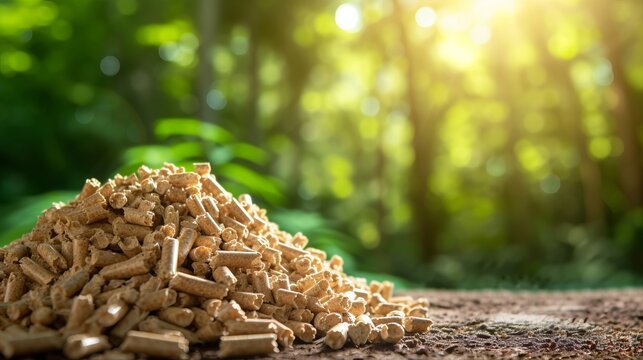
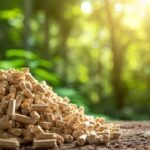
By compressing prepared hay and other suitable fibrous materials into dense pellets, producers can reduce bulk, improve handling, and create a more uniform product. Yet the real value of pellet production comes from designing the entire process around the characteristics of the raw material.
From harvesting and storage to grinding, moisture management, pelletizing, cooling, and packaging, every stage can influence the final result.
The Seasonal Problem With Loose Hay
Hay is valuable because it provides fiber and other nutrients for livestock, but loose forage creates several logistical challenges.
A large amount of physical space is required to store it. Transportation can also be inefficient because trucks may reach their volume limit before reaching their weight limit.
The situation becomes more complicated when a farm wants to automate feeding.
Long fibers do not always flow smoothly through hoppers and conveyors. They can bridge, tangle, or create irregular feeding conditions.
Pellets solve some of these problems by creating a denser and more standardized material.
Instead of handling irregular bundles or loose fibers, operators can move a product with relatively consistent dimensions through mechanical systems.
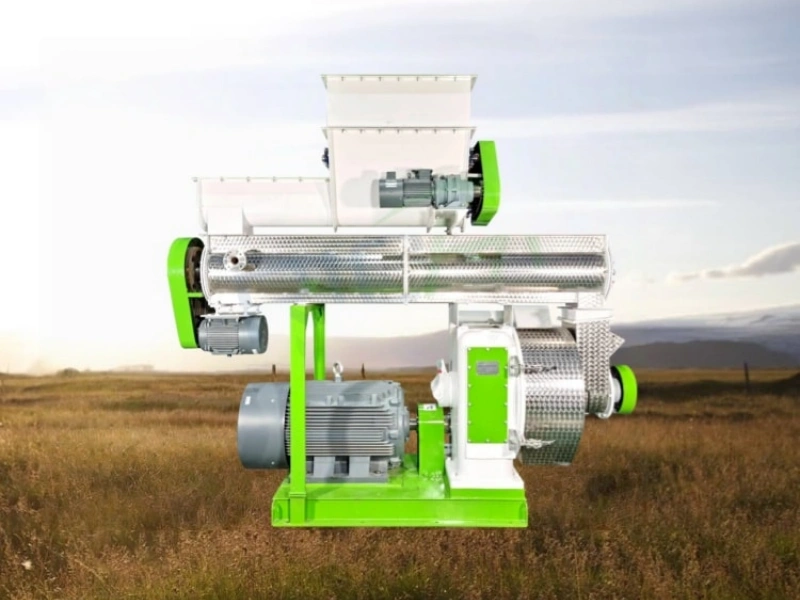
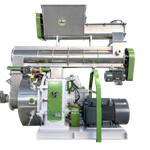
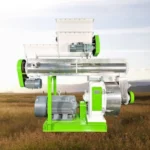
This is one reason a hay pellet mill can be useful beyond simple pellet formation: it can become part of a larger material-management strategy.
First Step: Understand the Forage
Not all hay behaves in the same way.
Alfalfa, grass hay, clover, mixed forage, and other feedstocks may differ in:
- Fiber length
- Moisture
- Leaf content
- Stem thickness
- Bulk density
- Natural binding properties
- Mineral content
- Storage condition
The maturity of the plant at harvest can also affect the material.
A young forage with a high leaf proportion may behave differently from mature hay with more coarse stems.
Therefore, a reliable pellet production project begins with raw-material evaluation.
Instead of asking only how many tons per hour a machine can produce, buyers should first determine what type of material they will actually feed into it.
Why Moisture Can Change the Entire Process
Moisture management is one of the most important considerations in forage pellet production.
If hay contains too much moisture, grinding and pelletizing can become difficult. Wet material may also create storage concerns.
On the other hand, excessively dry material may generate more dust and may not compact as effectively under some operating conditions.
The practical target depends on the raw material and equipment configuration.
A good production line should therefore allow operators to monitor and manage moisture rather than relying entirely on assumptions.
For operations that receive material at different moisture levels throughout the year, this flexibility can be especially valuable.
Does Every Hay Pellet Line Need a Dryer?
No.
Whether drying is necessary depends mainly on the condition of the incoming material.
Well-dried hay may be ready for grinding and pelletizing without industrial drying. Material harvested or stored under wetter conditions may require additional moisture reduction.
Installing a dryer where it is unnecessary can increase:
- Fuel consumption
- Equipment investment
- Maintenance
- Floor-space requirements
- Operating complexity
The correct approach is to test the material first.
A dryer should be included when it solves an actual moisture problem, not simply because it is common in other pellet plants.
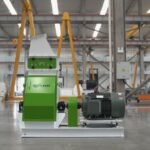
Why Grinding Matters
Hay contains long fibers that can interfere with continuous feeding and compression.
Grinding helps create a more uniform material and makes it easier to control the pelletizing process.
However, the objective should not be to grind hay into an extremely fine powder.
Excessive grinding increases energy use and can create additional dust. The better strategy is to produce a particle structure appropriate for the intended pellet diameter and equipment.
A practical processing sequence may therefore be:
Hay receiving → coarse preparation → grinding → moisture adjustment → pelletizing
The exact arrangement depends on the material.
Pellet Size Should Match the Application
Pellet diameter is not simply a technical specification.
It affects how the finished product is handled and consumed.
For livestock feed, the preferred diameter may vary according to animal species, age, feeding system, and ration design. A pellet intended for a mature animal may not be suitable for younger animals.
Before ordering a die, producers should determine the final application.
Questions worth answering include:
- Which animals will consume the product?
- Will the pellets be fed directly?
- Will they be mixed into another ration?
- How will the pellets be transported?
- Will the product be packaged or supplied in bulk?
These practical details can influence the equipment configuration.
What Production Capacity Makes Sense?
Production capacity should be connected to raw-material availability.
A farm with abundant seasonal hay may consider a higher-capacity system, while a smaller operation may benefit from a compact machine that can process material according to its own schedule.
For example, a 0.5-2 T/H bagasse pellet machine for sale represents a capacity range that may suit smaller residue-processing operations, but the same capacity principle can be applied when evaluating forage projects.
The important point is not the exact machine rating. It is the relationship between:
Raw material supply + operating hours + annual production target + market demand
A machine that is too large may have poor utilization. A machine that is too small may create unnecessary production bottlenecks.
Should Farmers Pelletize All Their Hay?
Not necessarily.
Pelletizing can be particularly useful when a producer has a clear reason to densify the material.
Potential benefits include:
- Easier storage
- More efficient transportation
- Consistent feeding
- Automated material handling
- Better space utilization
- Easier packaging
- Potentially improved distribution
But pelletizing also requires investment and operating energy.
Therefore, farmers should compare the cost of pellet production with the cost of their current forage handling method.
If hay is already stored efficiently, consumed locally, and transported only short distances, the economic benefit may be limited.
If the operation faces high transportation costs, limited warehouse space, or a need for automated feeding, pelletizing may become considerably more attractive.
From Individual Farm to Commercial Feed Producer
The requirements change significantly as production scales up.
A small farm may use a single pellet mill with manual feeding and packaging.
A commercial feed manufacturer may need:
Raw material receiving → cleaning → grinding → batching → mixing → conditioning → pelletizing → cooling → screening → packaging
The larger system provides greater automation and consistency.
A commercial producer may also need storage silos, dust collection, automatic weighing, and centralized control.
This is why equipment should be selected according to the business model rather than simply according to raw material type.
Can Straw Be Added to the Same Production Strategy?
In some cases, yes.
Agricultural businesses often have access to more than one residue.
A farm may produce hay during one season and wheat straw after grain harvesting. A cooperative may collect rice straw from several surrounding farms. A feed processor may have access to both forage and agricultural by-products.
This creates opportunities for flexible production.
A 3-4 T/H rice straw pellet machine for sale may be suitable for a rice-growing region where straw supply is concentrated and consistent.
However, switching between materials can require changes in grinding, feeding, moisture management, and pelletizing parameters.
A flexible plant should therefore be designed with material variation in mind from the beginning.
The Importance of Feeding Consistency
One often-overlooked factor in pellet production is the feeder.
Fibrous materials do not always flow like grain or powder.
Long fibers can form bridges or feed irregularly. If the pellet mill receives inconsistent quantities of material, the load on the main motor can fluctuate.
This can affect:
- Production rate
- Pellet quality
- Energy consumption
- Machine stability
- Wear on components
A properly designed feeding system can therefore contribute significantly to stable operation.
For commercial plants, automated feeding and variable-speed control can help maintain a more consistent material flow.
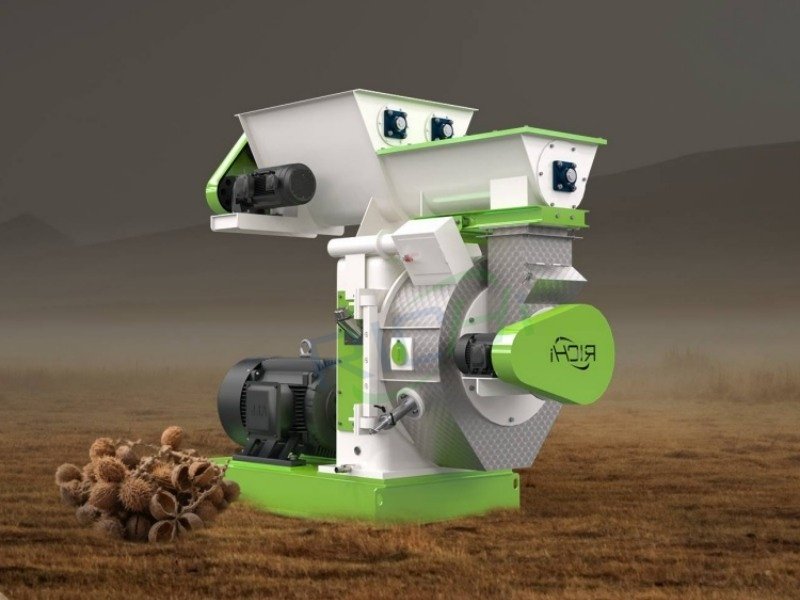
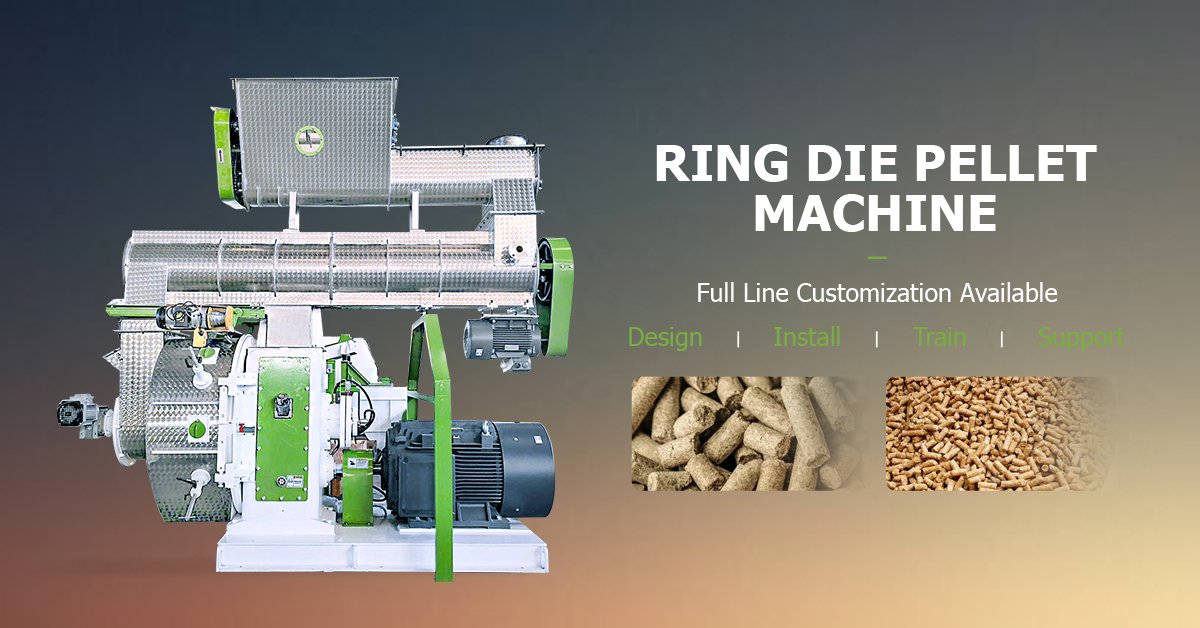
What Happens Inside the Pellet Mill?
During pelletizing, prepared material enters the compression chamber.
The rollers press the material through openings in the die. Friction and pressure create heat and force the material into compact cylindrical shapes.
The emerging pellet strand is cut to the required length.
Several factors influence the process:
Die hole diameter: affects pellet diameter.
Compression ratio: influences the degree of material compaction.
Roller adjustment: affects compression and operating stability.
Feeding rate: affects production capacity and motor load.
Moisture: affects material behavior during compression.
This illustrates why pellet quality cannot be attributed to a single specification.
Why Cooling Is Essential
Fresh pellets can be hot when they leave the pellet mill.
They may also contain moisture that needs to stabilize before storage.
A cooler reduces pellet temperature and helps create a more stable final product.
For larger plants, cooling capacity should be matched to pellet mill output.
If the pelletizer produces material faster than the cooler can process it, downstream accumulation can interrupt production.
This is a common example of why complete process design matters.
Screening: Small Step, Big Difference
After cooling, pellets can pass through a screening system.
The screen removes fines and broken pellets, creating a more uniform final product.
For commercial applications, this can improve:
- Product appearance
- Packaging consistency
- Handling quality
- Customer acceptance
Fines may sometimes be returned to the production process, depending on the formulation and system design.
This can help reduce material losses.
Packaging and Storage
The finished pellet is only useful if it can be stored and delivered effectively.
For small farms, bags may be sufficient.
Commercial facilities may choose:
- Small bags
- Large bags
- Bulk loading
- Storage silos
- Automatic weighing and packing
Storage conditions should protect pellets from rain and excessive humidity.
Warehouse design should also consider ventilation, loading access, forklift movement, and fire-safety requirements appropriate to the specific facility.
How Can a Farm Improve Pellet Production Economics?
The economics of a pellet project depend on several variables.
A simplified calculation should include:
Raw material → preparation → energy → labor → maintenance → packaging → transportation
The value side may include:
Feed value + logistics savings + storage savings + potential product revenue
If the raw material is already available on-site, the economics can be very different from a project that purchases and transports residue from distant farms.
This is why local feedstock availability is often one of the strongest factors in project feasibility.
Is a Larger Machine Always Better?
No.
A larger machine can produce more pellets per hour, but only if enough suitable raw material is available.
Imagine two businesses.
Business A has abundant local residue and operates multiple shifts.
Business B has limited seasonal material and operates only several hours per day.
Business A may benefit from a larger production line.
Business B could achieve better utilization and lower investment risk with a smaller system.
This is why capacity should be selected according to the business’s actual operating pattern.
(Related Post: https://biomasspelletizer.com/corn-stalk-pellet-machine/)
Building a Flexible Production Strategy
The most adaptable agricultural pellet plants are not necessarily those with the largest machines.
They are often the plants that can respond to changes in raw material availability.
A flexible design may allow:
- Different raw materials
- Multiple pellet diameters
- Adjustable feeding rates
- Moisture management
- Different operating schedules
- Future capacity expansion
This can make the facility more resilient when agricultural conditions change.
What Should Be Included in a Commercial System?
A commercial project may require several interconnected components:
Raw Material Section
Receiving equipment, conveyors, magnets, storage, and pre-cleaning.
Preparation Section
Grinding, screening, and moisture adjustment.
Pelletizing Section
Feeders, pellet mills, dies, and related control systems.
Post-Pelletizing Section
Coolers, screens, conveyors, and dust collection.
Finished Product Section
Storage bins, weighing, packaging, and dispatch systems.
Each section should be sized according to the production target.
A high-capacity pellet mill connected to an undersized cooler or packaging system will not create a high-capacity plant.
Where Does Technology Create the Most Value?
Technology creates value when it solves a specific operational problem.
For example:
If storage space is limited, densification can help.
If transportation costs are high, pelletizing can improve bulk density.
If manual feeding is inefficient, automation can help.
If raw material moisture fluctuates, drying or conditioning may stabilize production.
If finished pellets contain too many fines, screening and cooling may improve product consistency.
The best equipment investment is therefore not necessarily the most sophisticated one. It is the equipment that addresses the most important bottleneck.
A Practical Approach to Equipment Selection
Before contacting a supplier, buyers can prepare a simple project profile.
Raw material: What material will be processed?
Supply: How many tons are available per day or year?
Moisture: What is the typical moisture range?
Pellet size: What diameter is required?
Capacity: What output is actually needed?
Application: Feed, biomass, bedding, or another use?
Packaging: Bags or bulk?
Expansion: Is higher capacity expected in the future?
This information makes technical communication much more efficient.
Turning Seasonal Materials Into Year-Round Value
The biggest opportunity in agricultural residue pelletizing may not be the machine itself.
It is the ability to change how seasonal materials are managed.
Instead of dealing with large quantities of loose hay or straw for a short period, producers can transform part of that material into a dense and standardized product that is easier to store and distribute.
This can create a bridge between agricultural production and industrial processing.
For some businesses, the pellets become animal feed. For others, they become biomass fuel, bedding, or another densified agricultural product.
The technology may be similar, but the final process should always be designed around the intended application.
Conclusion
Turning seasonal forage and agricultural residues into pellets requires more than choosing a machine with a high hourly capacity.
The most reliable approach begins with understanding the material, controlling moisture, selecting appropriate particle size, defining the final pellet specification, and matching every stage of the production line.
A hay pellet making machine can be an important part of this process, but its performance depends on what happens before and after pelletizing.
For businesses evaluating agricultural residue utilization, the key questions are straightforward:
Is the raw material available consistently?
Can it be prepared economically?
What final product does the market need?
What production capacity matches actual supply?
Can the complete system operate reliably?
When these questions are answered before equipment selection, pellet production becomes less about purchasing a machine and more about building a practical agricultural processing business.
That shift—from machine-focused thinking to system-focused planning—is what can turn seasonal forage and crop residues into a more efficient, manageable, and potentially valuable resource.