

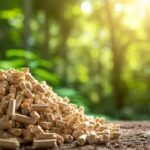
A grass pellet machine should be evaluated against the forage supply and the feeding program it is expected to support. Alfalfa, hay, ryegrass and Napier grass differ in stem thickness, leaf proportion, moisture and bulk density. These differences influence whether the material can be processed directly, needs drying, or requires a different grinding and conditioning arrangement. For a commercial forage operation, the key question is not simply how many tonnes the press can produce, but how consistently it can turn the available forage into pellets that meet the buyer’s specification.
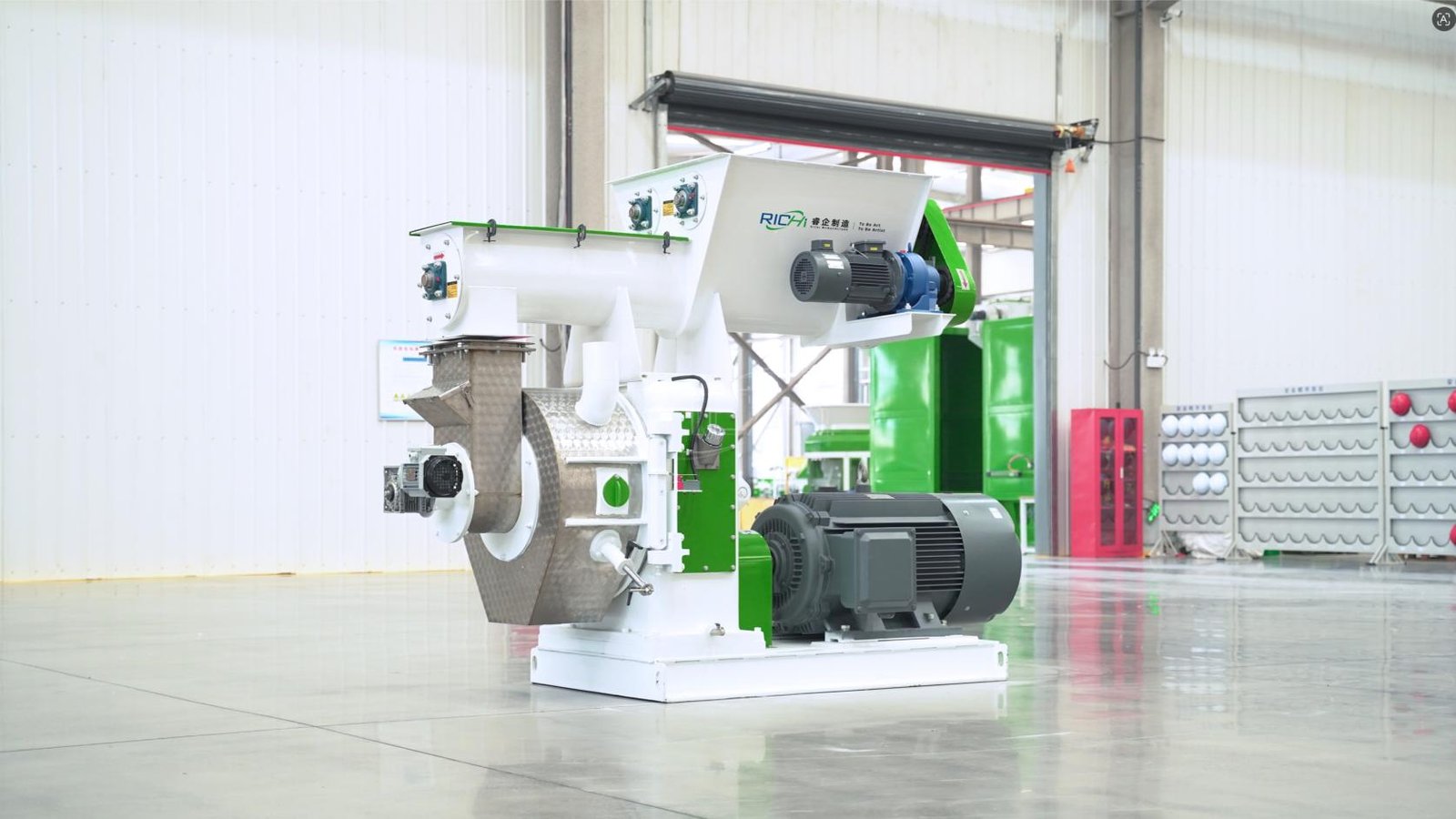
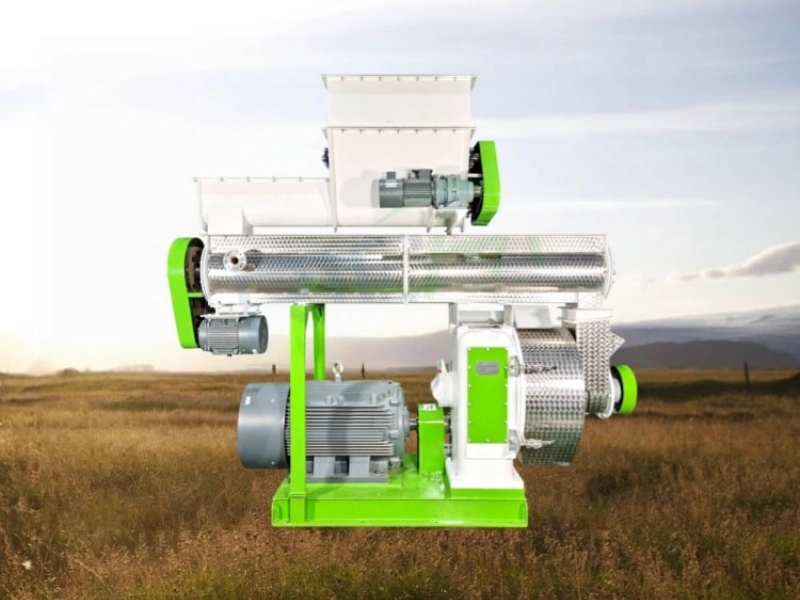
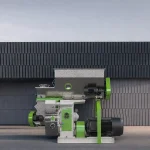
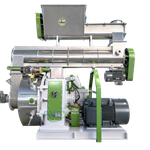
RICHI’s grass pellet machine information lists a reference capacity range of 0.5–10 t/h and pellet diameters of 4–12 mm, with customization according to forage type and formula. The page describes a ring-die machine with a conditioner, anti-bridging feed arrangement, forced feeder, 40CrMnTi wear-resistant components, gear direct drive and optional automatic bearing lubrication. The machine’s actual capacity depends on the forage, moisture, particle size, formula and die configuration.
Choose the Forage Stream That the Plant Can Supply Reliably
The first commercial decision is the raw-material sourcing model. A farm may process its own alfalfa or hay, while a feed mill may purchase forage from several growers. In either case, annual tonnage alone is not enough. Record the harvest calendar, supplier reliability, bale format, storage losses, moisture range and the share of leaves, stems and foreign material. A plant that has a pellet mill available year-round still needs enough usable forage to keep it operating.
Different forage types should be treated as separate process cases. Alfalfa can have a higher leaf proportion and different nutritional profile from mature grass hay. Ryegrass and Napier grass may arrive with different stem lengths and moisture. Silage or fresh grass generally requires dewatering or drying before a dry pelletizing route. Do not assume that one capacity figure applies to every forage or blend.
Prepare a supply specification with the forage name, moisture, particle-size range, bulk density if available, contamination, delivery frequency and target annual consumption. Keep samples from different suppliers and seasons. This makes it possible to test whether a single grinding and conditioning setup can handle the expected range or whether the project needs separate storage and process settings.

Decide Whether the Forage Needs Drying Before Grinding
Dry hay at a suitable moisture level may be processed without a dedicated dryer, while fresh or wet forage can require mechanical drying. The decision should be based on measured moisture and the finished-feed specification. Estimate the wet feed rate and water removal required if drying is needed. Include heat-source cost, residence time, airflow, exhaust handling and the risk of leaf loss or overheating.
Drying can become a major operating cost when the plant receives forage with high moisture. Compare the cost of purchasing or harvesting drier forage with the cost of drying wet material on site. The cheaper wet raw material is not necessarily cheaper after fuel, electricity, labor and moisture-related losses are included. Seasonal storage may also be preferable where dry forage can be collected during harvest and protected from rain.
After drying, protect the forage from moisture pickup. Use covered storage and batch rotation, and avoid long open transfer routes where the material can absorb humidity. If the line blends forage with grain or protein meals, meter the forage stream separately until batching so that its proportion can be controlled accurately.
Set Particle Size and Formula Before Selecting the Die
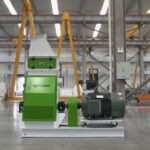
Forage fibers must be reduced enough to feed and compress consistently, but excessive grinding consumes power and can create dust. Particle size should be selected according to stem thickness, pellet diameter, die compression and the share of forage in the formula. A high-forage ration may behave differently from a grain-rich blend even when the pellet diameter is unchanged.
A grass pellet may be made from a single forage or from a formulated ration containing grains, protein meals, minerals and other ingredients. If the product is intended as complete animal feed, the formulation should be established by a qualified nutritionist. The pellet machine cannot correct an unbalanced ration. Record each recipe and the forage percentage because that percentage can change the practical output and conditioning requirement.
The ring die hole diameter determines the pellet diameter, while the compression ratio affects density and forming load. RICHI describes customized ring dies for different grasses and formulas. Select the die using trial material and the intended pellet quality. A die that works well for dry alfalfa may not provide the same output or durability with a different grass blend.
Use Conditioning to Manage Fiber and Pellet Formation
The grass pellet machine uses a conditioner to introduce steam and moisture before the mash enters the die. Conditioning can soften fiber and improve binding, but the required settings depend on the formula, moisture and throughput. Confirm the boiler capacity, steam quality, pressure at the conditioner, condensate handling and water treatment. A stable conditioner requires a reliable utility system, not just a temperature display.
The product page describes one- to three-layer stainless-steel conditioner options for alfalfa configurations. More conditioning time may help some formulas, but it also changes throughput and process cost. The correct arrangement should be selected by the actual forage and product target. Avoid assuming that the longest conditioning time always produces the best pellet.
Monitor feed rate, steam addition, conditioner temperature, motor load and pellet appearance together. If pellets are weak or the die load rises, investigate moisture, particle size, formula and steam quality before making large adjustments. Keep a validated operating record for each main forage blend.
Assess Wear Components and Maintenance Access
High-fiber forage can create sustained mechanical loading and abrasion. RICHI describes a 40CrMnTi alloy ring die with carburizing and quenching treatment, a gear direct-drive transmission, SKF bearings and a safety pin for overload protection. These features should be considered alongside the actual forage condition and maintenance plan. Soil, sand and other contamination can accelerate wear regardless of the material specification.
The feed inlet uses an anti-bridging mechanism and variable-frequency feeder, while a forced feeder delivers material to the pelletizing chamber. These components address the low bulk density and flow behavior of loose forage. During commissioning, test the hopper with the buyer’s actual bale or meal preparation. If bridging persists, review fiber length, moisture, hopper geometry and the upstream grinder rather than simply increasing feeder speed.
Allow space to remove the die, rollers, feeder screw and conditioner parts. Confirm lifting access, lubrication points, guards and safe isolation. Optional automatic lubrication can reduce manual work, but operators still need inspection routines for bearing temperature, vibration, unusual noise, die condition and feeder buildup.
Build a Production Plan Around Saleable Feed
The complete line may include bale breaking, crushing, drying, batching, mixing, conditioning, pelleting, cooling, screening and packing. The required stages depend on the forage form and formula. If the plant produces several pellet sizes, plan for die changes and the time needed to stabilize the next product. If it supplies bulk feed to a nearby farm, the packing system may be simpler than a retail operation.
Measure output after cooling and screening. Fines, broken pellets and product outside the required dimensions should not be counted as saleable tonnage. If fines are recycled, monitor the recycle rate because repeated handling consumes capacity and energy. A line’s commercial performance depends on accepted product delivered to the customer, not only the press discharge rate.
The layout should separate raw forage storage from finished-feed handling and provide access for cleaning. Dust extraction should cover grinding, transfer, screening and packing. Define responsibility for the transformer, boiler, external conveyors, building, electrical installation and lifting equipment before the supplier’s equipment is delivered.
Validate the Machine With the Customer’s Forage
A meaningful test should use the forage type and formula expected in routine production. Record forage source, moisture, particle size, formula proportion, conditioner settings, feeder speed, die specification, motor load, pellet dimensions, cooling conditions, fines and saleable output. If the buyer expects to switch between alfalfa, hay and ryegrass, test the main cases separately.
Acceptance criteria should identify the target pellet size, moisture, durability, test duration, sampling method and throughput basis. Include the normal operating interruptions and changeover time if the plant will make several products. If the test falls short, identify whether the restriction comes from drying, grinding, batching, conditioning, feeding, the die or downstream cooling.
Forage-Specific Process Configuration
Alfalfa, mature hay, ryegrass and Napier grass should be assessed separately. Alfalfa may have a larger leaf fraction and a different fines profile; mature hay can contain longer, tougher stems; Napier grass may arrive with higher moisture and require chopping and drying. Silage requires a moisture-removal route before dry pelleting. Record leaf-to-stem ratio, moisture, particle length, contamination and formula share for each source. Use these records to decide whether one screen, feeder and conditioner setup can cover the full supply range.
When the forage source changes, compare feeder stability, conditioner response, motor load, pellet durability and saleable output with the approved reference run. Do not compensate for longer stems by simply increasing feeder speed; correct chopping and preparation first. The ration itself must be formulated by a qualified nutritionist.
Forage Supply Coverage Calculation
Calculate annual net supply after field losses, storage deterioration and rejected material. Convert delivered wet tonnes to usable dry matter using measured moisture, then divide by planned operating hours after allowing for maintenance, cleaning and changeovers. This gives a realistic hourly requirement. Recalculate when the harvest calendar, moisture, supplier reliability or formula forage percentage changes. Retain representative samples from different seasons and suppliers so that the line’s operating window is based on actual forage rather than a single ideal batch.
Conclusion: Select the Grass Pellet Machine Around the Forage Program
A suitable grass pellet machine is one that can process the forage supply the plant can obtain consistently and produce the required pellet quality at an acceptable operating cost. Moisture, fiber length, formula, conditioning, die selection and maintenance access all influence the result. Model capacity is only a starting point until it is confirmed with representative forage.
For machine options and component details, review the RICHI grass pellet machine range. Prepare forage samples, annual supply estimates, moisture data, formula proportions, target pellet size and site utilities before requesting a final configuration.