




The rapid expansion of aquaculture has created new opportunities for businesses involved in aquatic feed production. As fish farming becomes more commercialized, feed manufacturers are facing higher expectations from customers who require stable quality, competitive pricing, and reliable supply.
Fish feed is not simply a mixture of ingredients. It is a carefully processed product that must provide balanced nutrition while maintaining proper physical characteristics in water.
For species that require feed sinking below the water surface, production accuracy becomes even more important. The feed must have suitable density, good water stability, and excellent nutrient retention.
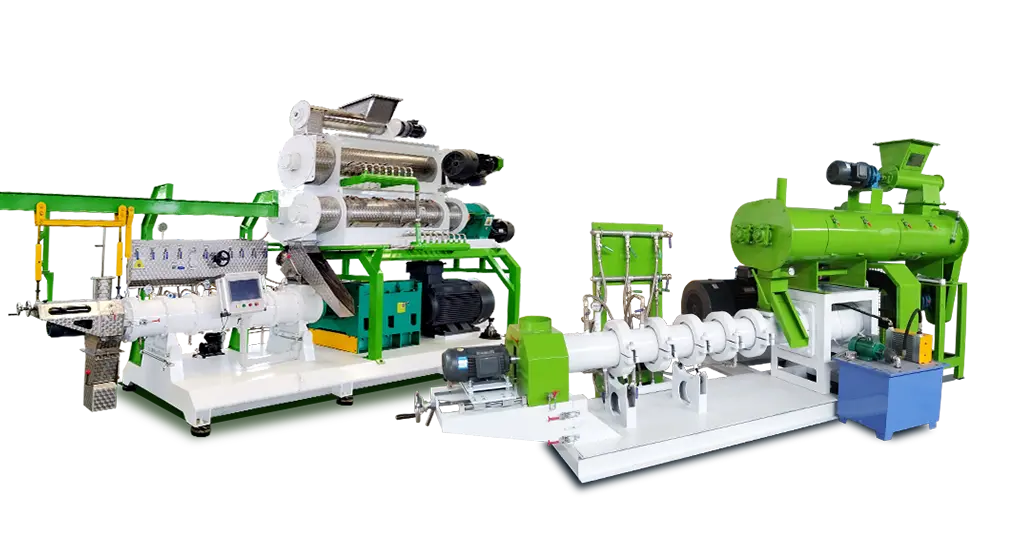
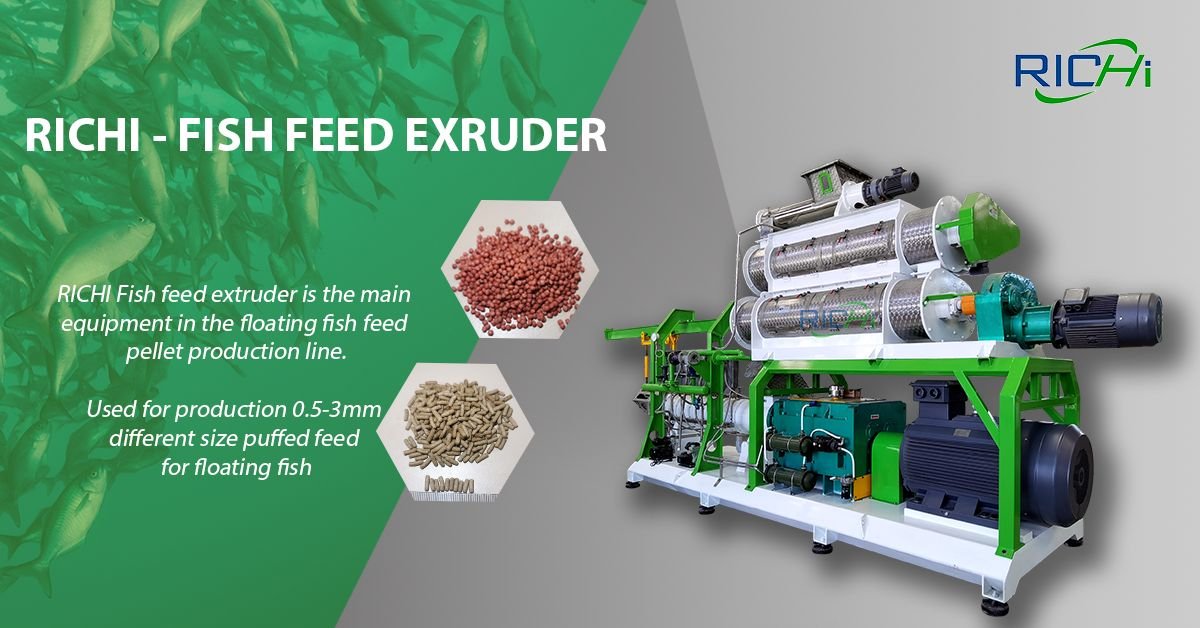
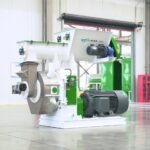
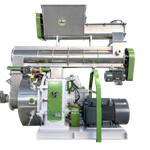
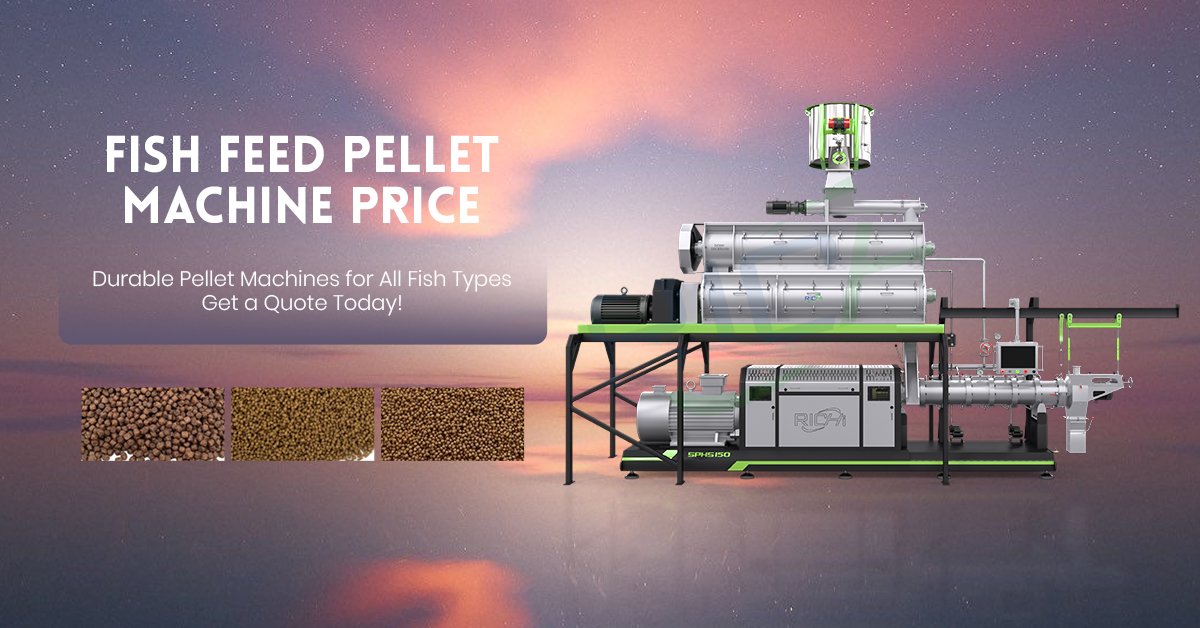
To meet these requirements, many manufacturers are upgrading their facilities with advanced extrusion technology. A professional sinking fish feed extruder machine helps producers manufacture consistent sinking pellets while improving production efficiency and reducing operational challenges.
The Changing Requirements of the Aquatic Feed Industry
The aquaculture industry has changed significantly in recent years.
Small-scale fish farming has gradually developed into large commercial operations. As farms expand, their requirements for feed suppliers become more demanding.
Modern feed buyers expect:
- Stable pellet quality
- Consistent nutritional value
- Reliable supply capacity
- Competitive production costs
- Customized feed solutions
Feed manufacturers must therefore improve not only their formulas but also their processing technology.
A modern production line allows companies to respond quickly to market changes and provide better products.
Why Efficient Feed Production Matters
Feed production efficiency directly influences business profitability.
A poorly designed production process may lead to:
- High energy consumption
- Excessive raw material waste
- Uneven pellet quality
- Frequent equipment downtime
An optimized production system can help manufacturers achieve:
- Higher output
- Lower operating costs
- Better product consistency
- Improved customer satisfaction
This is why professional aquatic feed companies focus on upgrading equipment and production management.
Understanding the Function of Sinking Fish Feed Equipment
A sinking fish feed production system is designed to create dense pellets that move downward after entering water.
The equipment controls multiple factors, including:
- Pellet density
- Size distribution
- Moisture content
- Processing temperature
- Feed structure
These factors determine how the final product performs during actual farming applications.
High-quality sinking feed should:
- Maintain shape underwater
- Provide balanced nutrition
- Minimize feed loss
- Support efficient fish growth
Main Stages of Sinking Fish Feed Production
A complete aquatic feed production process includes several important stages.
Raw Material Preparation
Feed formulas usually contain multiple ingredients.
Common materials include:
- Fish meal
- Soybean meal
- Wheat flour
- Corn products
- Animal protein sources
- Vegetable protein ingredients
- Vitamins and minerals
Each ingredient must be prepared properly before processing.
Grinding and Particle Size Control
Grinding improves ingredient uniformity.
Smaller particles provide advantages such as:
- Better mixing
- Improved extrusion performance
- More consistent pellets
Particle size selection depends on feed type and target species.
Mixing and Formula Accuracy
A high-quality mixer ensures all ingredients are evenly distributed.
Uniform mixing prevents:
- Nutritional imbalance
- Pellet inconsistency
- Quality variation between batches
For commercial feed factories, accurate formulation control is essential.
Extrusion Processing
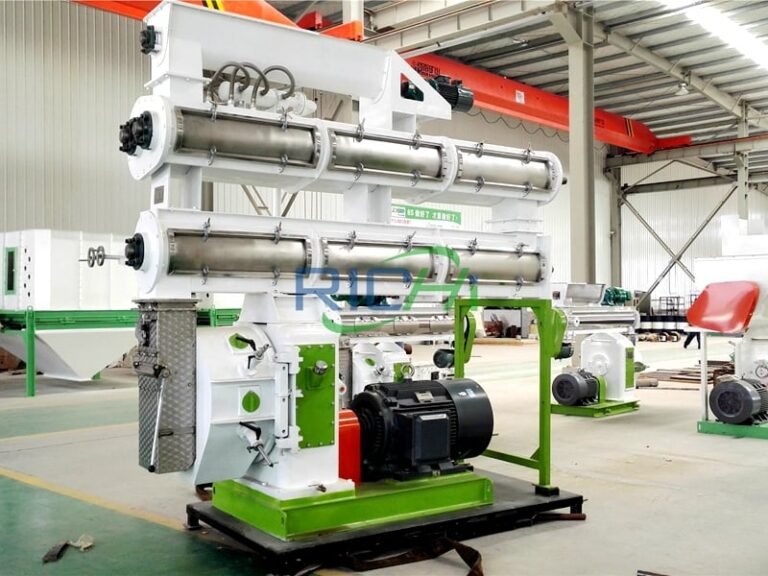
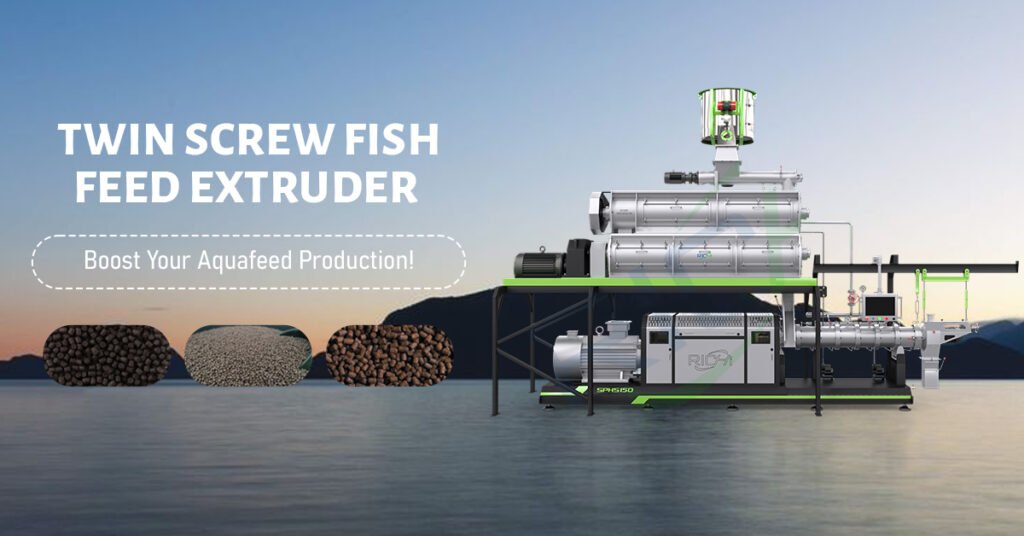
Extrusion is the key stage where raw materials become finished feed pellets.
During this process:
- Pressure increases
- Heat develops
- Ingredients become compacted
- Pellets are formed
Machine parameters can be adjusted according to different feed requirements.
For businesses planning medium-scale aquatic feed projects, equipment such as the 2-3 T/H shrimp feed making machine for sale can provide efficient production capacity while maintaining stable quality.
Drying and Stabilization
After extrusion, pellets contain excess moisture.
Drying improves:
- Storage life
- Pellet strength
- Product stability
Proper drying prevents quality problems during transportation and storage.
Coating and Packaging
Some formulas require oil spraying after drying.
This process can improve:
- Energy content
- Feed attractiveness
- Nutritional performance
The final product is then packaged according to customer requirements.
(Related Post: https://www.richipelletmill.com/twin-screw-fish-feed-extruder/)
How Equipment Selection Influences Factory Performance
Choosing suitable equipment is one of the most important decisions when building a feed factory.
Different machines have different effects on:
Production Capacity
The equipment should match expected market demand.
Pellet Quality
Processing stability influences final product performance.
Operating Costs
Energy consumption and maintenance requirements affect profitability.
Expansion Ability
Future production increases require flexible system design.
Professional suppliers analyze these factors before recommending equipment.
The Importance of Customized Feed Production Solutions
Every aquaculture market has unique requirements.
A shrimp farm, tilapia producer, and catfish farmer may require completely different feed characteristics.
Customized solutions consider:
- Target species
- Feed formula
- Pellet size
- Production capacity
- Local market conditions
A professional engineering approach helps manufacturers avoid unnecessary investment and achieve better results.
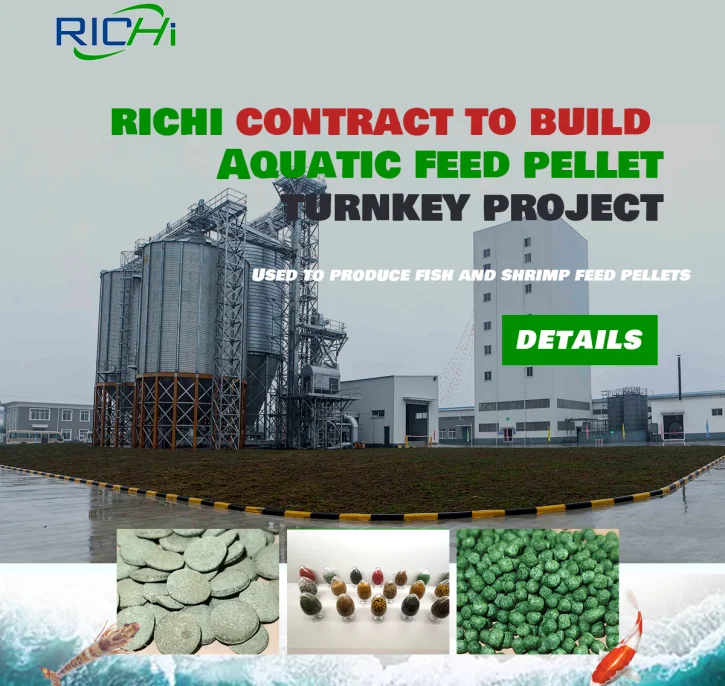
Companies cooperating with Richi machinery manufacture can receive production solutions designed around specific customer needs.
Improving Production Through Automation
Automation has become an important trend in modern feed factories.
Advanced systems can include:
Automatic Ingredient Management
Precise ingredient control improves formula accuracy.
Intelligent Production Monitoring
Operators can track machine performance in real time.
Automatic Alarm Systems
Potential problems can be identified quickly.
Data-Based Management
Production data helps improve efficiency.
Automation reduces manual errors and creates more stable production conditions.
Capacity Planning for Different Feed Businesses
Choosing the right production scale is essential.
Startup Feed Companies
Smaller production systems allow businesses to enter the market with lower investment.
Growing Manufacturers
Medium-capacity factories can serve regional aquaculture customers.
Large Feed Enterprises
Large companies require continuous production and advanced management systems.
For businesses targeting larger markets, equipment such as the 1-2 T/H shrimp feed pellet machine for sale can support efficient commercial production.
Proper planning ensures equipment investment matches business development goals.
Common Challenges in Fish Feed Production
Although aquatic feed production offers strong market opportunities, manufacturers should consider several challenges.
Maintaining Raw Material Quality
Ingredient quality directly affects final feed performance.
Controlling Production Costs
Energy and raw materials represent major expenses.
Meeting Different Customer Needs
Different species require specialized feed formulas.
Maintaining Consistent Quality
Large customers expect stable products across every batch.
Advanced equipment and professional management help overcome these challenges.
The Future Direction of Aquatic Feed Manufacturing
The aquatic feed industry is moving toward smarter and more sustainable production.
Future trends include:
Intelligent Factories
Automation and digital management will become more common.
More Efficient Processing
New technologies will reduce energy consumption.
Customized Nutrition
Feed formulas will become more specialized.
Sustainable Ingredients
Alternative protein sources will receive greater attention.
These developments will continue improving aquaculture efficiency worldwide.
Industry professionals can about this to explore more information about advanced aquatic feed production technologies.
Building a Competitive Aquatic Feed Business
Success in the fish feed industry requires more than purchasing equipment.
Businesses need:
- Market research
- Proper production planning
- Reliable machinery
- Technical support
- Quality management
A professional supplier can provide guidance throughout the project lifecycle.
Manufacturers with extensive industry experience understand the challenges of aquatic feed production and can provide practical solutions.
Companies choosing Richi Pelletizer equipment can develop customized production systems suitable for different feed types and output requirements.
Conclusion
Efficient feed production is becoming increasingly important as global aquaculture continues expanding.
A modern sinking fish feed extruder machine provides manufacturers with the ability to produce stable, nutritious, and market-ready sinking pellets.
By improving production processes, adopting automation, and selecting suitable equipment capacity, feed companies can reduce costs, improve quality, and strengthen their position in the competitive aquaculture market.
With professional support from experienced suppliers such as Richi Pelletizer, businesses can build reliable aquatic feed production systems designed for long-term growth and sustainable development.