
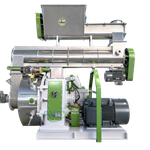
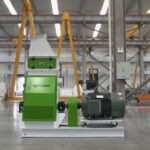


A cat litter pellet machine should be evaluated by the cost and consistency of the finished litter, not only by its purchase price or rated output. Different litter materials behave differently during preparation and forming. Wood-based, paper-based, bentonite and plant-based formulations can require distinct grinding, drying, mixing, conditioning or forming routes. Even within one material category, moisture, particle size, bulk density, additives and the required pellet properties can change machine performance.
For a manufacturer, the economic question is how much it costs to produce one tonne of saleable litter that meets the required absorbency, strength, size and handling characteristics. That calculation should include raw-material preparation, energy, wear parts, labour, product losses, cleaning and downtime. A machine with a lower initial price may not be the lowest-cost choice if it produces more fines or requires frequent maintenance.
Define the litter product before estimating machine cost
Start with the product specification. Define the raw material, pellet or granule dimensions, bulk density, moisture, fines allowance, strength and intended use. A wood-based litter product may need drying and fibre preparation. A paper-based route may require sorting, shredding and moisture management. Bentonite and plant-based formulations have different forming and material-handling considerations. These routes should not be treated as interchangeable simply because each produces a granule or pellet.
Product requirements influence the machine and the process around it. If the litter must have a narrow size distribution, screening and recycle handling become important. If the product is sensitive to moisture, drying and storage control may be necessary. If dust is a commercial concern, fines generation and collection must be considered at grinding, transfer, forming and packing stages.
Measure raw-material preparation cost
Raw-material preparation can represent a substantial part of operating cost. Grinding consumes electricity and wear parts. Drying consumes heat and requires fuel handling, exhaust and dust management. Screening and conveying also use power and need maintenance. Ask suppliers to identify the preparation equipment required for the material in its actual delivered condition.
For drying, record incoming moisture and target moisture using a consistent basis. Estimate the mass of water to be removed before choosing the dryer. If the incoming material varies seasonally, calculate a range rather than using only the average. A dryer sized for the average condition may become a bottleneck during wet periods. Conversely, oversizing the dryer can increase capital and operating cost when the feed is normally dry.
Preparation cost should also include yield. If screening removes a large quantity of fines or oversize material, determine whether it can be recycled and how many passes are practical. Recycle increases internal material flow and may consume additional energy. The important measure is saleable product yield after the full process, not the mass entering the pellet mill.
During commissioning, weigh the material entering the process and the accepted product leaving it over a defined period. Record fines, oversize, rejected batches, recycle and material retained in equipment. Keep recycled material separate in the calculation so internal circulation is not counted as new production. Repeat the measurement for representative raw-material batches and operating settings. This provides a more defensible economic basis than relying on the pellet mill’s discharge rate alone.

Compare energy use across the complete line
Energy demand is distributed across grinders, mixers, feeders, pellet mills, conveyors, fans, dryers, coolers and packing equipment. The installed power of one machine does not describe the energy cost of the line. Ask suppliers for an estimate that identifies the equipment included, expected operating load, throughput and material conditions. If thermal energy is required, request its basis separately from electricity.
Use the local electricity tariff and actual fuel cost in the calculation. If the plant operates multiple shifts, calculate annual consumption using realistic operating hours and planned downtime. Include auxiliary equipment that may run continuously, such as dust collection or ventilation. Where energy use is a major part of the business case, consider installing meters on key process sections so that actual operating data can be compared with the original estimate after commissioning.
Understand wear cost and maintenance time
Wear depends on the raw material, contamination, abrasive content, operating hours and equipment design. Grinding equipment may require hammer, screen and liner replacement. Pelletizing equipment may require die and roller service. Conveyors, bearings, seals, fans and dust collectors have their own inspection needs. Ask suppliers to identify the components that require routine inspection and the conditions that trigger replacement.
Request the material and construction details of critical wear parts where relevant, but do not treat a material grade as proof of service life. Actual life depends on operating conditions. Ask how parts are removed, what tools are required and whether lifting equipment is needed. Poor maintenance access can turn a routine replacement into a long shutdown.
Spare-parts availability is an economic factor. Standard bearings may be sourced locally, while specialized dies, rollers or screens may need to be ordered. Compare lead times and decide which parts should be stocked at the plant. Include maintenance labour and the value of lost production in the ownership model.
Calculate the cost per tonne of saleable litter
Build an annual cost model with electricity, fuel, labour, wear parts, routine maintenance, packaging, cleaning and waste handling. Divide the total by annual saleable output. For example, if a line has annual conversion costs of USD 210,000 and produces 7,000 tonnes of accepted litter, the conversion cost is USD 30 per tonne. If product losses and downtime reduce accepted output to 6,000 tonnes without a similar reduction in cost, the cost rises to USD 35 per tonne.
This simplified example excludes raw-material purchase cost, which should be shown separately because it depends on sourcing and formulation. It also assumes that all conversion costs are assigned to the same product. If a plant makes several litter types, allocate costs according to actual process time, energy use and material flow rather than dividing everything equally.
Lifecycle comparison matrix
| Cost area | Data to collect | Decision impact |
|---|---|---|
| Preparation | Moisture, particle size, grinding and drying duty | Determines upstream equipment and energy |
| Forming | Capacity under actual material and product conditions | Determines machine size and line balance |
| Energy | Electricity and thermal consumption by process stage | Changes recurring cost per tonne |
| Wear | Inspection interval, part life assumptions and replacement cost | Changes maintenance budget and downtime |
| Yield | Fines, oversize, recycle and rejected product | Changes saleable output |
| Labour | Operators per shift and maintenance skill | Changes staffing and training cost |
| Availability | Planned and unplanned downtime | Changes annual output and unit cost |
Match capacity to market demand and bottlenecks
A larger pellet mill may reduce the number of production hours needed, but it can also require a larger grinder, dryer, cooler, screen, conveyor and packing system. If market demand is uncertain, a smaller line with higher utilization may provide a more resilient investment. If demand is already secured, the owner should verify that the complete process can sustain the required output.
Check whether the plant will operate one material route or several. Separate product types may require separate storage, cleaning and changeover arrangements. A line designed for one consistent product may have a different economic profile from a plant that changes between wood-based and plant-based litter. The recommendation should change when product mix, material properties or annual demand changes.
Include quality control and packaging in the economics
Product testing and quality control help prevent off-spec batches from reaching customers. Define sampling points for moisture, size distribution, fines, bulk density and the product characteristics relevant to the intended litter. The frequency of testing should reflect material variability and the consequences of a quality failure. Packing also affects cost: bag size, packaging material, sealing, palletizing and dispatch handling all contribute to the finished-product cost.
Do not compare a machine that discharges uncooled product with a complete line that includes cooling and screening as if they provide the same finished output. The project scope should identify the condition of the product at the point where it is measured and sold.
Prepare a supplier enquiry that supports a real comparison
Provide the raw-material type, moisture range, particle size, target pellet dimensions, required output, operating hours, product specification, packing method and site information. Ask for the process flow, equipment list, capacity basis, installed power, utility estimate, wear-parts list, maintenance access and installation scope. Require suppliers to state what is excluded and what assumptions support their capacity estimate.
Review the cat litter pellet machine configuration against the intended litter type and the condition of the raw material at the machine inlet. A useful proposal should explain the preparation stages, forming method, finishing equipment and acceptance criteria rather than quoting a machine price in isolation.
The best cat litter investment is the configuration that produces the required product at a sustainable cost and can be maintained with the resources available at the site. By comparing energy, wear, yield, labour and availability on a saleable-tonne basis, manufacturers can make a more reliable decision than one based on initial equipment price alone.
Account for product changeovers and cleaning losses
Some cat litter plants make more than one product grade or use different raw-material blends. Each changeover may require emptying hoppers, cleaning contact surfaces, adjusting the formulation or changing a screen or die. The time and material lost during these activities should be included in the production model. A machine that achieves a high rate during a long, uninterrupted run may deliver a lower weekly output when the factory changes products frequently.
Ask the supplier which components require adjustment for each product and how long a normal changeover takes. Confirm whether the process has dedicated storage or transfer routes for different materials. If cross-contamination is unacceptable, cleaning procedures and inspection points become part of the equipment specification rather than an afterthought.
Use a controlled trial to validate saleable yield
Frequently Asked Questions About Cat Litter Pellet Machine Economics
What raw-material details affect the cost of a cat litter pellet production line?
The material type, incoming moisture, particle size, bulk density and contamination determine the required preparation and forming route. Wood fibre, paper, bentonite and plant-based materials should not be costed as if they use identical equipment. Provide the supplier with the actual material specification and intended litter product.
How much does drying add to cat litter production cost?
The impact depends on incoming moisture, target moisture, throughput, heat source, dryer efficiency and operating hours. Estimate the water-removal duty from representative samples, then include fuel, electricity, exhaust handling, dust collection and dryer maintenance in the cost model.
Why should I calculate cost per tonne of saleable cat litter?
The pellet mill discharge is not necessarily all saleable product. Fines, oversize material, rejected batches, recycle and downtime affect accepted output. Divide annual conversion costs by the quantity that meets the product specification to compare configurations on a consistent basis.
How do fines and recycle affect the operating cost?
Screening can remove fines and oversize material, but recycling them adds internal material flow and may consume additional energy and capacity. Measure the incoming and accepted product over a defined trial period, and record recycle separately so it is not counted as new production.
What information is needed to estimate the cost of a cat litter pellet machine line?
Provide raw-material type, moisture range, particle size, target pellet dimensions, required capacity, annual operating hours, packaging method, energy prices and site conditions. Clarify whether the quotation includes grinding, drying, forming, cooling, screening, dust collection and packing.