

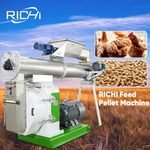



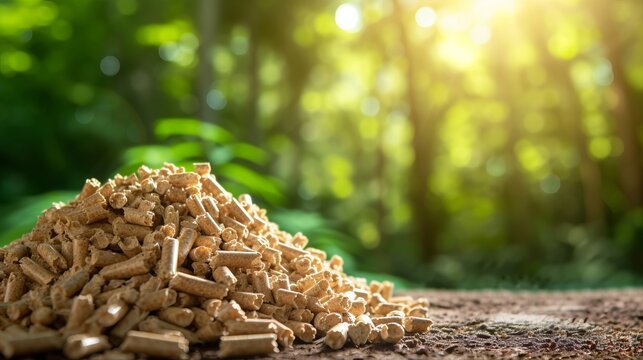
Straw pelletizing is an effective way to convert agricultural residues into a denser and easier-to-handle biomass fuel. Wheat straw, rice straw, corn stalks, barley straw, oat straw, sorghum stalks, and other crop residues can all be processed into pellets when their physical properties are properly controlled.
However, installing a pellet mill does not automatically guarantee high production efficiency. Straw is a fibrous and relatively lightweight biomass material, and its moisture, particle size, fiber length, ash content, and composition can vary considerably. If these factors are not controlled, a production line may experience unstable feeding, die blockage, low output, excessive fines, high electricity consumption, or rapid wear of key components.
Improving straw pelletizing efficiency therefore requires optimization of the entire production process. The straw pellet machine is the core compression equipment, but its performance depends heavily on the preparation equipment and operating conditions before and after pelletizing.
This article explains the major factors affecting straw pelletizing efficiency and provides practical methods for improving production capacity, pellet quality, energy efficiency, and equipment stability.
What Does Straw Pelletizing Efficiency Mean?
Straw pelletizing efficiency is not simply the number of tons produced per hour.
A high-efficiency straw pellet production line should ideally achieve several objectives at the same time:
- Stable production capacity
- Consistent pellet quality
- Reasonable electricity consumption
- Low material loss
- Low percentage of fines
- Stable equipment operation
- Controlled component wear
- Efficient raw material utilization
- Reliable long-term production
For example, increasing the feeding rate may temporarily increase hourly output, but if it causes die blockage, unstable pellets, excessive motor load, or frequent downtime, the overall production efficiency may actually decrease.
A better approach is to optimize the entire process from raw material preparation to final packaging.
1. Understand the Characteristics of the Straw
The first step toward improving pelletizing efficiency is understanding the raw material.
Different types of agricultural straw have different physical characteristics.
Common materials include:
- Wheat straw
- Rice straw
- Corn stalks
- Barley straw
- Oat straw
- Sorghum stalks
- Cotton stalks
- Rapeseed straw
- Grass residues
Even the same type of straw can vary depending on harvesting conditions, storage methods, geographic location, and crop maturity.
Important characteristics include:
Moisture Content
Moisture strongly affects pellet formation and drying requirements.
Fiber Length
Long fibers can cause feeding and bridging problems.
Particle Size
Particle size affects compression and pellet durability.
Bulk Density
Loose straw has a low bulk density, which affects transportation and feeding.
Ash and Mineral Content
Soil, sand, and other mineral contaminants can increase wear and influence fuel properties.
Chemical Composition
The relative amounts of cellulose, hemicellulose, lignin, and minerals affect how the material behaves during compression and combustion.
Before designing a production line, these characteristics should be evaluated.
2. Keep Raw Material Moisture Stable
Moisture is one of the most important variables in straw pelletizing.
Straw that is too wet may be difficult to compress effectively. Excess moisture can contribute to soft pellets, unstable production, increased energy requirements for drying, and storage problems.
Straw that is excessively dry can also create problems. It may generate more dust and may not bind as effectively during compression.
The goal is not simply to make the straw as dry as possible. The goal is to achieve a stable moisture condition suitable for pelletizing.
Use an Appropriate Straw Dryer
If the incoming straw has excessive moisture, an industrial rotary dryer machine can be installed before grinding and pelletizing.
The dryer should be selected according to:
- Initial moisture
- Target moisture
- Straw throughput
- Heat source
- Local climate
- Required operating hours
Drying capacity should match the pellet mill capacity.
If the dryer is too small, it becomes a bottleneck. If it is significantly oversized, the project may incur unnecessary equipment and energy costs.
Monitor Moisture Continuously
Moisture should not be checked only when the production line starts.
Changes in incoming straw can affect the drying requirements throughout the day.
Regular sampling or online moisture monitoring can help operators adjust the drying system and maintain more stable pelletizing conditions.
3. Improve Bale Breaking and Straw Preparation
Many commercial straw pellet plants process baled agricultural residues.
Large bales must be opened before the material can be shredded and ground efficiently.
A bale breaker can provide a more consistent material flow.
Poor bale breaking can cause large clumps of compressed straw to enter downstream equipment. This can overload shredders or create unstable feeding.
Efficient raw material preparation helps maintain continuous operation and reduces manual intervention.
4. Reduce Long Straw Fibers Before Grinding
Straw is naturally fibrous.
Long fibers can wrap around equipment components, create bridging in hoppers, and interfere with stable feeding.
A straw shredder can reduce the length of the material before it enters the hammer mill.
The objective is to prepare the straw for efficient grinding rather than immediately reduce everything to an extremely fine powder.
Proper shredding can:
- Improve material flow
- Reduce grinder load
- Reduce the risk of bridging
- Improve feeding stability
- Increase grinding efficiency
The required fiber length depends on the straw type and the design of the downstream equipment.
5. Optimize Particle Size
Particle size is another critical factor affecting pelletizing efficiency.
If straw particles are too large, they may not compress evenly inside the die.
Large particles can also make it more difficult to produce pellets with consistent density.
However, excessively fine grinding is not always beneficial.
Fine grinding requires additional electricity and may increase dust generation.
The objective should therefore be an appropriate particle size distribution rather than the smallest possible particle size.
How Particle Size Affects Energy Consumption
The hammer mill is often one of the significant electricity consumers in a biomass pellet plant.
Grinding material more finely requires more energy.
If the final pellet quality does not improve significantly after additional grinding, the extra electricity is unnecessary.
Therefore, operators should test different grinding sizes and select a specification that provides sufficient pellet quality while maintaining reasonable power consumption.
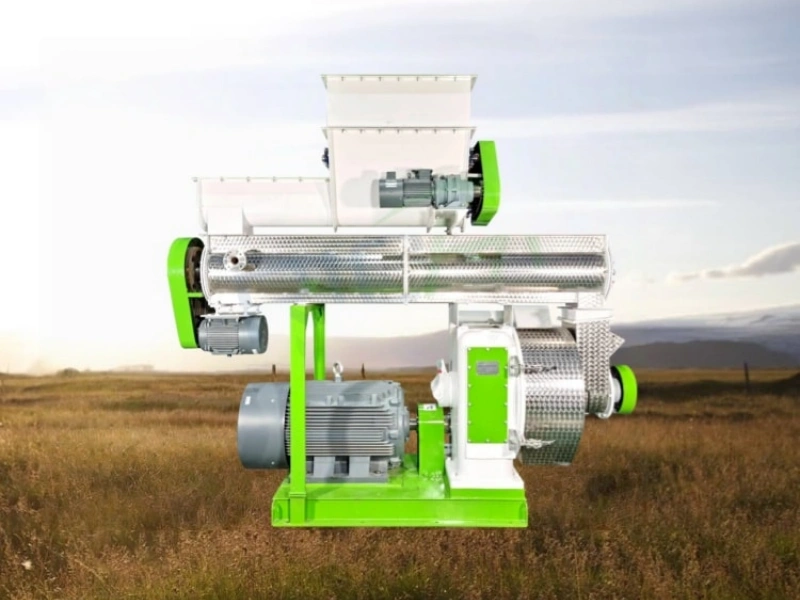
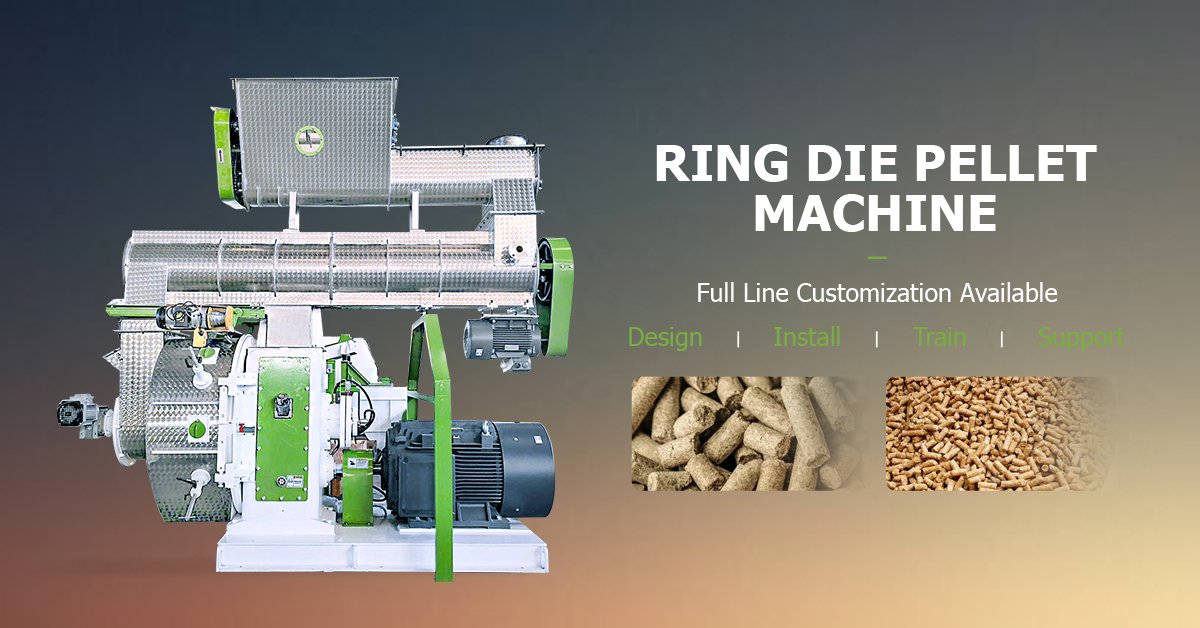
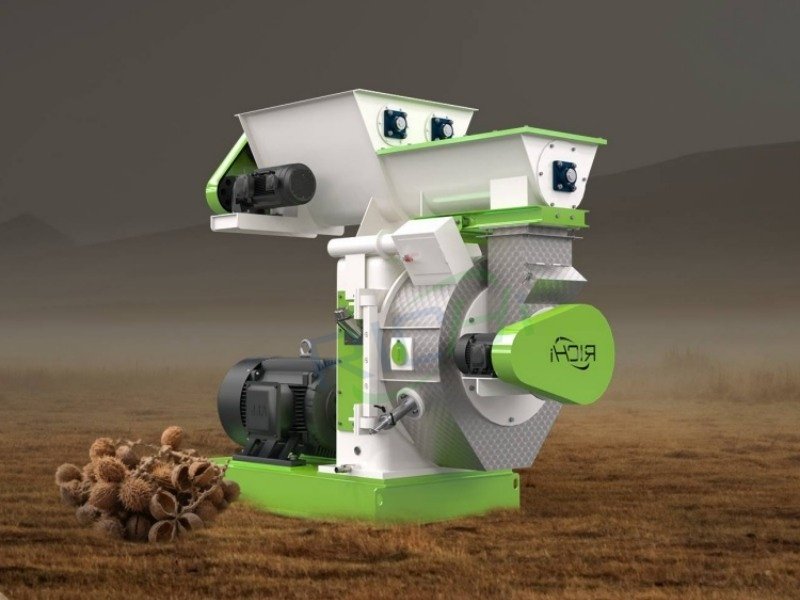
6. Choose the Right Straw Pellet Machine
The pellet mill is the core equipment in the production line.
A properly selected straw pellet machine should match the raw material, production capacity, pellet diameter, moisture condition, and operating requirements.
Important factors include:
- Required output
- Straw type
- Pellet diameter
- Die compression ratio
- Motor power
- Feeding system
- Roller and die design
- Lubrication system
- Overload protection
- Automation level
- Maintenance requirements
A machine selected only according to advertised capacity may not deliver the same output under actual operating conditions.
The capacity of a pellet machine depends on the specific raw material and operating parameters.
Therefore, material testing and production trials can provide valuable information before final equipment selection.
(Learn more: https://richipelletizer.com/straw-pellet-machine-for-sale/)
7. Select the Correct Die Compression Ratio
The die plays a central role in pellet formation.
When the rollers force straw through the die holes, the material is compressed and friction generates heat.
The resistance created by the die affects pellet density, durability, power consumption, and production stability.
Different straw materials may require different compression conditions.
A die designed for one biomass material may not be ideal for another.
An unsuitable compression ratio may cause:
- Low output
- High motor load
- Die blockage
- Excessive wear
- Poor pellet durability
- Increased energy consumption
For this reason, die selection should be based on actual material properties and desired pellet specifications.
8. Maintain the Correct Roller and Die Clearance
The roller and die work together to create the compression zone.
If the clearance is not properly adjusted, the pelletizing process can become less efficient.
Excessive clearance may reduce compression efficiency and increase material slippage.
Insufficient clearance can increase friction, wear, and mechanical load.
Regular inspection and adjustment are therefore important.
Operators should follow the pellet mill manufacturer’s recommended procedures for roller adjustment.
The condition of the roller surface and die holes should also be inspected regularly.
9. Keep the Feeding System Stable
Stable feeding is essential for efficient pellet production.
If the straw enters the pellet mill too quickly, the motor may become overloaded.
If the feeding rate is too low, production capacity is not fully utilized.
Uneven feeding can also cause fluctuating motor loads and inconsistent pellet quality.
A well-designed feeding system should provide a relatively stable flow of prepared straw.
Depending on the production line, this may involve:
- Feed hoppers
- Screw conveyors
- Belt conveyors
- Variable-frequency drives
- Level sensors
- Automatic feeders
A variable-frequency drive can help operators adjust the feeding rate according to motor load and production requirements.
10. Prevent Bridging in the Hopper
Straw fibers can easily form bridges inside storage hoppers.
When bridging occurs, the material stops flowing even though the hopper still contains a large amount of straw.
This can cause interruptions in pellet mill feeding.
Anti-bridging equipment or mechanical agitation can help maintain continuous material flow.
The hopper should also be designed according to the physical properties of straw rather than copied from a design intended for dense granular materials.
Proper hopper geometry, outlet size, and feeding mechanism can make a significant difference in production stability.
11. Avoid Overloading the Pellet Mill
One common mistake is attempting to maximize output by continuously increasing the feeding rate.
The pellet mill has a practical operating range.
When the machine is overloaded, several problems may occur:
- Motor current increases
- Die temperature rises
- Pellet quality becomes unstable
- Die blockage becomes more likely
- Component wear increases
- Emergency shutdowns become more frequent
Operating within a stable load range can produce better overall efficiency than repeatedly pushing the machine beyond its optimal operating condition.
The objective should be maximum sustainable production rather than maximum instantaneous production.
12. Keep the Straw Pellet Machine Properly Lubricated
Lubrication is essential for equipment reliability.
A pellet mill contains bearings, gears, rollers, and other moving components that require appropriate lubrication.
Insufficient lubrication can increase friction and temperature.
It can also accelerate component wear and lead to unexpected downtime.
For larger production systems, an automatic lubrication system can reduce manual maintenance requirements and provide more consistent lubrication.
However, automated lubrication still requires inspection.
Operators should check:
- Lubricant levels
- Lubrication intervals
- Oil temperature
- Leakage
- Bearing condition
- Gearbox condition
Preventive maintenance is generally more efficient than waiting for a component to fail.
13. Keep the Die and Rollers in Good Condition
The die and rollers are among the most important wear components in a pellet mill.
Straw can contain abrasive particles, especially if it has been contaminated with soil or sand during harvesting.
As the die and rollers wear, compression performance can change.
Potential consequences include:
- Reduced output
- Increased electricity consumption
- Poor pellet quality
- Increased fines
- Unstable feeding
- Higher operating costs
Regular wear inspection helps identify problems before they cause major production losses.
When replacement becomes necessary, components should be selected according to the machine model and raw material.
14. Improve Raw Material Cleaning
Contamination can significantly reduce equipment efficiency.
Stones, metal, soil, and other foreign materials can damage shredders, grinders, and pellet mills.
A cleaning system can help reduce these risks.
A magnetic separator is useful for removing ferrous metal.
Screening equipment can remove certain oversized contaminants.
Better field collection practices can also reduce contamination at the source.
Reducing contamination is particularly important for commercial biomass plants that operate continuously.
15. Optimize the Drying System
Drying can become one of the major energy-consuming stages of a straw pellet plant.
Therefore, dryer efficiency has a direct effect on overall production economics.
Several measures can improve drying performance.
Match Dryer Capacity to Production
The dryer should be designed for the actual throughput.
Avoid Excessive Drying
Removing more moisture than necessary wastes thermal energy.
Maintain Good Heat Transfer
The dryer should provide sufficient contact between the hot drying medium and the biomass.
Control Feed Rate
An unstable feed rate can cause uneven drying.
Monitor Exhaust Conditions
Exhaust temperature and moisture can provide information about dryer performance.
An efficient drying system should deliver the required moisture condition without unnecessary heat consumption.
16. Use Heat Efficiently
A straw pellet plant may require significant thermal energy for drying.
The choice and management of the heat source therefore influence operating costs.
Where technically appropriate, biomass residues or other available heat sources may be considered.
Heat recovery can also be evaluated in larger plants.
For example, some waste heat streams may potentially be reused in drying systems if the system design and safety requirements allow it.
The goal is to minimize unnecessary thermal losses while maintaining stable drying performance.
17. Improve Pellet Cooling
Pellet cooling is sometimes underestimated.
Fresh pellets leave the pellet mill hot and may still contain residual moisture.
If cooling is inadequate, the pellets may remain soft or warm when they enter the packaging system.
Potential problems include:
- Pellet deformation
- Increased fines
- Condensation
- Storage instability
- Packaging problems
A properly sized counterflow cooler can remove heat and residual moisture efficiently.
Cooling capacity should match the output of the pellet mill.
An undersized cooler can become a bottleneck in a high-capacity plant.
18. Reduce Pellet Handling Losses
Pellets can break during transportation between the pellet mill, cooler, screen, conveyors, and packaging machine.
Excessive mechanical handling may increase the percentage of fines.
Therefore, conveyors and transfer points should be designed to minimize unnecessary impact.
Gentle material transfer can improve the percentage of intact pellets reaching the packaging stage.
This is especially important when the final product is sold commercially and customers expect consistent pellet quality.
19. Improve Screening Efficiency
Screening removes fines and broken pellets from the finished product.
An effective screening system can improve product uniformity.
The screen should be selected according to:
- Pellet diameter
- Production capacity
- Fines content
- Material flow
- Required product specifications
Fines can often be returned to the production process.
Recycling fines reduces material loss and improves overall production efficiency.
20. Control Dust During Production
Straw processing generates dust, particularly during shredding, grinding, conveying, and screening.
Excessive dust can reduce workplace cleanliness and may create operational and safety concerns.
A properly designed dust collection system can capture airborne particles.
Dust control also helps keep equipment and electrical components cleaner.
The dust collection system should be designed together with the production line rather than added as an afterthought.
21. Use Automation to Improve Process Stability
Automation can help improve efficiency in medium- and large-scale straw pellet plants.
A centralized control system can monitor and adjust:
- Feeding rate
- Pellet mill load
- Dryer temperature
- Material flow
- Cooler operation
- Conveyor status
- Motor current
- Alarm conditions
Automation does not replace skilled operators, but it can reduce repetitive manual adjustments and improve process consistency.
For example, the feeding rate can be adjusted according to pellet mill motor load, helping prevent sudden overloads.
22. Establish Preventive Maintenance
Unplanned downtime can have a major effect on production efficiency.
A preventive maintenance program should cover all major equipment.
Typical maintenance tasks include:
Pellet Mill
Check rollers, die, bearings, lubrication, gearbox, motor, and safety devices.
Hammer Mill
Inspect hammers, screens, bearings, and drive components.
Dryer
Check burners or heat sources, fans, drum condition, seals, and material flow.
Conveyors
Inspect belts, chains, bearings, motors, and tension systems.
Cooler
Check fans, screens, discharge mechanisms, and temperature control.
Packing Machine
Inspect weighing accuracy, bags, sealing mechanisms, and material flow.
Regular maintenance reduces the likelihood of unexpected breakdowns.
23. Train Operators Properly
Even advanced equipment cannot operate efficiently without trained personnel.
Operators should understand:
- How to start and stop equipment
- How to adjust feeding
- How to monitor motor load
- How to recognize die blockage
- How to check moisture
- How to inspect pellet quality
- How to perform routine lubrication
- How to respond to alarms
- How to carry out basic maintenance
Operator training is especially important during commissioning.
Experienced operators can identify unusual noise, vibration, temperature, or material flow before these conditions become serious failures.
24. Monitor Key Production Indicators
Production efficiency should be measured using actual operating data.
Useful indicators include:
- Tons per hour
- Electricity consumption per ton
- Thermal energy consumption
- Pellet durability
- Percentage of fines
- Downtime
- Die life
- Roller life
- Raw material loss
- Maintenance frequency
For example, if output increases by 10% but electricity consumption increases by 30%, the process may not actually be more economical.
A comprehensive evaluation should therefore consider both productivity and resource consumption.
25. Design the Entire Production Line as One System
One of the most important principles for improving straw pelletizing efficiency is avoiding isolated equipment selection.
A pellet mill may have a high theoretical capacity, but if the dryer can only process half that amount, the dryer becomes the bottleneck.
Similarly, if the hammer mill is undersized, the pellet mill cannot receive enough prepared material.
If the cooler is too small, pellets must wait before packaging.
Therefore, all major machines should be balanced.
A typical commercial process may include:
Raw Material Receiving → Cleaning → Bale Breaking → Shredding → Drying → Grinding → Buffer Storage → Feeding → Pelletizing → Cooling → Screening → Packaging
The capacity of each stage should be coordinated.
26. Conduct Raw Material Tests Before Large-Scale Investment
Testing is one of the most effective ways to reduce uncertainty.
Before selecting a large straw pellet machine, representative raw material can be tested for:
- Moisture
- Particle size
- Pellet density
- Pellet durability
- Production capacity
- Energy consumption
- Die compression requirements
- Fines generation
Different straw types can produce different results.
For example, a process optimized for wheat straw may need adjustments when processing rice straw or corn stalks.
Material testing allows the production line to be designed according to actual conditions.
27. Optimize Pellet Size for the End Use
Pellet diameter should be selected according to the intended application.
Common biomass fuel pellet diameters include 6 mm and 8 mm, although other sizes may be possible.
Smaller pellets can provide certain feeding characteristics, while larger pellets may be appropriate for other systems.
The correct choice depends on the combustion equipment, fuel handling system, transportation requirements, and customer specifications.
Choosing the pellet size before selecting the die is therefore important.
28. Reduce Unnecessary Material Handling
Every additional transfer point can consume energy and create opportunities for pellet breakage.
The production line layout should therefore be designed to minimize unnecessary transportation distances.
Equipment should be arranged according to the natural sequence of the process.
A well-planned layout can reduce:
- Conveyor length
- Material transfer
- Energy consumption
- Floor space
- Labor requirements
- Pellet damage
This is particularly valuable for large industrial plants.
29. Balance Quality and Production Capacity
Maximum output is not always the same as maximum efficiency.
If increasing the feed rate results in poor-quality pellets, excessive fines, high electricity consumption, or frequent machine stoppages, the apparent capacity increase may not provide a real economic benefit.
A more effective strategy is to identify the stable operating range of the pellet mill.
Within this range, the machine can operate continuously while maintaining acceptable pellet quality and energy consumption.
30. Build a Customized Straw Pellet Production Line
Every straw pellet project has different conditions.
A farm may have abundant dry wheat straw but limited electricity.
A biomass fuel producer may process several types of agricultural residues and require high automation.
An agricultural cooperative may have seasonal raw material availability and need large storage capacity.
Therefore, the best straw pellet plant is not necessarily the one with the most machines.
It is the one that matches:
- Raw material
- Moisture
- Available capacity
- Pellet specifications
- Local energy costs
- Labor conditions
- Storage requirements
- Final application
- Future expansion plans
A customized solution can coordinate the straw preparation system, drying system, grinding system, straw pellet machine, cooling system, screening system, packaging system, and electrical control.
What Is the Most Important Factor in Straw Pelletizing Efficiency?
There is no single factor that determines pelletizing efficiency.
Instead, efficiency is the result of multiple variables working together.
The most important areas to control are:
1. Raw material quality
Clean and consistent straw is easier to process.
2. Moisture
Stable moisture supports consistent pellet formation.
3. Particle size
Appropriate grinding improves compression without excessive energy consumption.
4. Pellet mill selection
The machine should match the material and required capacity.
5. Die and roller condition
Good compression components support stable production.
6. Feeding
A consistent material flow prevents overload and unstable operation.
7. Cooling
Proper cooling stabilizes finished pellets.
8. Maintenance
Preventive maintenance reduces unexpected downtime.
9. Automation
Process monitoring can improve operating consistency.
10. Complete line design
Balanced equipment prevents bottlenecks.
(see this website:RICHI Pelletizer)
Practical Checklist for Improving Straw Pelletizing Efficiency
Before operating a straw pellet plant, operators can review the following checklist:
Raw Material
- Is the straw clean?
- Is the moisture stable?
- Are long fibers properly reduced?
- Is contamination controlled?
Grinding
- Is particle size appropriate?
- Is the hammer mill overloaded?
- Is excessive grinding being avoided?
Pellet Mill
- Is the feeding rate stable?
- Is motor load within the appropriate range?
- Are die and rollers in good condition?
- Is the die compression ratio suitable?
- Is lubrication sufficient?
Cooling
- Are fresh pellets adequately cooled?
- Is the cooler capacity matched to pellet mill output?
Screening
- Is the fines percentage acceptable?
- Are broken pellets being recycled efficiently?
Maintenance
- Are wear parts inspected regularly?
- Are bearings and gears lubricated?
- Are abnormal vibration and temperature monitored?
Production Management
- Is electricity consumption monitored?
- Is production output recorded?
- Are downtime and maintenance events tracked?
Conclusion
Improving straw pelletizing efficiency requires much more than increasing the speed of the pellet mill. The complete production process must be optimized from raw material preparation to final pellet storage.
The most important measures include controlling moisture, reducing long fibers, optimizing particle size, selecting the appropriate straw pellet machine, matching the die compression ratio to the raw material, maintaining stable feeding, keeping rollers and dies in good condition, improving drying and cooling efficiency, reducing material handling losses, and implementing preventive maintenance.
The production line should also be designed as an integrated system. A high-capacity pellet mill cannot operate efficiently if the dryer, grinder, feeder, cooler, or packaging system becomes a bottleneck.
For commercial projects, raw material testing is particularly valuable. Testing can help determine the appropriate moisture range, particle size, die configuration, expected capacity, and energy consumption before a large investment is made.
Ultimately, efficient straw pelletizing is about achieving a balance between capacity, pellet quality, energy consumption, equipment life, and operating stability. When these factors are properly coordinated, agricultural residues such as wheat straw, rice straw, corn stalks, and barley straw can be processed into consistent biomass pellets with better handling characteristics and more efficient production.