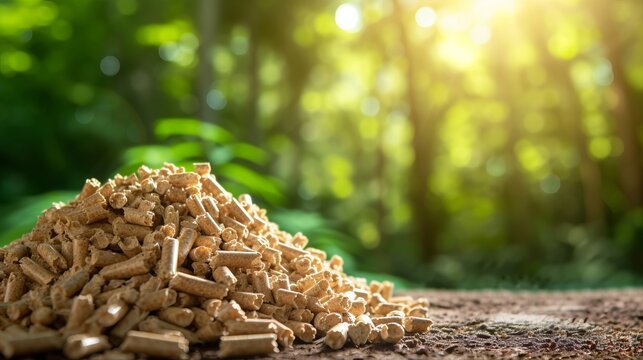





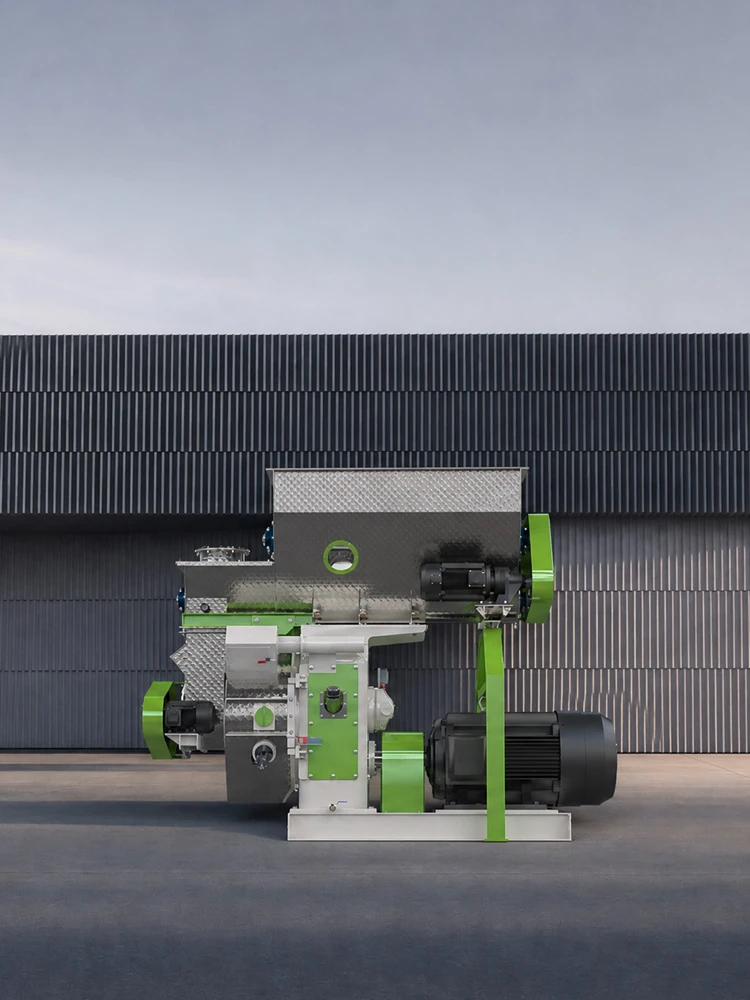
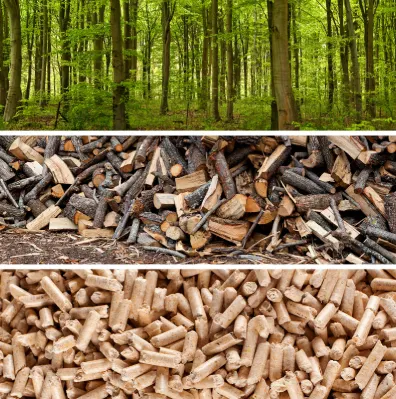
Sawdust is one of the most common by-products of wood processing. Furniture factories, sawmills, woodworking shops, and timber processing plants can generate large quantities of fine wood residues every day. Instead of treating this material simply as waste, many businesses and biomass energy projects process it into dense pellets that are easier to store, transport, and use as fuel.
The basic idea sounds simple: collect sawdust, remove unsuitable materials, reduce moisture, compress the particles, and produce uniform pellets. In practice, however, pellet production involves several technical decisions. Raw material properties, moisture content, particle size, equipment configuration, production capacity, and drying requirements can all influence the final result.
So, how should a sawdust pellet project be planned? What kind of equipment is necessary? And when does a small processing system become a complete biomass pellet production line? This article explains the process step by step.
Why Is Sawdust Suitable for Biomass Pellets?
Sawdust has several characteristics that make it suitable for densification. Wood particles generally contain natural lignin, a component that softens under suitable heat and pressure. During pelletizing, lignin can help bind the particles together without requiring large amounts of external binding agents.
Another important advantage is particle uniformity. Sawdust from industrial woodworking processes is often relatively fine, which reduces the amount of mechanical size reduction required before pelletizing. However, this does not mean that every type of sawdust can be processed directly.
Different wood species produce particles with different densities, fiber structures, and chemical characteristics. Hardwood and softwood residues can behave differently during compression. Bark content can also affect ash levels and pellet quality. In addition, sawdust contaminated with paint, adhesives, plastics, treated wood, or other foreign substances may not be appropriate for fuel production.
Therefore, the first step is not buying equipment. It is understanding the available raw material.
What Should Be Checked Before Building a Pellet Plant?
Before designing a production system, several basic parameters should be evaluated.
The first is moisture content. Material that is too wet generally requires drying before pelletizing, while excessively dry material may also create problems with binding and pellet formation. A suitable moisture range depends on the material and equipment, but biomass pellet production commonly requires careful moisture control rather than simply relying on visual inspection.
The second factor is particle size. Although sawdust is already fine, oversized chips, wood strips, and other coarse particles may need to be removed or processed through a hammer mill.
The third consideration is cleanliness. Stones, metal pieces, plastic fragments, and other contaminants can damage equipment and reduce pellet quality. Magnetic separation and screening may therefore be useful parts of the preparation system.
Finally, the expected production capacity should be estimated from actual raw material availability rather than the desired machine output alone. A machine capable of producing several tons per hour is of limited practical value if the plant cannot consistently supply enough suitable biomass.
What Does a Typical Sawdust Pellet Production Process Look Like?
A basic process can be divided into several stages:
Raw material receiving → screening → size reduction → drying → conditioning → pelletizing → cooling → screening → packing or storage
Not every project needs every stage. For example, relatively dry and fine sawdust may require little size reduction. Conversely, wet sawdust with a large proportion of wood chips may need more intensive preparation.
The process should therefore be designed around the characteristics of the material instead of following a fixed equipment list.
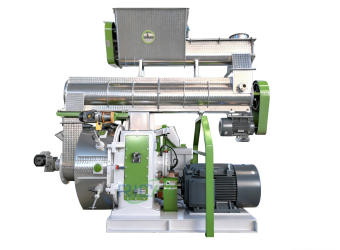
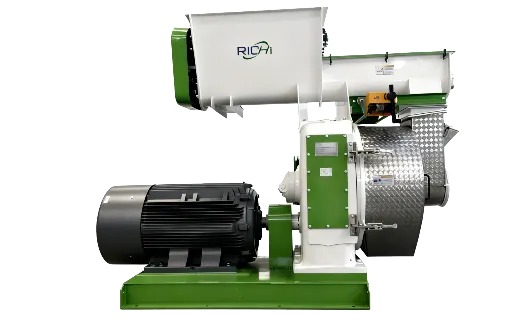
One commonly discussed equipment choice is a pellet mill for sawdust, which compresses prepared biomass particles through a die to form cylindrical pellets. The die opening, compression ratio, feed rate, and operating conditions all influence pellet formation.
The pelletizer is important, but it is only one part of the complete system. Poor drying, inconsistent feeding, or unsuitable particle size can cause problems even when the pellet mill itself is properly selected.
How Important Is Moisture Control?
Moisture is one of the most important variables in biomass pellet production.
If sawdust contains too much water, the material may become difficult to compress efficiently. Excessive moisture can also increase drying costs and may contribute to soft pellets or unstable production. On the other hand, material that is excessively dry may not form strong pellets as easily because the natural binding characteristics of the biomass can be affected.
A drum dryer, rotary dryer, or another suitable drying system may be used when the incoming biomass has a high moisture content. The exact drying configuration depends on the feedstock, initial moisture, desired capacity, available energy source, and local operating conditions.
For this reason, moisture testing should be carried out before finalizing the process design. Simple laboratory measurements can provide much more useful information than estimating moisture content based only on appearance.
Can Rice Husk Be Processed in a Similar Way?
Sawdust is not the only biomass material suitable for pellet production. Agricultural residues such as rice husks, peanut shells, corn stalks, and other crop-processing by-products can also be densified under suitable conditions.
However, agricultural residues do not necessarily behave exactly like wood. Rice husk, for example, contains a relatively high proportion of ash and silica compared with many woody materials. This affects combustion characteristics, equipment wear, and the type of pellet application that may be appropriate.
A 1-2 t/h rice husk pellet mill may therefore be configured differently from equipment used primarily for clean sawdust. The material’s ash content, moisture level, particle characteristics, and intended end use should all be considered when selecting equipment.
This illustrates a broader principle: biomass pellet production equipment should be selected according to the feedstock rather than simply according to a nominal capacity.
What Raw Materials Can Be Used in a Biomass Pellet Line?
One of the most frequently asked questions when planning a biomass project is what raw materials for biomass fuel pellet production line can be used?
Related Post: https://commercialpelletmill.com/biofuel-pellet-production-line/
The answer depends on the intended fuel product and local availability. Common examples include sawdust, wood shavings, wood chips, rice husks, peanut shells, sunflower husks, corn stalks, cotton stalks, bamboo residues, and certain other agricultural by-products.
However, “biomass” is a broad category. Two materials that both appear to be agricultural waste can have very different moisture levels, fiber structures, ash contents, and bulk densities.
For example, sawdust generally has a different densification behavior from rice husk. Straw may require different preparation from wood residues because of its fibrous structure. Some materials may also require chopping or special grinding before they can enter the pelletizer efficiently.
Therefore, raw material testing should be considered an essential part of process planning.
How Does Particle Size Affect Pellet Quality?
Particle size influences how biomass particles fill the die channels and how effectively they bond under pressure.
If the particles are too large, they may bridge or block feeding systems and make pellet formation less stable. If they are excessively fine, the grinding process may consume unnecessary energy without providing a meaningful improvement in pellet quality.
For many sawdust applications, the incoming material is already close to a suitable size. Nevertheless, a hammer mill may still be required when the feedstock contains larger wood fragments.
Uniform feeding is also important. Sudden changes in particle size can alter the amount of material entering the pelletizer and create fluctuations in production.
A practical production line therefore aims for a consistent feedstock rather than simply the smallest possible particle size.
What Happens Inside the Pellet Mill?
During pelletizing, prepared biomass enters the compression chamber and is forced through openings in a die. Mechanical pressure and friction generate heat, while the particles are compressed into a denser form.
The newly formed pellets are then cut to the desired length.
Several variables influence this process. These include feed rate, die specifications, roller condition, biomass moisture, particle size, and machine operating speed.
If the material does not enter the die consistently, output can fluctuate. If the moisture is unsuitable, pellets may be weak or difficult to form. Excessive pressure or unsuitable operating conditions can increase energy consumption and mechanical wear.
This is why pelletizing should be viewed as a process-control problem rather than simply a matter of pressing biomass through a machine.
Is Cooling Necessary After Pelletizing?
Fresh pellets can be relatively hot when they leave the pelletizer. They may also contain residual moisture and can be more fragile immediately after production.
A cooling process helps reduce pellet temperature and stabilize the product before screening and packaging. Counter-flow coolers are commonly used in larger biomass pellet systems because they can provide controlled cooling while removing some remaining moisture.
After cooling, pellets can pass through a screening stage. Fine particles and broken pellets are separated and may be recycled into the production process.
For small systems, the cooling and screening arrangement may be simpler. The appropriate configuration depends largely on production capacity and the requirements of the final product.
How Should a Small Pellet Project Be Designed?
Small-scale projects often have different priorities from large industrial plants.
A small operator may have limited raw material supply and may not need a high-capacity drying system. In some cases, locally generated sawdust is already relatively dry, making a simpler process possible.
However, smaller does not automatically mean simpler. Feeding stability, dust management, storage, electrical requirements, and maintenance still need to be considered.
Production capacity should be calculated based on realistic operating hours. A machine rated for a particular hourly output will not necessarily deliver that output continuously under every raw material condition.
It is also useful to calculate annual raw material availability. For example, if a woodworking facility produces only a limited quantity of sawdust each day, installing equipment with substantially higher nominal capacity may lead to low utilization.
What Are the Main Operating Costs?
The cost structure of a biomass pellet project normally includes more than the pelletizing machine itself.
Electricity is one major operating expense. Grinding, drying, pelletizing, conveying, cooling, and dust collection can all consume energy.
Raw material handling is another factor. If biomass is available as a low-cost by-product on site, transportation costs may be relatively low. If material must be collected from multiple suppliers, logistics can become a significant part of the total cost.
Drying can also be energy-intensive when wet biomass is used. Therefore, the initial moisture content of the feedstock can have a major influence on operating economics.
Maintenance should not be overlooked either. Dies, rollers, bearings, screens, hammers, and other wear components require inspection and periodic replacement depending on operating conditions.
What About Dust and Workplace Safety?
Biomass processing generates dust, especially during grinding, conveying, screening, and pellet handling.
Dust collection systems can help control airborne particles and maintain a cleaner working environment. Enclosed conveyors and appropriate ventilation can further reduce unnecessary dust exposure.
Fire prevention is another important consideration. Fine biomass dust can present a combustible-dust hazard under certain conditions. Good housekeeping, appropriate electrical equipment, temperature monitoring, and a well-designed dust collection system are therefore important parts of responsible plant operation.
Operators should also establish procedures for equipment shutdown, cleaning, lubrication, and inspection. Safety should be integrated into the process design rather than treated as an afterthought.
How Should Equipment Capacity Be Selected?
Capacity should match three things: raw material supply, expected market demand, and available operating resources.
If a facility can consistently collect only a small quantity of suitable biomass, a large pellet line may not be economical. Conversely, a plant with abundant raw material may need multiple processing stages or parallel equipment to achieve the desired output.
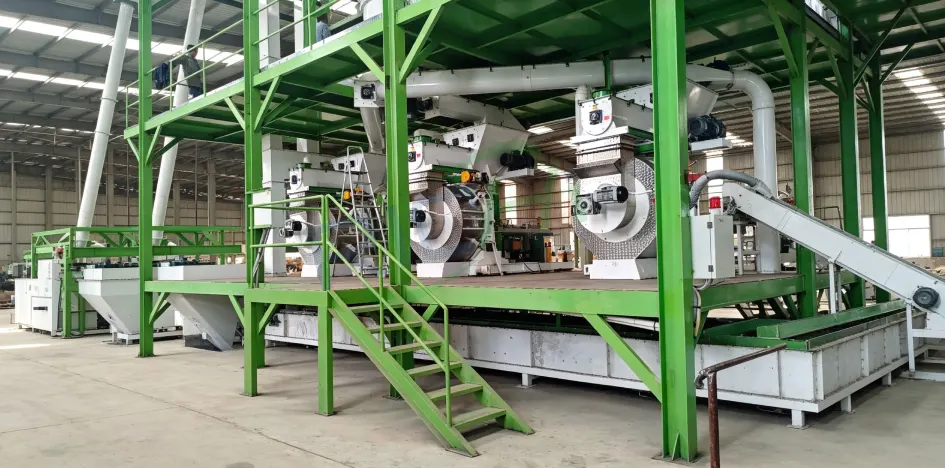
Capacity also influences auxiliary equipment. A higher-output pelletizer generally requires corresponding increases in drying, conveying, cooling, screening, and storage capacity.
For this reason, it is better to evaluate the entire material flow than to choose a pellet mill based on its rated capacity alone.
What Helpful Checks Should Be Made Before Production?
There are several helpful hints that can make biomass pellet projects easier to manage.
First, test the raw material before finalizing equipment specifications. Moisture, particle size, ash content, bulk density, and contamination can all influence the process.
Second, keep production records. Recording output, electricity consumption, moisture levels, die condition, and operating hours can help identify changes before they become major problems.
Third, avoid making process changes too quickly. If pellet quality suddenly declines, check raw material moisture and particle size before changing several machine settings simultaneously.
Fourth, maintain consistent feeding. Stable feeding conditions often contribute to more predictable pellet quality and equipment performance.
Finally, leave sufficient space for maintenance around major machines. A compact layout may save floor area initially, but insufficient maintenance access can create difficulties later.
Can Biomass Pellets Be Stored for Long Periods?
Proper storage is important because pellets can absorb moisture from the surrounding environment.
Pellets should generally be stored in a dry, well-ventilated area protected from rain and excessive humidity. Direct contact with wet floors should be avoided.
Storage design also depends on the intended application. Bulk storage may be suitable for larger industrial users, while bags can be more practical for smaller consumers.
The storage area should also be kept clean. Accumulated fines and dust can create housekeeping and safety problems, especially in enclosed spaces.
Good storage practices protect the product after all the energy and resources invested in processing it.
What Role Does Process Design Play in Pellet Quality?
Pellet quality is not determined by one machine alone. It is the result of the entire process.
Consider a line in which the pelletizer is correctly sized but the dryer produces inconsistent moisture. The pelletizer may experience unstable operation. Likewise, if the grinder produces highly variable particle sizes, pellet density and durability can fluctuate.
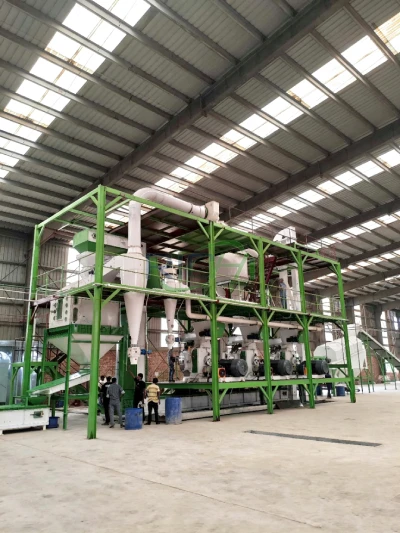
This is why process design should be approached as a complete system.
A suitable equipment supplier can help evaluate raw materials, production capacity, drying requirements, conveying distances, cooling arrangements, and storage needs. For projects involving different biomass materials, testing and process verification can be particularly useful.
Companies such as wood pellet maker are examples of manufacturers involved in biomass pellet and related processing equipment, but the technical suitability of any proposed system should ultimately be assessed according to the actual raw material and production requirements.
Should a Biomass Pellet Line Be Fully Automated?
Automation is not necessarily required for every project.
Small plants may use relatively simple control systems, while larger facilities often require centralized monitoring of temperature, current, feeding rate, moisture, and equipment status.
The value of automation depends on production scale and labor availability. Automated systems can reduce manual intervention and improve consistency, but they also introduce additional sensors, control equipment, and maintenance requirements.
A sensible approach is to automate the operations where consistency and safety benefit most, while avoiding unnecessary complexity.
What Is the Most Important Step Before Investing?
Perhaps the most important step is understanding the raw material.
A pellet line designed for clean, dry sawdust may not be suitable for wet agricultural residues without modification. Likewise, equipment selected for rice husks may not deliver the same performance with fibrous straw or large wood chips.
A proper feasibility assessment should therefore answer several basic questions:
- How much biomass is available each day or month?
- What is its typical moisture content?
- What is the particle size distribution?
- Does it contain bark, soil, stones, or other contaminants?
- What production capacity is actually required?
- Is drying necessary?
- What type of pellet will be produced?
- How will the pellets be cooled, stored, and transported?
- What energy sources are available?
- How much space is available for the production system?
Once these questions are answered, equipment selection becomes much more straightforward.
Final Thoughts: Is Sawdust Pellet Production Complicated?
Turning sawdust into biomass pellets is based on a relatively straightforward principle, but achieving stable production requires attention to many details.
Raw material quality, moisture control, particle size, grinding, drying, pelletizing, cooling, screening, storage, and safety all form part of the same process. A successful project does not necessarily require the most complicated equipment. Instead, it requires equipment and process design that match the actual characteristics of the biomass.
For anyone considering a sawdust pellet project, the best starting point is therefore not a machine catalog but a careful evaluation of the feedstock and production objectives. Understanding the material first makes it easier to determine which processing stages are truly necessary, what capacity is realistic, and how the overall system should be configured.
With appropriate preparation and process control, sawdust and other suitable biomass residues can be transformed from low-density by-products into a more convenient solid fuel, providing a practical pathway for utilizing materials that might otherwise have limited value.