



You have probably seen it happen. Two alfalfa growers, same region, same soil, same rainfall. One sells his hay for a modest price and hopes the weather cooperates next year. The other sells pellets into markets the first grower never considered, commands a premium, and sleeps better at night. The difference is not the crop. It is what happens after the crop is cut. It is the decision to stop selling a commodity and start selling a product. And for a growing number of growers, that decision has changed everything.
Alfalfa is one of the most valuable forages a farmer can grow. It is high in protein, rich in minerals, and highly digestible. Dairy cows produce more milk on it. Horses thrive on it. Rabbits, goats, and sheep all benefit from it. For centuries, it has been the gold standard of forage. But it is also fragile. The leaves, which contain most of the protein and vitamins, shatter easily. Every time the crop is handled—raking, baling, loading, feeding—some of those leaves are lost. By the time the hay reaches the animal, a significant portion of its nutritional value has crumbled away. That is the hidden cost of hay. The crop you harvest is not the crop you feed. And the difference is money out of your pocket.
The Losses That Happen After Harvest
Walk through a hay field after baling and you will see it. A dusting of green leaves on the ground. Those leaves are the most nutritious part of the plant. They contain two to three times more protein than the stems. They are also the most digestible. When they shatter and fall, the hay that remains is mostly stem—higher in fiber, lower in energy, and less palatable. Research has shown that leaf loss during harvest and handling can range from 15% to 30% or more. That is not a small amount. If you are producing 500 tons of alfalfa hay, you could be losing 75 to 150 tons of the most valuable part of the crop. At current hay prices, that is tens of thousands of dollars in lost revenue.
And the loss does not stop at the field. It continues during storage, during transport, and during feeding. Every time the hay is moved, more leaves break off. The fine particles that accumulate at the bottom of the feeder are the remnants of what was once premium forage. Weather makes everything worse. Rain during curing leaches soluble nutrients. High humidity encourages mold. Delayed baling reduces quality. Every delay and every weather event takes a toll. The hay that finally reaches the animal is a shadow of what it could have been.
What Pelleting Changes
Pelleting solves the leaf loss problem by grinding the entire plant—leaves and stems together—into a uniform meal, then compressing that meal into dense pellets. Nothing is lost. Every leaf that would have shattered is captured in the pellet. Every stem is ground and incorporated. The nutritional profile of the pellet reflects the nutritional profile of the whole plant, not just the stems that survived handling. The pelleting process also improves digestibility. The heat and pressure gelatinize starches and break down some of the fiber structures. The result is a feed that animals can utilize more efficiently. More of what they eat is converted into milk, meat, or fiber.
There is another advantage: consistency. Hay varies from field to field, from cutting to cutting, and even from bale to bale. Pellets are uniform. Every pellet contains the same balance of nutrients. Feeders can formulate rations with confidence, knowing that the alfalfa pellets they are using will perform the same way every time. That consistency commands a premium price in the market. It opens doors to buyers who would never consider purchasing baled hay—feed mills, export terminals, and specialty operations that demand a standardized product.
Choosing the Right Equipment
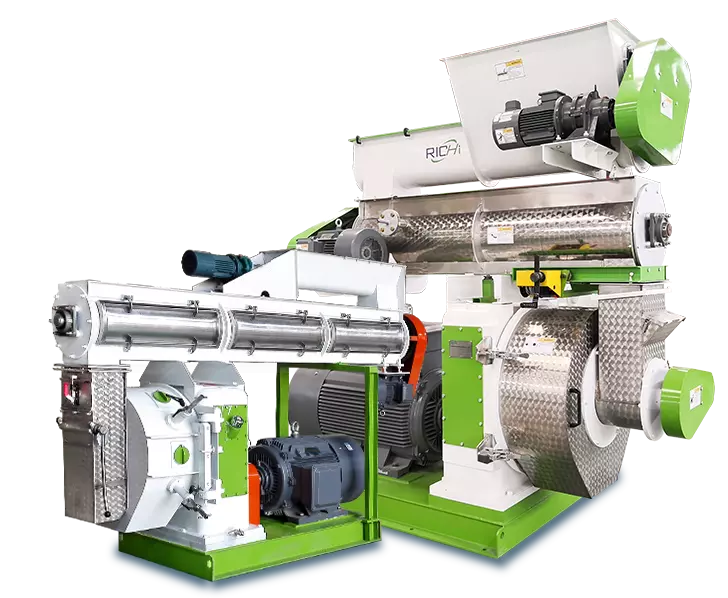
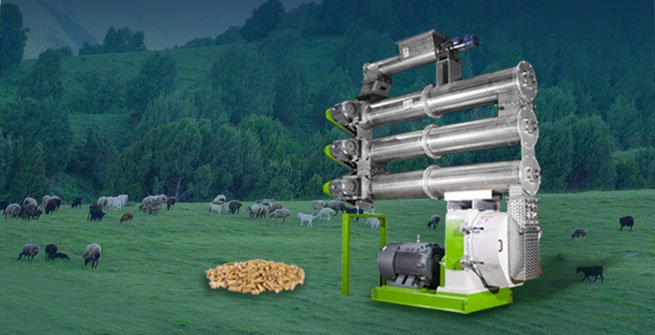
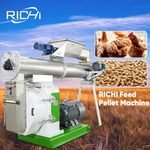
If you are convinced that pelleting makes sense, the next question is equipment. Not all pellet machines are the same. Some are designed for wood pellets. Some are designed for poultry feed. Some are general-purpose machines that can handle a range of materials but do not excel at any of them. Alfalfa is fibrous and abrasive. It requires a machine that is built for the job. When you start looking for an alfalfa pellet mill for sale, you will find options at different scales and price points. The right choice depends on your production goals, your available power, and your budget. A small machine might produce a few hundred kilograms per hour, suitable for a farm that wants to process its own feed. A larger machine might produce several tons per hour, suitable for a commercial operation.
The die is the most important component. It must be made from wear-resistant alloy. Alfalfa is abrasive, and a standard steel die will wear out quickly. The die hole diameter determines the pellet size. For alfalfa, pellets are typically 4 to 8 millimeters, depending on the animals being fed. The compression ratio—the relationship between the die hole diameter and the die thickness—affects pellet density and durability. A higher compression ratio produces denser, more durable pellets but requires more power and generates more heat. The right ratio depends on the material and the desired pellet characteristics. The conditioning system is equally important. Proper steam conditioning softens the fibers and activates the natural binders. Without adequate conditioning, the pellets will be weak and dusty. With too much conditioning, the material becomes sticky and can clog the die.
Scaling Up: The Industrial Option
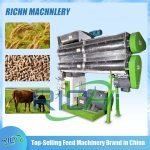
For operations that want to sell into larger markets, a single pellet mill is not enough. You need a complete system. An industrial alfalfa pellet production line integrates grinding, mixing, conditioning, pelleting, cooling, screening, and packaging into a coordinated flow. The line is designed to handle large volumes continuously, with minimal labor and maximum efficiency. The advantage of an industrial line is not just volume. It is consistency. When every stage of the process is controlled, the final product is predictable. The nutrient profile is uniform. The pellet quality is stable. The feed performs the same way every day, which means the animals perform the same way every day.
An industrial line also allows for greater flexibility. You can produce different formulations for different customers. You can switch between pellet sizes. You can incorporate a wider range of ingredients. And you can respond quickly to changes in the market or the availability of raw materials. The investment in an industrial line is significant. But the economics can be compelling. The reduction in leaf loss alone can pay for the equipment over time. The improved feed efficiency adds to the return. And the ability to sell a premium product—consistent, high-protein alfalfa pellets—opens markets that baled hay cannot reach.
The Manufacturer Behind the Machine
The equipment is only part of the equation. The manufacturer behind it matters just as much. A company with experience in alfalfa processing understands the specific challenges of the material. They know which die works best. They know the conditioning parameters that produce the best results. They know the maintenance practices that extend the life of the machine. RICHI manufacture has been building feed and biomass processing equipment for decades. They have worked with alfalfa producers in many countries. They understand that alfalfa is not the same as wood or straw. They have designed their equipment to handle the unique characteristics of this forage. Their pellet mills use hardened dies and precision rollers. Their production lines are engineered for efficiency and reliability. And they provide the support—installation, training, spare parts, and technical assistance—that keeps operations running.
A good manufacturer does not just sell you a machine. They help you design a system that fits your operation. They ask about your raw material, your capacity goals, and your market. They recommend the right configuration. They stand behind their equipment with a warranty and responsive service. That partnership can be the difference between a line that runs smoothly for years and one that sits idle waiting for a part or an answer.
The Economics of Pelleting Alfalfa
The decision to invest in pelleting equipment is ultimately an economic one. The costs include the equipment, installation, energy, labor, maintenance, and financing. The benefits include reduced leaf loss, improved feed efficiency, access to new markets, and better storage and transport economics. The reduction in leaf loss alone can be significant. If 20% of the crop is currently lost between field and feeder, pelleting can recover most of that value. On a large alfalfa operation, that recovered value can cover a substantial portion of the equipment cost. The revenue from pellet sales adds to the return. Alfalfa pellets typically sell at a premium to baled hay because of their consistency and convenience. Export markets often pay especially well for high-quality pellets that meet protein and durability specifications.
The operating costs are predictable. Electricity is the largest variable cost. Labor depends on automation. Maintenance depends on wear parts and operating hours. A well-designed line with good support will have lower long-run costs than a poorly designed one. The payback period for a pellet line depends on the scale and the market. For many operations, it is two to four years. After that, the line generates ongoing savings or income. The equipment has a useful life of ten to fifteen years or more with proper maintenance. So the long-term return can be substantial.
What to Look For in a Supplier
Before you buy, ask the supplier these questions. What is the actual capacity with my material? What die configuration do you recommend and why? What is the expected die life? What spare parts should I keep on hand? What training do you provide? What support do you offer after the sale? The answers will tell you a lot about the supplier and the equipment. A supplier who hesitates or gives vague answers is not the one you want to work with. A supplier who engages with your questions and provides specific, detailed answers is the one you want.
It also helps to visit a working installation. See the equipment in operation. Talk to the operators. Watch how the pellets come out. Ask about maintenance and downtime. A firsthand look will tell you more than any brochure. If you cannot visit, ask for references from other customers and call them. Their experience will tell you more than any sales pitch.
The Market for Alfalfa Pellets
Alfalfa pellets serve several markets. The dairy industry is the largest consumer. Dairy farmers use alfalfa pellets as a protein supplement in total mixed rations. The consistency of the pellets allows for precise formulation and predictable milk production. The horse market is another important segment. Horse owners value alfalfa pellets for their high nutritional content and low dust. Pellets are easier to store and handle than hay, and they reduce the risk of respiratory issues caused by mold and dust. The export market is growing. Alfalfa pellets are shipped from production regions to areas where alfalfa cannot be grown or where hay is scarce. The density of the pellets makes transportation economical, even over long distances.
There are also smaller markets. Rabbit and guinea pig owners use alfalfa pellets as a primary feed. Organic fertilizer producers sometimes use alfalfa pellets as a soil amendment. And in some regions, alfalfa pellets are used as a biomass fuel, though this is less common than for wood or straw pellets. The premium markets pay for consistency, cleanliness, and nutritional quality. That is where a well-run production line can differentiate itself. Consistent pellets command better prices. Inconsistent pellets are discounted or rejected.
A Final Thought
Alfalfa is a valuable crop. But its value is diminished by the losses that occur during harvest, storage, and feeding. Pelleting captures that value and delivers it to the animal or the market. The technology is proven. The equipment is available. The markets are established. For farmers and feed producers looking to get more from their alfalfa, pelleting is a practical solution. It preserves nutrition, improves efficiency, and opens new opportunities. The investment is significant, but the returns are real. The question is not whether alfalfa pellets are worth producing. It is whether you are ready to start.