




Waste management has become one of the most pressing environmental challenges of the 21st century. Every year, billions of tons of agricultural residues, forestry by-products, wood waste, and organic industrial materials are generated around the world. While much of this biomass has significant energy potential, a large portion is still burned in open fields, dumped in landfills, or left to decompose naturally. These practices not only waste valuable resources but also contribute to air pollution, greenhouse gas emissions, and environmental degradation.
Biomass pelletizing offers an effective solution by transforming low-value organic waste into high-density renewable fuel. Through mechanical compression, loose biomass materials are converted into standardized pellets that are easier to transport, store, and utilize. This process supports waste recycling, promotes the circular economy, reduces dependence on fossil fuels, and creates new economic opportunities for rural communities and biomass processing industries.
Today, biomass pelletizing is recognized as one of the most practical methods for recycling agricultural and forestry waste while simultaneously producing clean, renewable energy. As governments and industries continue to pursue carbon neutrality and sustainable development goals, biomass pellet production has become an increasingly important component of modern waste recycling systems.
Understanding Biomass Waste
Biomass waste refers to organic materials generated from agricultural production, forestry operations, food processing, and wood manufacturing. Unlike plastic or chemical waste, biomass is renewable and biodegradable, making it an ideal resource for recycling into energy products.
Common biomass waste materials include:
- Sawdust
- Wood chips
- Wood shavings
- Tree branches
- Bark
- Rice husks
- Wheat straw
- Corn stalks
- Cotton stalks
- Sugarcane bagasse
- Peanut shells
- Coconut shells
- Palm fiber
- Bamboo residues
- Coffee husks
- Sunflower husks
- Alfalfa residues
These materials often accumulate in large quantities, creating storage and disposal challenges if not properly utilized.
The Waste Recycling Challenge
Traditional disposal methods for biomass waste present several environmental problems.
Open-field burning produces:
- Fine particulate matter
- Carbon monoxide
- Nitrogen oxides
- Volatile organic compounds
- Large amounts of carbon dioxide
Landfilling organic waste generates methane, a greenhouse gas significantly more potent than carbon dioxide.
Simply leaving biomass to decay also wastes valuable renewable energy resources.
As global environmental regulations become stricter, industries are seeking more sustainable waste recycling solutions.
What Is Biomass Pelletizing?
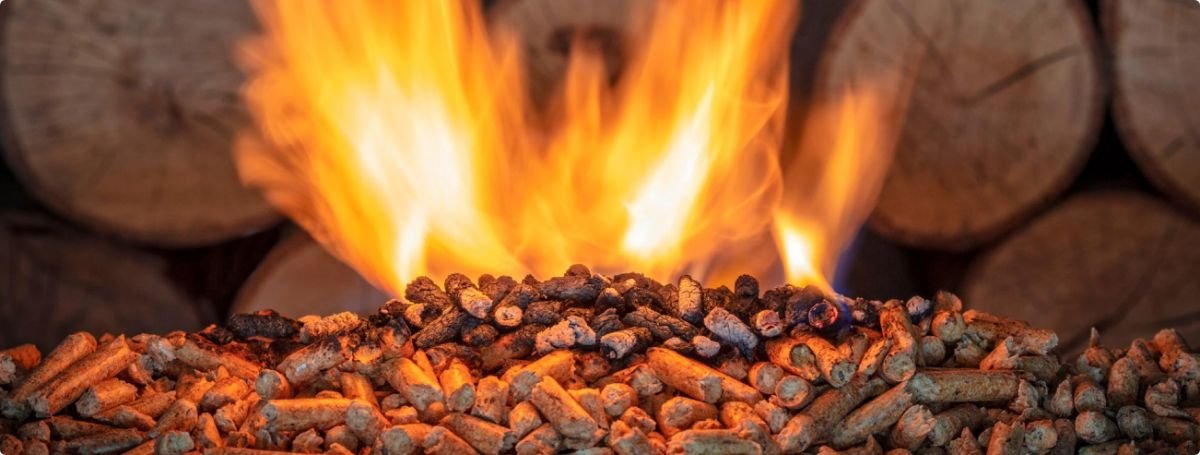
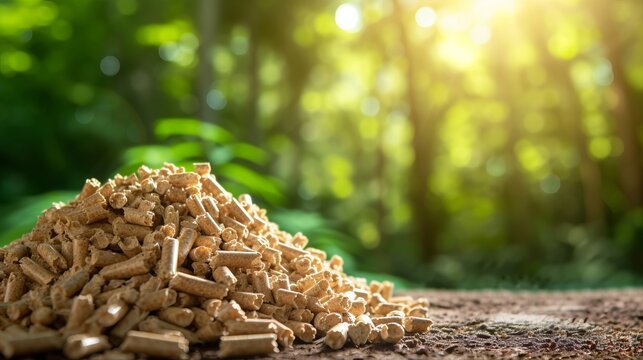
Biomass pelletizing is the process of compressing finely prepared biomass into cylindrical pellets using high pressure.
During pellet formation, friction between rollers and the die raises the material temperature. Natural lignin contained within plant fibers softens and acts as a binding agent, eliminating the need for synthetic adhesives in most applications.
The finished pellets possess:
- High density
- Uniform dimensions
- Excellent durability
- Low moisture content
- High combustion efficiency
These characteristics make biomass pellets ideal renewable fuels.
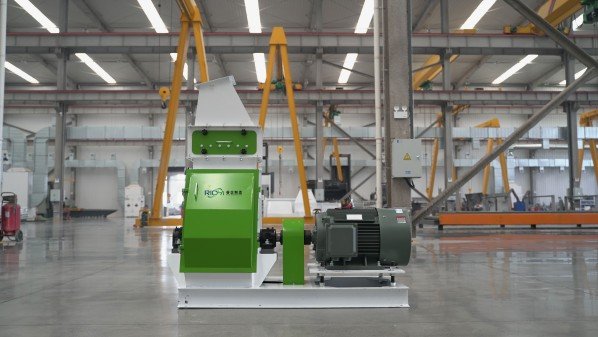
(Related machine: efficient wood pellet mill)
How Pelletizing Supports Waste Recycling
Pelletizing transforms waste into commercially valuable products.
Instead of treating biomass residues as disposal problems, industries can convert them into marketable fuel for residential heating, industrial boilers, power generation, and combined heat and power systems.
This approach creates value throughout the recycling chain.
Benefits include:
- Waste reduction
- Renewable energy production
- Resource conservation
- Lower disposal costs
- Additional revenue
- Reduced environmental impact
The result is a sustainable recycling model that benefits both the environment and the economy.
The Biomass Pellet Production Process
Waste recycling through pelletizing involves several production stages.
Raw Material Collection
Biomass is gathered from:
- Farms
- Sawmills
- Furniture factories
- Forestry operations
- Agricultural processing facilities
Reliable raw material supply is essential for continuous production.
Size Reduction
Large biomass materials are processed using:
- Chippers
- Crushers
- Shredders
- Hammer mills
Uniform particle size improves pellet quality and production efficiency.
Drying
Fresh biomass often contains excessive moisture.
Rotary dryers reduce moisture to approximately 10–15%, creating suitable conditions for pelletizing.
Grinding
Fine grinding further standardizes particle size, allowing better compression inside the pellet mill.
Pelletizing
Prepared biomass enters the pellet mill, where rollers compress material through precision die holes.
The resulting pellets are cut to the desired length before cooling.
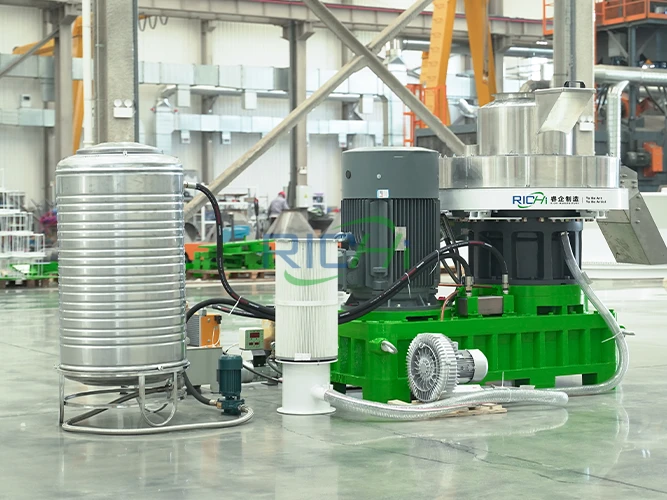
Many modern manufacturers choose a vertical wood pellet production machine because of its stable operation, efficient feeding system, and ability to process a wide variety of biomass materials. A vertical wood pellet production machine is particularly suitable for recycling forestry residues, sawdust, wood chips, straw, and other agricultural wastes into high-quality biomass fuel pellets with excellent durability and density.
Cooling and Screening
Fresh pellets are cooled gradually before passing through vibrating screens.
Broken pellets and fines are recycled back into production.
Packaging
Finished pellets are packaged for transportation or bulk storage.
Environmental Benefits of Biomass Pelletizing
Reduces Open Burning
Many agricultural regions traditionally burn crop residues after harvest.
Pelletizing provides an alternative use for these materials, significantly reducing smoke and air pollution.
Reduces Greenhouse Gas Emissions
Replacing coal with sustainably sourced biomass pellets helps lower net carbon emissions.
Although biomass combustion releases carbon dioxide, the carbon was previously absorbed during plant growth, contributing to a relatively balanced carbon cycle.
Reduces Landfill Waste
Organic materials no longer occupy valuable landfill space.
This also reduces methane emissions generated during decomposition.
Improves Resource Efficiency
Every ton of biomass converted into pellets represents valuable renewable energy recovered from waste.
This supports more efficient resource utilization.
Economic Advantages
Waste recycling through biomass pelletizing generates substantial economic value.
Additional Income for Farmers
Agricultural residues become commercial products instead of disposal burdens.
Farmers can sell:
- Straw
- Corn stalks
- Rice husks
- Cotton stalks
- Peanut shells
This creates new revenue streams.
Increased Value for Wood Processors
Furniture manufacturers and sawmills produce significant quantities of wood residues.
Pelletizing converts these by-products into profitable fuel products.
Job Creation
Pellet plants require workers in:
- Raw material collection
- Transportation
- Equipment operation
- Maintenance
- Quality control
- Logistics
This stimulates employment in rural communities.
Supporting the Circular Economy
The circular economy emphasizes continuous resource utilization instead of waste disposal.
Biomass pelletizing perfectly illustrates this concept.
The process follows a sustainable cycle:
Agricultural production generates biomass residues.
Residues become pellet raw materials.
Pellets generate renewable energy.
Ash produced during combustion can sometimes return to farmland as a soil amendment.
This recycling loop minimizes waste while maximizing resource efficiency.
Improving Transportation Efficiency
Loose biomass has extremely low bulk density.
Typical densities include:
- Loose sawdust: 180–250 kg/m³
- Straw: 80–150 kg/m³
After pelletizing, bulk density often exceeds 650 kg/m³.
Higher density dramatically reduces transportation costs.
More energy can be transported per truckload, lowering fuel consumption and logistics expenses.
Improving Storage
Loose biomass absorbs moisture easily and occupies large storage areas.
Pellets require significantly less storage space.
Advantages include:
- Reduced warehouse costs
- Better inventory management
- Lower moisture absorption
- Longer storage life
- Reduced biological degradation
These improvements simplify biomass supply chains.
Applications of Biomass Pellets
Waste-derived biomass pellets serve many industries.
Residential Heating
Pellet stoves provide clean, efficient heating for homes.
Commercial Buildings
Schools, hotels, hospitals, and office buildings increasingly adopt biomass heating systems.
Industrial Boilers
Manufacturing plants use pellets to replace fossil fuels.
Power Plants
Dedicated biomass power stations generate electricity using renewable pellet fuel.
Combined Heat and Power
CHP facilities maximize energy efficiency by producing electricity and useful heat simultaneously.
Technological Advances
Modern biomass pellet plants increasingly integrate intelligent automation. (visit site)
Advanced control systems monitor:
- Material moisture
- Temperature
- Motor load
- Roller pressure
- Pellet quality
- Production capacity
Automation improves production stability while reducing operating costs.
Predictive maintenance technologies also minimize unexpected downtime.
Challenges in Biomass Waste Recycling
Despite its advantages, biomass pellet production faces several challenges.
Feedstock quality may vary seasonally.
Transportation distances influence production costs.
Different biomass materials require different processing conditions.
Equipment maintenance remains essential for continuous production.
Market demand may fluctuate depending on energy prices and government policies.
Successful producers address these challenges through diversified feedstock sourcing and optimized production management.
Future Outlook
Global interest in biomass recycling continues to expand.
Several factors support long-term industry growth:
- Carbon neutrality initiatives
- Renewable energy incentives
- Sustainable waste management policies
- Growing demand for clean industrial fuels
- Increased investment in biomass power generation
Technological innovations will continue improving pellet quality while reducing production costs.
Artificial intelligence, digital monitoring, and energy-efficient equipment are expected to further increase plant productivity.
Why Equipment Selection Matters
Selecting suitable machinery directly influences production efficiency and operating costs.
Modern pellet plants evaluate equipment based on:
- Production capacity
- Energy consumption
- Raw material adaptability
- Automation level
- Maintenance requirements
- Operational reliability
For many recycling facilities, a vertical wood pellet production machine provides significant advantages because its vertical structure promotes smooth material feeding, efficient heat dissipation, and long-term continuous operation. This makes it an excellent choice for converting diverse biomass wastes into premium-quality fuel pellets while supporting large-scale recycling projects.
https://pelletisingmachine.com/vertical-ring-die-wood-pellet-mill
Conclusion
Biomass pelletizing has become one of the most effective technologies for transforming agricultural and forestry waste into valuable renewable energy. Instead of allowing organic residues to become environmental burdens through open burning or landfill disposal, pellet production converts these materials into standardized, high-density fuel with broad commercial applications.
By improving waste utilization, reducing emissions, supporting the circular economy, and generating new economic opportunities, biomass pelletizing creates benefits that extend far beyond renewable energy production. Modern equipment, including the vertical wood pellet machine, enables manufacturers to process a wide range of biomass feedstocks efficiently while maintaining consistent pellet quality and high production capacity. As global demand for sustainable waste recycling solutions continues to increase, biomass pelletizing will remain a critical technology for advancing cleaner energy systems and more efficient resource management worldwide.