




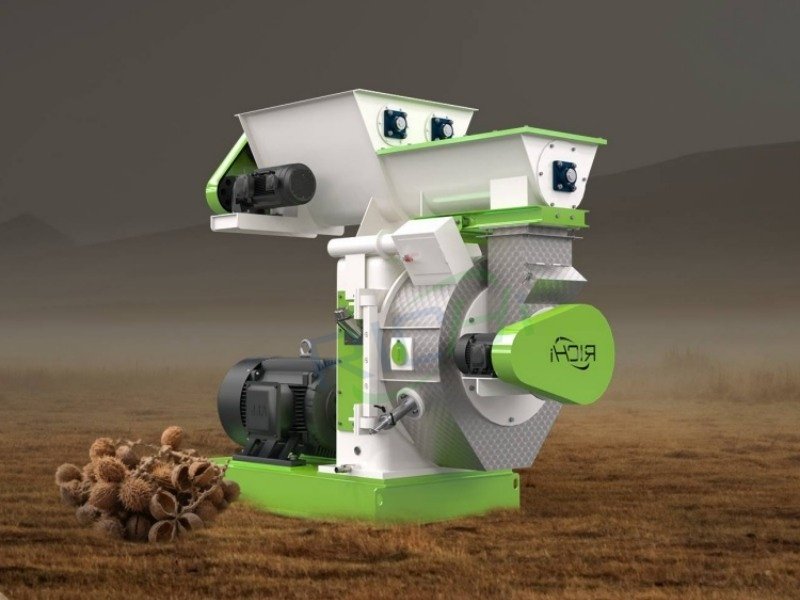
There is a meaningful difference between a small farm-scale husk pellet unit and a full industrial biomass facility. The jump from 1–2 T/H to 5–6 T/H is not simply a matter of buying a larger machine. It involves redesigning raw material logistics, power supply infrastructure, dust control systems, and quality management protocols to match the demands of continuous multi-shift operation. This article addresses that transition — for the plant developer, project engineer, or operations manager who needs to understand what industrial-scale husk pellet production actually requires.
What Changes When You Scale Up?
Several variables that are manageable at small scale become critical constraints at 5–6 T/H:
Raw Material Supply Continuity
A 5 T/H plant running two shifts consumes 80 tonnes of raw husk per day. That is the entire hourly output of a mid-sized rice mill. Securing continuous supply requires either co-location with a large-scale rice processing complex, procurement contracts across multiple mills within a 50 km radius, or covered buffer storage of 5–7 days supply — all of which require upfront logistics planning that a small operator can ignore.
Power Infrastructure
The installed electrical demand of a 5–6 T/H biomass production line typically ranges from 350–550 kW. This exceeds the standard rural supply capacity in many regions and may require dedicated transformer installation, power factor correction systems, and negotiated industrial electricity tariffs. Infrastructure cost for power supply can reach $50,000–$150,000 before the first pellet is made.
Dust and Emission Control
At industrial throughput, biomass dust generation triggers regulatory requirements in every jurisdiction. A properly engineered dust collection system — pulse-jet bag filters, explosion venting on the pellet mill enclosure, and CO monitoring in the dryer — is mandatory rather than optional. Budget $40,000–$100,000 for a compliant environmental system.
The Core Machine: Specifying for 5–6 T/H Output
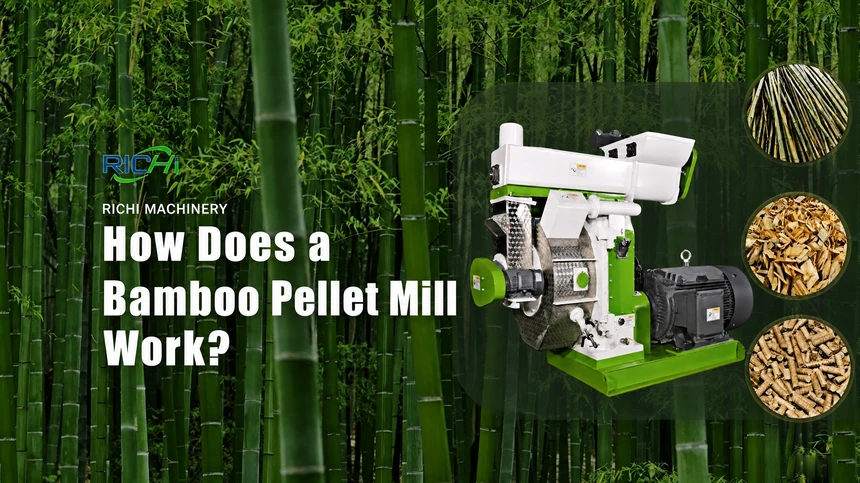
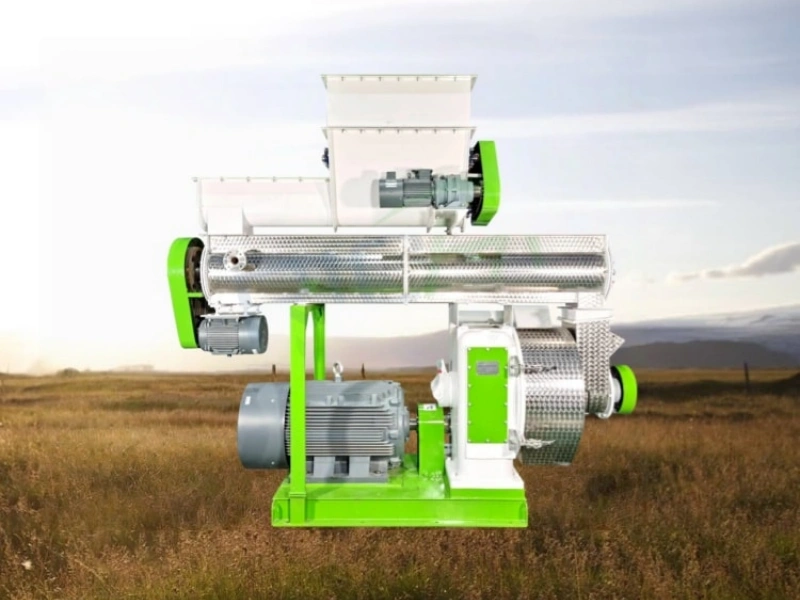
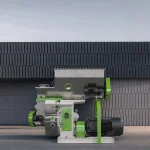
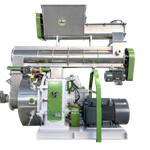
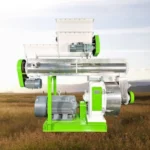
The centrepiece of any industrial facility is a purpose-built biomass husk pellet machine designed for continuous duty at elevated throughput. Several design parameters distinguish industrial-grade machines from scaled-up farm equipment:
- Main drive motor: 250–315 kW ring die motors are standard for 5–6 T/H husk production. Lower-rated motors are undersized for continuous operation with abrasive feedstocks and will trip on thermal overload.
- Die material: High-chromium white iron alloys with carbide hardness above 800 HV are the correct specification for husk. Standard 42CrMo4 alloy dies wear to below-specification compression ratios within 200–300 hours on rice husk, compared to 600–900 hours for the high-chrome alternative.
- Press roller adjustment: Industrial machines incorporate hydraulic or mechanical roller gap adjustment that can be performed under load, allowing operators to compensate for progressive die wear without shutdown.
- Conditioning system: Steam conditioning at 80–90°C for 20–30 seconds residence time is recommended even for husk, which has lower moisture sensitivity than compound feeds. Conditioning reduces die wear by approximately 15% by softening surface silica micro-particles.
Complete Plant Layout for a 5–6 T/H Facility
A properly sequenced 5–6 T/H husk pellet plant includes the following stages, in order:
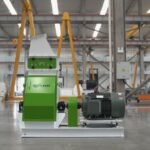
- Pre-cleaning and primary crushing: Removes tramp metal, reduces husk agglomerates, and separates stones before they reach the press.
- Drying (if required): Rotary drum dryer sized for 8–10 T/H green material throughput with 3–5% moisture reduction capacity.
- Buffer hopper and metering feeder: Ensures steady, controlled feed rate to the press regardless of upstream variation.
- Ring die pellet press: Main production stage.
- Counterflow cooler: Sized for 5–6 T/H throughput, target outlet temperature ambient +5°C.
- Vibrating screener: Separates fines for recycle and oversized pellets for re-processing.
- Conveying and bulk storage or automated bagging: Depending on whether product is sold bulk or bagged.
When evaluating options for the core press in this capacity range, a 5-6 T/H rice husk pellet mill for sale from a manufacturer with documented husk-specific engineering — not a repurposed feed press — is the critical specification criterion. Request reference sites processing husk specifically, not wood or feed, and verify throughput data under continuous operating conditions rather than short-term manufacturer trials.
Why Manufacturer Selection Is as Important as Machine Specification
Industrial pellet production equipment is not a commodity purchase. The machine itself accounts for roughly 40–50% of total plant investment; the balance goes to civil works, electrical installation, auxiliary systems, and commissioning. Selecting a manufacturer who can support all phases — pre-engineering, supply, installation, commissioning, and ongoing technical support — dramatically reduces project risk.
Among the manufacturers with documented track records in husk-specific applications at industrial scale, Richi Pellet Mill has established a reference base across Southeast Asia, South Asia, and Sub-Saharan Africa that specifically includes high-silica agricultural residue processing. Their engineering support team provides die compression ratio recommendations based on feedstock Kst values and silica content — a level of application-specific detail that generic equipment catalogues do not provide.
Economic Modelling: 5 T/H at Scale
A simplified annual economics model for a 5 T/H plant, 2-shift, 250 operating days:
- Annual output: 5 T/H × 16 h/day × 250 days = 20,000 tonnes
- Revenue at $90/tonne average: $1,800,000
- Raw material cost at $12/tonne: $240,000
- Operating cost (energy, labour, maintenance, dies): ~$420,000
- Gross profit before financing and depreciation: ~$1,140,000
- Capital investment (complete plant): ~$800,000–$1,200,000
- Indicative payback period: 12–24 months depending on off-take pricing
These numbers are illustrative and region-dependent, but the structure of the economics — low raw material cost, significant processing margin, meaningful scale advantages — is consistent across markets.
Where to Find Detailed Technical Specifications
For plant developers who want to compare detailed equipment specifications, installation footprint requirements, and after-sales support structures across manufacturers, go to website resources maintained by industrial biomass associations in the EU, India, and Southeast Asia provide vetted supplier directories and technology comparison frameworks that save months of independent research.Industrial-scale husk pellet production is a mature technology with proven economics. The barriers to success are not technical — they are commercial (securing off-take), logistical (building raw material supply chains), and financial (accessing capital at acceptable terms). Operators who address these three dimensions before finalising machine specifications consistently outperform those who start with the equipment decision.
(Related Post: https://biomasspelletizer.com/peanut-shell-pellet-machine/)