
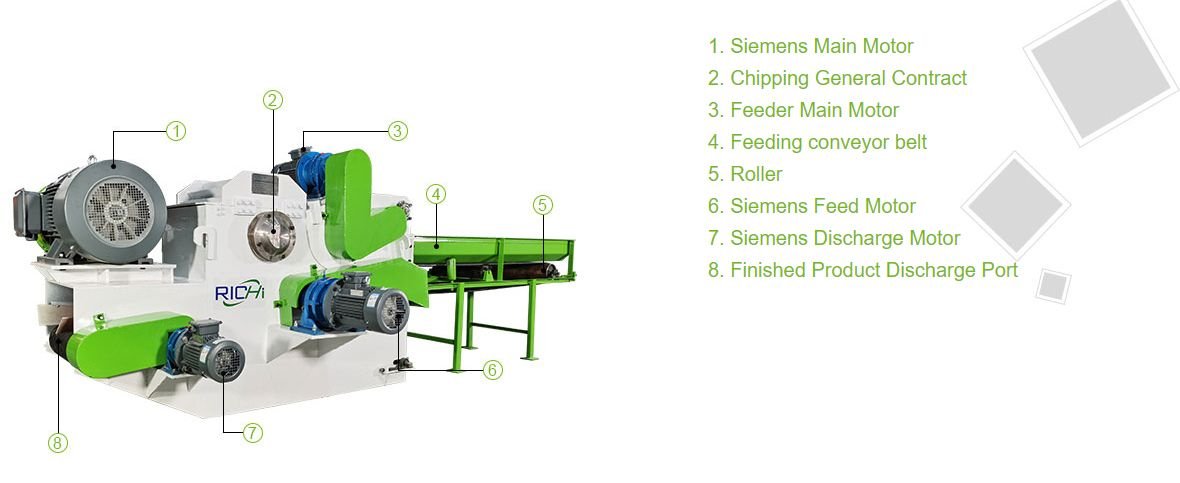
Wood chipper machines are essential equipment in forestry, landscaping, and wood processing industries. They efficiently reduce large wood pieces into smaller chips or particles. However, the energy consumption of these machines can vary significantly based on several factors. Understanding these factors is crucial for optimizing operations and reducing costs. This article explores the primary determinants of energy consumption in wood chipper machines.
- Machine Design and Type
The design and type of wood chipper significantly impact its energy consumption:
- Disc Chippers: These use a large, rotating disc with blades to cut wood. They are generally more energy-efficient for processing smaller diameter materials.
- Drum Chippers: Featuring a rotating drum with blades, these are more powerful and can handle larger logs but may consume more energy.
- Screw Chippers: These use a large screw to pull in and chip wood material. Their energy consumption can vary based on the specific design.
For example, the Shandong Dexi Machine Co., Ltd. offers various wood chipper models with different power ratings, indicating that machine design plays a crucial role in energy consumption.
- Engine Power and Efficiency
The engine or motor powering the wood chipper is a primary factor in energy consumption:
- Horsepower: Higher horsepower engines generally consume more energy but can process larger volumes of wood more quickly.
- Fuel Type: Diesel engines may offer better fuel efficiency compared to gasoline engines for larger operations.
- Electric Motors: In some cases, electric-powered chippers can be more energy-efficient, especially for smaller, stationary operations. (Related post: wood hammer mill)
- Material Properties
The characteristics of the wood being processed significantly affect energy consumption:
- Wood Hardness: Harder woods require more energy to chip than softer woods.
- Moisture Content: Wet or green wood is generally more difficult to chip and consumes more energy than dry wood.
- Size and Shape: Larger diameter logs or irregularly shaped pieces may require more energy to process.
- Blade Condition and Sharpness
The condition of the chipper blades directly impacts energy efficiency:
- Sharp Blades: Well-maintained, sharp blades require less energy to cut through wood.
- Dull Blades: Worn or dull blades increase energy consumption as they require more force to chip the wood effectively.
Regular maintenance and blade sharpening are essential for maintaining energy efficiency.
- Feed Rate and Processing Volume
How the machine is operated affects its energy consumption:
- Optimal Feed Rate: Feeding wood at the machine’s optimal rate ensures efficient energy use.
- Overfeeding: Pushing too much material through the chipper at once can strain the engine and increase energy consumption.
- Underfeeding: Running the machine with insufficient material can lead to energy waste.
- Chip Size Settings
The desired output chip size influences energy consumption:
- Smaller Chips: Producing smaller wood chips generally requires more energy as the wood must be cut more finely.
- Larger Chips: Larger chip sizes typically require less energy to produce.
- Environmental Conditions
External factors can impact the machine’s performance and energy use:
- Temperature: Extreme cold or heat can affect engine efficiency and overall energy consumption.
- Altitude: Operating at higher altitudes may reduce engine efficiency, potentially increasing fuel consumption.
- Maintenance and Operational Practices
Proper maintenance and operation significantly affect energy efficiency:
- Regular Servicing: Well-maintained machines operate more efficiently.
- Operator Training: Skilled operators can run the machine more efficiently, optimizing feed rates and reducing energy waste.
- Technology and Automation
Advanced features can contribute to energy efficiency:
- Auto-Feed Systems: These can optimize the feed rate, ensuring consistent and efficient operation.
- Energy Management Systems: Some modern chippers include systems that adjust engine output based on load, improving overall efficiency.
- Machine Age and Condition
The age and overall condition of the wood chipper impact its energy efficiency:
- Newer Models: Generally, newer machines incorporate more energy-efficient technologies.
- Wear and Tear: As machines age, they may become less efficient, consuming more energy to perform the same tasks.
Case Study: Efficiency in Modern Wood Chippers
Modern wood chippers, like those offered by Shandong Dexi Machine Co., Ltd., incorporate features aimed at improving energy efficiency. For instance, their GX2113 model, designed for biomass power plants, boasts a 220kW power rating. This high power allows for efficient processing of large volumes of wood, potentially reducing overall energy consumption per unit of wood processed when compared to smaller, less powerful models operating for longer periods.ConclusionThe energy consumption of wood chipper machines is influenced by a complex interplay of factors, including machine design, engine characteristics, material properties, operational practices, and environmental conditions. By understanding these factors, operators can make informed decisions to optimize energy efficiency.Key strategies for reducing energy consumption include:
- Choosing the right machine for the specific application
- Maintaining equipment properly, especially keeping blades sharp
- Training operators in efficient feeding techniques
- Processing wood at optimal moisture levels when possible
- Considering newer, more energy-efficient models when upgrading equipment
As technology advances, we can expect to see further improvements in the energy efficiency of wood chipper machines. Manufacturers are likely to focus on developing more efficient engines, improved blade designs, and smarter control systems to optimize energy use while maintaining or improving performance.
By carefully considering these factors and implementing best practices, operators can significantly reduce the energy consumption of their wood chipper machines, leading to cost savings and a reduced environmental impact.
For details please contact: wood pellet machine
WhatsApp:86 138 3838 9622
Email:enquiry@richipelletmachine.com