
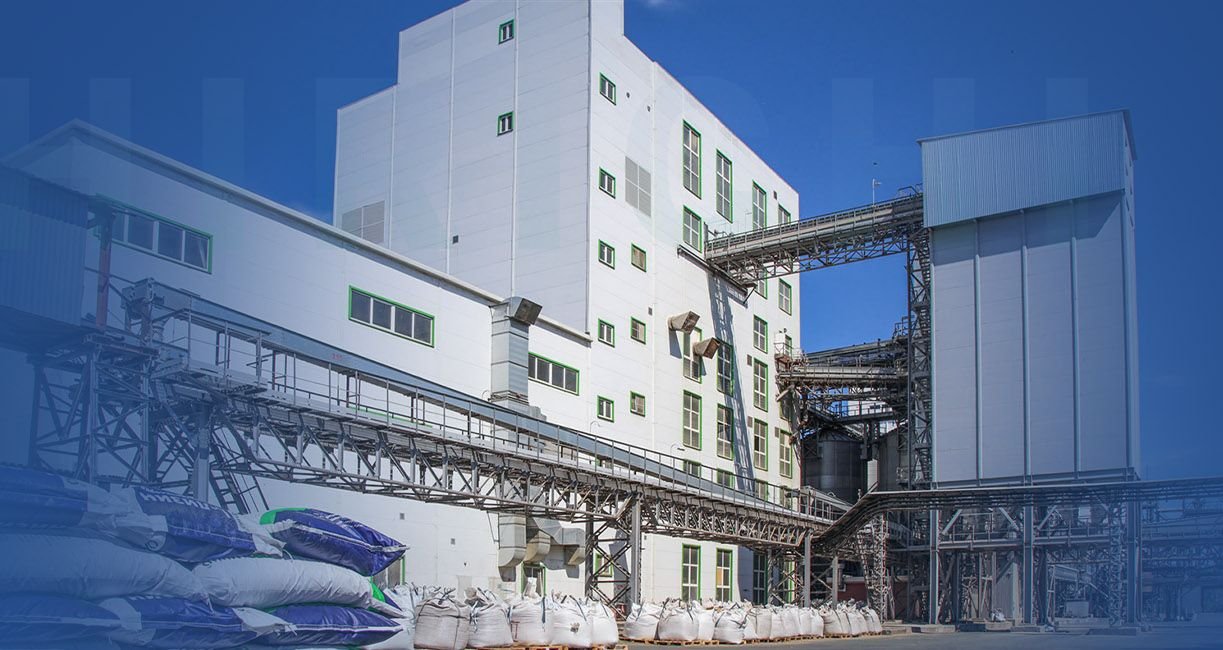
A 5 tons per hour (t/h) floating fish feed mill represents a substantial investment in the aquaculture sector. Understanding the production efficiency of such a facility is essential for operators to maximize output, minimize costs, and ensure high-quality feed production. This article delves into the various factors that affect the production efficiency of a 5t/h floating fish feed mill and provides insights into optimizing its performance.
Defining Production Efficiency
Production efficiency in a floating fish feed mill refers to the ratio of actual output to the theoretical maximum output, taking into account factors such as equipment capabilities, raw material quality, and operational practices. For a 5t/h mill, the theoretical maximum production is 5 tons of finished feed per hour; however, several variables can influence actual production efficiency.
Key Factors Influencing Production Efficiency
- Raw Material Quality and Preparation The quality and consistency of raw materials significantly impact production efficiency. High-quality ingredients that are well-ground and mixed can enhance the extrusion process, leading to better feed quality and higher production rates. Efficient raw material handling and preparation systems also contribute to overall plant efficiency.
- Extrusion Process Optimization The extrusion process is crucial for producing floating fish feed. Factors such as moisture content, temperature, and pressure in the extruder must be carefully regulated to achieve optimal expansion and flotation properties. Well-optimized extrusion parameters can increase throughput and reduce energy consumption.
- Drying and Cooling Efficiency Following extrusion, the feed needs to be dried to the correct moisture content and cooled to ambient temperature. Efficient drying and cooling systems are essential for maintaining high production rates and ensuring feed quality. Poorly designed or maintained drying systems can create bottlenecks in the production process.
- Equipment Maintenance and Reliability Regular maintenance of all equipment—from grinders and mixers to extruders and dryers—is crucial for sustaining high production efficiency. Unplanned downtime due to equipment failures can significantly affect overall production performance.
- Operational Expertise The skill and experience of operators play a vital role in maximizing production efficiency. Well-trained staff can swiftly adjust process parameters to optimize production and effectively address any arising issues.
- Feed Formulation The specific formulation of the fish feed can influence production efficiency. Some ingredients may be more difficult to process than others, affecting extrusion rates and energy consumption.
- Production Scheduling Efficient production scheduling, including minimizing changeover times between different feed formulations, can significantly enhance overall plant efficiency.
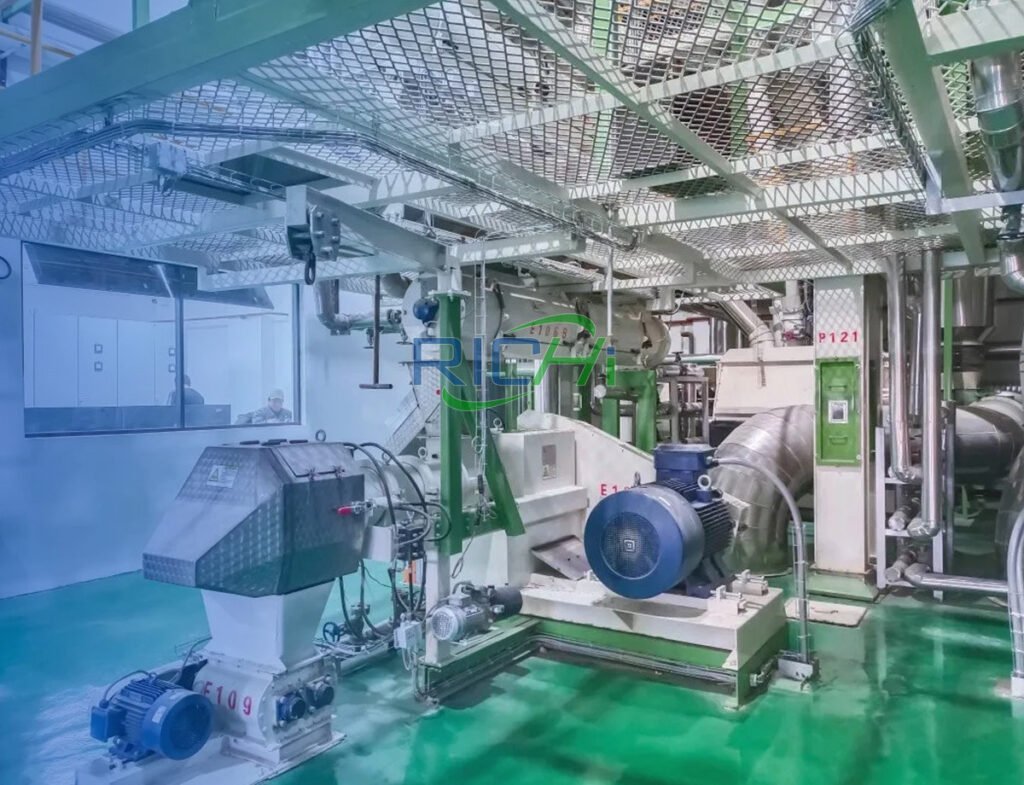
Typical Production Efficiency Metrics
For a well-designed and operated 5t/h floating fish feed mill, the following efficiency metrics can be anticipated:
- Overall Equipment Effectiveness (OEE): A well-operated plant should aim for an OEE of 85% or higher, which translates to an average production of approximately 4.25 tons per hour.
- Specific Energy Consumption: Energy efficiency is crucial for cost control and environmental sustainability. A modern 5t/h plant should target specific energy consumption of around 80-100 kWh per ton of feed produced.
- Yield: The yield, or the ratio of finished product to raw material input, should fall within the range of 95-98% for a well-managed plant.
- Downtime: Unplanned downtime should be minimized, ideally to less than 5% of total operational time.
Strategies for Enhancing Production Efficiency
- Implement Advanced Process Control Systems Modern control systems can continuously monitor and adjust process parameters to optimize production efficiency. This includes automated systems for raw material dosing, extrusion control, and drying/cooling management.
- Invest in Energy-Efficient Equipment Upgrading to energy-efficient motors, drives, and heating systems can significantly lower energy consumption and improve overall efficiency.
- Optimize Raw Material Handling Efficient storage, conveying, and dosing systems for raw materials can reduce labor costs and enhance consistency in the production process.
- Establish Preventive Maintenance Programs Regular maintenance schedules and condition monitoring can help prevent unexpected breakdowns and prolong equipment life, boosting overall efficiency.
- Continuous Operator Training Ongoing training for operators ensures they can effectively manage the production process and swiftly address any issues that arise.
- Optimize Feed Formulations Collaborating with nutritionists to develop feed formulations that meet fish nutritional needs while processing efficiently can enhance production.
- Adopt Lean Manufacturing Principles Implementing lean principles can help identify and eliminate waste in the production process, further improving overall efficiency.
Case Study: Efficiency Improvements in a 5t/h Floating Fish Feed Mill
Consider a 5t/h floating fish feed mill that initially operated at an average production rate of 4 tons per hour, facing frequent unplanned downtime and high energy consumption. After implementing several efficiency improvements, including:
- Upgrading the extrusion control system
- Establishing a preventive maintenance program
- Optimizing feed formulations for better processability
- Providing advanced training for operators
The plant achieved the following outcomes:
- Increased average production to 4.5 tons per hour
- Reduced unplanned downtime from 10% to 3%
- Decreased specific energy consumption from 110 kWh/ton to 90 kWh/ton
- Improved yield from 94% to 97%
These enhancements led to a 12.5% increase in overall production efficiency and significant cost savings in energy and raw materials.
Conclusion
The production efficiency of a 5t/h Floating Fish Feed Production Line is influenced by a complex interplay of factors, including raw material quality, equipment performance, operational expertise, and process optimization. While the theoretical maximum output is 5 tons per hour, real-world efficiencies typically yield production rates of 4.25 to 4.5 tons per hour for well-operated plants.
Achieving high production efficiency necessitates a comprehensive approach that addresses all aspects of the production process, from raw material handling to final product packaging. By implementing advanced control systems, investing in energy-efficient equipment, optimizing feed formulations, and emphasizing continuous improvement in operational practices, feed mill operators can significantly enhance their production efficiency.
As the aquaculture industry continues to expand and evolve, maintaining high production efficiency in floating fish feed mills will be vital for meeting growing demand while controlling costs and ensuring product quality. Operators who prioritize optimizing their production efficiency will be well-positioned to thrive in this competitive and dynamic market.