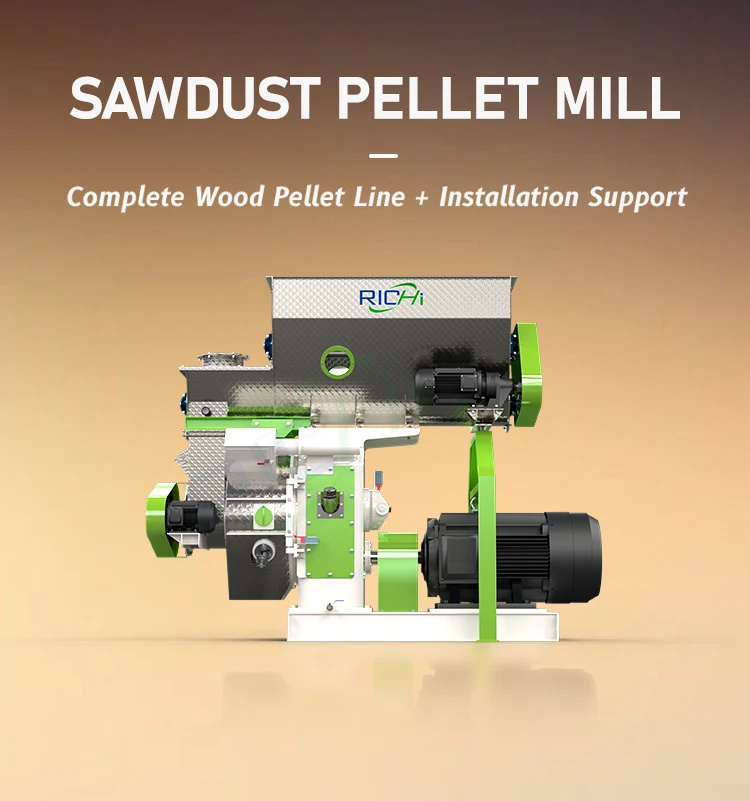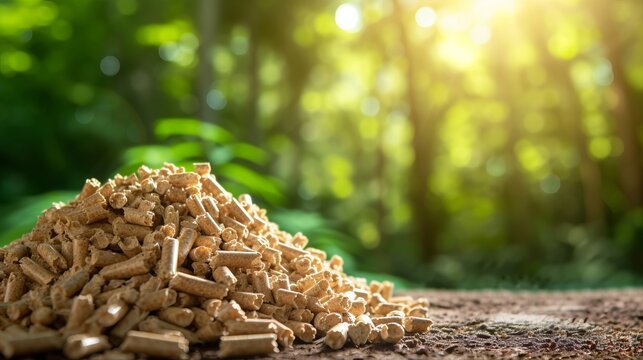







A sawdust pellet mill is a specialized machine designed to convert loose sawdust and other wood residues into dense, uniform biomass pellets. As global demand for renewable energy and sustainable fuel alternatives continues to rise, sawdust pellets have become one of the most popular biomass fuels for industrial boilers, power plants, and residential heating systems.
By using a high-performance sawdust pellet mill, manufacturers can turn low-value wood waste into high-energy, easy-to-transport fuel pellets, significantly improving both economic and environmental outcomes.
What Is a Sawdust Pellet Mill?
A sawdust pellet mill is a type of biomass pellet making machine that compresses sawdust into cylindrical pellets under high pressure. During pelletization, natural lignin in the wood softens and acts as a binder, allowing pellets to form without the need for chemical additives.
Sawdust pellet mills are widely used in:
- Biomass fuel pellet production plants
- Wood processing factories
- Furniture manufacturing waste recycling
- Agricultural and forestry residue utilization projects
(Read More: https://pelletisingmachine.com/biomass-pellet-mill/)
Raw Materials Suitable for a Sawdust Pellet Mill
One of the major advantages of a sawdust pellet mill is its wide raw material compatibility. Common materials include:
- Softwood and hardwood sawdust
- Wood shavings and wood chips (after crushing)
- Wood bark and sanding dust
- Forestry residues
- Mixed biomass materials (with proper preparation)
For optimal pellet quality, raw materials typically require moisture content between 10% and 15%.
Sawdust Pellet Mill Working Principle
The working process of a sawdust pellet mill is simple and efficient:
- Feeding: Prepared sawdust is evenly fed into the pelletizing chamber.
- Compression: Rollers press the material through die holes under high pressure.
- Pellet Formation: Heat and pressure activate lignin to bind particles together.
- Cutting: Adjustable knives control pellet length.
- Discharge: Finished biomass pellets are released for cooling and packaging.
This process ensures consistent pellet density, durability, and calorific value.
Types of Sawdust Pellet Mills
Different production scales and applications require different pellet mill designs.
Ring Die Sawdust Pellet Mill
Ideal for medium to large-scale biomass pellet production, offering high output, stable operation, and long service life.
Flat Die Sawdust Pellet Mill
Suitable for small-scale production or pilot projects, with simple structure and lower initial investment.
Both types can be integrated into a complete wood pellet production line.
Advantages of Using a Sawdust Pellet Mill
A professional sawdust pellet mill provides multiple benefits for biomass producers:
- High Pellet Density
Dense pellets offer higher energy output and better combustion efficiency. - Waste Recycling
Converts wood waste into valuable biomass fuel. - Lower Transportation Costs
Pelletized sawdust is easier to store and transport than loose material. - Environmentally Friendly
Biomass pellets reduce dependence on fossil fuels and lower carbon emissions. - Stable and Automated Operation
Modern pellet mills support continuous production with reduced labor input.
Key Factors When Choosing a Sawdust Pellet Mill
Selecting the right sawdust pellet mill is critical for long-term profitability.
Production Capacity
Choose a pellet mill that matches your target output, from small plants to industrial-scale biomass production lines.
Die and Roller Quality
High-quality alloy steel dies and rollers ensure wear resistance and stable pellet forming.
Energy Efficiency
Efficient motors and optimized transmission systems reduce electricity consumption per ton of pellets.
Raw Material Adaptability
A good sawdust pellet mill should handle different wood types and particle sizes.
Maintenance and Support
Easy maintenance design and reliable after-sales service are essential for continuous operation.
Sawdust Pellet Mill in a Complete Biomass Pellet Production Line
A sawdust pellet mill is usually part of a complete biomass pellet production line, which may include:
- Wood crushing and grinding system
- Drying system for moisture control
- Pelletizing system
- Cooling system
- Screening and packaging system
An integrated pellet production line ensures consistent quality, higher efficiency, and lower production costs.
Market Demand and Applications
The global demand for sawdust pellet mills continues to grow due to:
- Rising biomass energy consumption
- Government incentives for renewable energy
- Increasing wood processing waste
- Expansion of pellet heating systems
Sawdust pellets are widely used in industrial boilers, biomass power plants, and residential heating, making pellet production a stable and profitable business.
Conclusion
A high-quality sawdust pellet mill is a key investment for turning wood waste into clean, renewable energy. With strong adaptability, efficient pelletizing performance, and scalable capacity, sawdust pellet mills play a vital role in modern biomass fuel production.
By choosing the right sawdust pellet mill and production solution, manufacturers can improve pellet quality, reduce operating costs, and gain a competitive advantage in the growing biomass energy market.